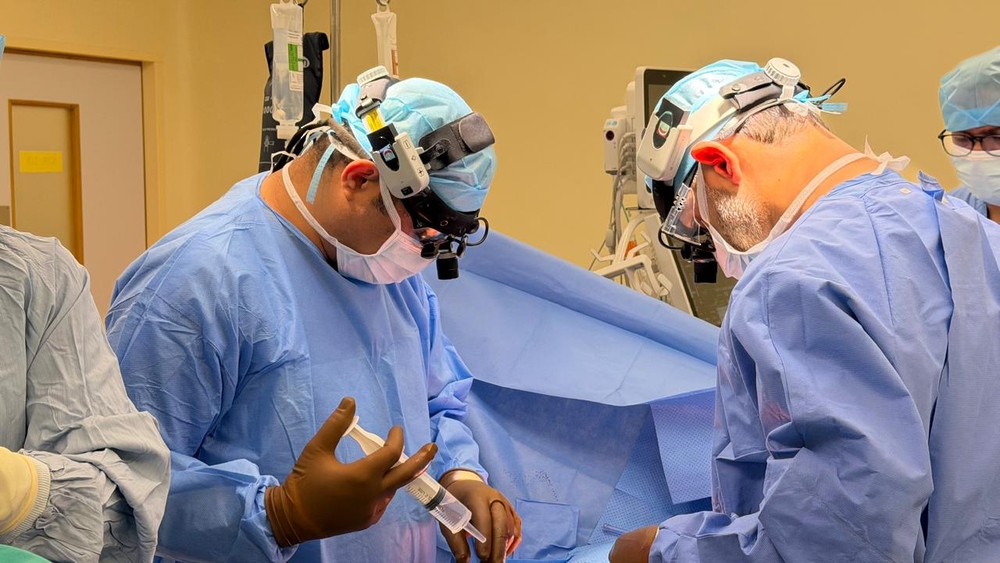

Muscat: The operation began after a patient at Khoula Hospital was declared brain dead in accordance with approved medical protocols. Following comprehensive medical, legal and ethical procedures, the donor’s family made the selfless decision to donate the organs, enabling specialists to save four patients through the transplantation of the heart, liver and two kidneys.
Working in close coordination, medical teams from Khoula Hospital, the Royal Hospital and the Omani Center for Organ and Tissue Donation and Transplantation carried out extensive clinical, laboratory and immunological assessments to determine organ suitability and identify the most compatible recipients from national waiting lists.
As heart transplantation requires highly specialised facilities and equipment, the donor was transferred to the Royal Hospital, where multidisciplinary teams successfully completed the organ retrieval and transplant procedures under a tightly coordinated system designed to preserve organ viability and minimise the time between retrieval and transplantation.
Read More
- Six arrested for illegally entering Oman with over 40kg of drugs and firearm
- ‘Continued diplomacy remains essential to reduce tensions’: Oman FM after meeting India’s Jaishankar
- Oman moves to boost investment, non-oil trade under Royal directives
- UN chief praises Oman’s diplomatic role as Sayyid Badr, Guterres discuss regional crises
- Oman wins bid to host World Wind Energy Congress 2027
The operation brought together a wide range of national specialists, including transplant surgeons, cardiac, liver and urological surgeons, anaesthesiologists, intensive care physicians, laboratory experts, immunologists, radiologists, nurses, operating theatre technicians, ambulance personnel, transplant coordinators and administrative support teams, all working seamlessly to ensure the success of every stage of the process.
All four transplant recipients recovered well following surgery, completed their rehabilitation programmes and have since been discharged from hospital. They will continue receiving follow-up care under approved treatment plans.
Dr. Noureen bint Yousef Al-Balushi, Director of the Omani Center for Organ and Tissue Donation and Transplantation, said the centre oversees every stage of the donation and transplantation process in line with internationally recognised medical, legal and ethical standards.
She said the successful operation demonstrated the strength of cooperation between the Royal Hospital, Khoula Hospital and the Omani Center, describing it as a model of institutional integration that reflects the maturity of Oman’s organ donation and transplantation system.
Dr. Noureen stressed that organ donation after brain death carries a powerful humanitarian message, giving patients and their families a second chance at life while encouraging greater public confidence in the national programme. She added that continued awareness campaigns and successful transplant stories will play a key role in encouraging more people to register as organ donors.
Looking ahead, she said the centre aims to build a comprehensive and sustainable national transplantation system by expanding transplant programmes to include additional organs and tissues such as lungs, pancreas and intestines, strengthening specialised national expertise and enhancing regional and international partnerships.
Dr. Al-Warith bin Ahmed Al-Hashimi, Consultant of Liver and Pancreas Surgery and Head of the Organ Transplantation Department at the Royal Hospital, described the operation as a major milestone that highlights the readiness and capability of Omani medical teams to perform highly complex transplant procedures.
He explained that once brain death was confirmed, multiple specialist teams worked simultaneously to assess organ viability, identify compatible recipients and complete the procedures within the narrow timeframe required to preserve organ function.
He acknowledged that time remains the greatest challenge in organ transplantation, as every organ has a limited period during which it can be successfully retrieved, transported and transplanted. However, he said the expertise of national medical teams, clear clinical protocols and effective teamwork enabled the operation to be completed successfully.
Dr. Al-Warith also expressed gratitude to the donor’s family for their humanitarian decision, noting that one donor was able to save four lives. He called on the public to learn more about organ donation after death, describing it as one of the greatest acts of compassion that can continue to benefit others even after a person’s passing.
The Royal Hospital, Khoula Hospital and the Omani Center for Organ and Tissue Donation and Transplantation jointly praised the donor’s family for their extraordinary generosity, saying their decision not only saved four lives but also reinforced the values of solidarity, compassion and humanitarian giving within Omani society.
The Omani Center continues to work with health institutions across the Sultanate to strengthen organ donation services and raise public awareness about the life-saving impact of organ donation after brain death.
The operation is the third successful heart transplant performed in the Sultanate of Oman.





