

MUSCAT – The rainfall contributed to groundwater recharge, increased water spring flows and improved water storage levels.
Eng. Ali bin Bakhit Bait Saeed, Director of the Water Resources Department at the Directorate General, said the Kanzeer station in the Wilayat of Salalah recorded the highest rainfall during the season, reaching 731.6 mm.
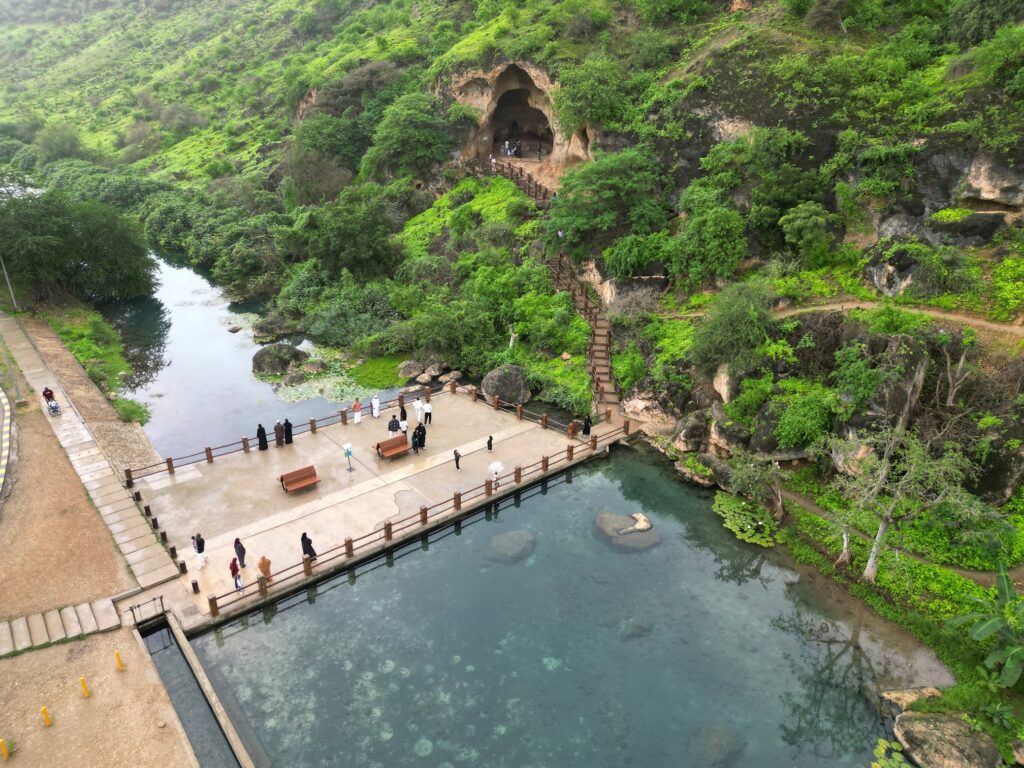
He added that most hydrological monitoring stations recorded rainfall levels exceeding their seasonal averages by between 11 and 91 percent, highlighting the exceptional performance of the 2025 Khareef season compared with previous years.
Read More
- Oman accident: Truck collision causes injuries, traffic congestion on Sultan Thuwaini bin Said Road
- Oman extends condolences to Pakistan after Islamabad hospital fire
- GCC history forum participants thank His Majesty Sultan Haitham for Oman’s warm hospitality
- His Majesty Sultan Haitham sends condolences to Nepal president over flood, landslide victims
- Oman records highest temperature of 46.2°C
Bait Saeed explained that the low-pressure system that affected Dhofar from 15 to 25 August 2025 contributed significantly to increasing rainfall totals, enhancing valley and waterfall flows and boosting groundwater recharge rates.
The hydrological analysis showed a positive response from underground water reservoirs, with rising water levels and increased flows from several springs following peak rainfall during July and August. This response continued in the following months, reflecting the importance of the Khareef season in sustaining water resources in the governorate.
The report indicated that the total flow from major water springs in Dhofar reached approximately 13.4 million cubic metres during the season, while the average flow of Ain Razat recorded 322 litres per second, exceeding its average over the past 10 years.
Rainfall during the season also contributed to increasing water storage in surface dams, with total stored water reaching around 13,953 cubic metres, compared with 11,177 cubic metres during the 2024 Khareef season.
Bait Saeed stressed that the importance of the Khareef season extends beyond rainfall levels, as it plays a key role in replenishing groundwater reserves, maintaining spring flows and supporting water security and environmental development in Dhofar.
The report was based on data collected from hydrological monitoring stations across the governorate, which track rainfall distribution and monitor the response of groundwater and springs to climatic conditions.
The Ministry of Agriculture, Fisheries and Water Resources continues to enhance hydrological monitoring systems, expand seasonal databases, support scientific studies and improve water harvesting facilities to strengthen sustainable water resource management and climate resilience in Oman.
The Dhofar Khareef season is one of Oman’s most significant climatic phenomena, supporting vegetation growth, replenishing groundwater reservoirs and sustaining the governorate’s ecosystems through seasonal drizzle, low clouds and fog.





