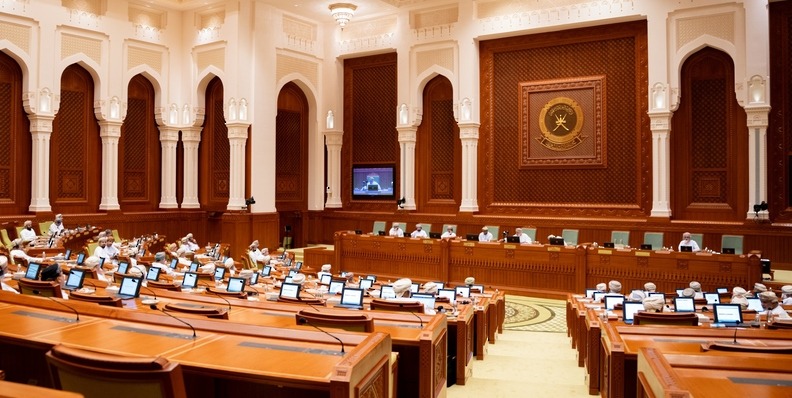

Muscat: Held under the chairmanship of His Excellency Khalid bin Hilal Al Maawali, Chairman of the Shura Council, the session highlighted the Council’s ongoing role in supporting Oman’s development agenda through legislative review and policy discussions aligned with the goals of Oman Vision 2040.
In his opening remarks, H.E. Al Maawali said the Council remains committed to its national responsibility of supporting sustainable development by studying legislation and discussing issues of public interest. He praised the active participation of Council members and stressed that the topics under discussion reflect the Council’s efforts to strengthen the legislative framework and support national policies and programmes.
The session included briefings on several draft laws and agreements referred by the government for legislative review. Among them was the draft unified law for volunteer work in GCC countries, which seeks to promote volunteerism, strengthen its social culture, and establish legislative frameworks that support volunteer initiatives while enhancing cooperation among GCC states.
Read More
- Oman condemns Saudi airport attacks, urges restraint
- Oman convenes global experts to advance AI innovation in mental healthcare
- HH Sayyid Theyazin chairs International Financial Centre of Oman board meeting
- Oman participates in Interpol Anti-Drug Conference in Czech Republic
- HH Sayyid Bilarab honours former Wali of Bausher for dedicated public service in Muscat
Members were also briefed on a draft environmental law aimed at strengthening environmental protection, preserving natural resources, addressing climate change challenges, and safeguarding biodiversity. The proposed legislation seeks to balance economic development needs with environmental sustainability for future generations.
The Council further reviewed a draft agreement between Oman and Azerbaijan on the avoidance of double taxation and the prevention of tax evasion and avoidance. The agreement is expected to strengthen economic and investment ties between the two countries by providing a more stable and transparent tax environment for investors and businesses.
A major focus of the session was the proposed draft law on alternative penalties and penal measures. His Excellency Dr Ahmed bin Ali Al Saadi, Chairman of the Legislative and Legal Committee, said the proposal aims to modernise Oman’s criminal justice system by introducing a comprehensive legislative framework for alternative sentencing options.
He explained that the draft law would provide judicial authorities with greater flexibility in handling certain offences where alternatives to imprisonment may be more appropriate. The proposal is designed to achieve both deterrence and rehabilitation while reducing the social, economic and psychological consequences of custodial sentences on individuals and their families.
According to H.E. Al Saadi, the proposed measures would also help improve the efficiency of the criminal justice system, optimise spending associated with imprisonment, and allow resources to be directed towards more serious crimes.
The Council also discussed a report by the Economic and Financial Committee on evaluating the state of local industries in Oman. His Excellency Ahmed bin Saeed Al Sharqi, Chairman of the Committee, highlighted the industrial sector’s strategic role in supporting economic diversification, increasing GDP contributions, creating jobs, enhancing value-added production, and boosting non-oil exports and investment.
In the education sector, members reviewed a report by the Education, Scientific Research and Innovation Committee on expanding partnerships between the public and private sectors in early childhood education and in services for academically outstanding, talented and disabled students.
His Excellency Dr Ali bin Nasser Al Harasi, Chairman of the Committee, said the initiative seeks to strengthen private sector participation in educational programmes and expand specialised services for students with diverse needs. The report aims to improve the quality and accessibility of educational and rehabilitation services across the Sultanate’s governorates.





