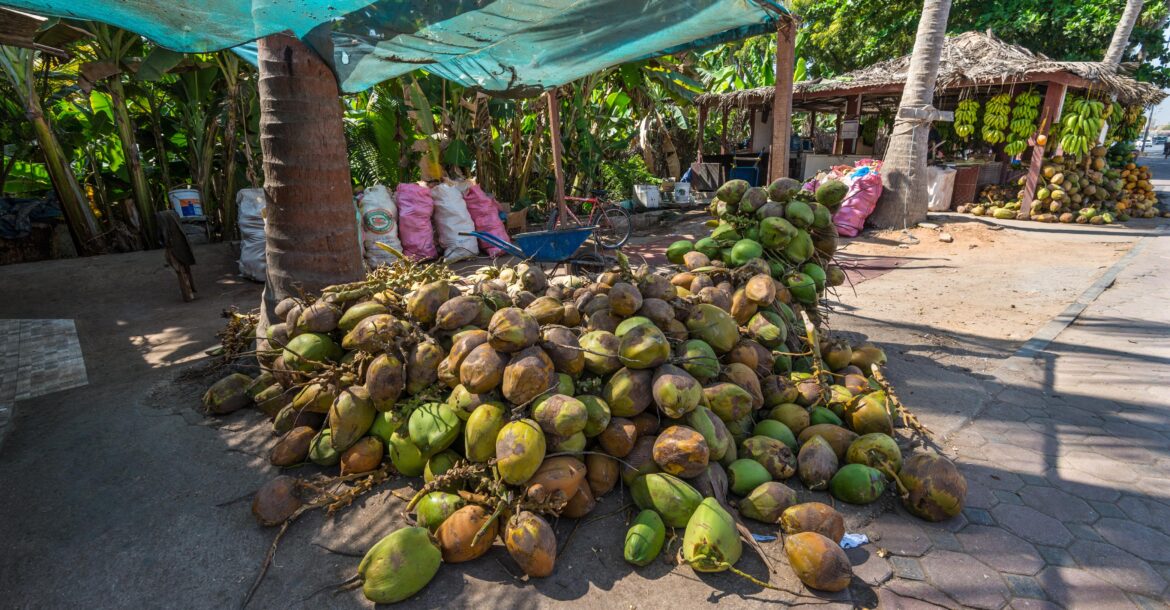

Muscat – The Directorate General of Agriculture, Fisheries, and Water Resources in the governorate has highlighted ongoing efforts to address the decline in coconut crop yields in Salalah and Taqah. This follows an analysis of monitoring data gathered by field teams in collaboration with the Consumer Protection Authority (CPA) and other relevant authorities who had visited kiosks selling coconut palm fruits. The team also investigated the reasons for the scarcity in the availability of coconut fruits, and the challenges facing the availability of the fruit in sales outlets.
Eng. Muslim bin Salem Rafeet, Acting Director General of Agricultural Wealth, Fisheries, and Water Resources in Dhofar, explained that coconut production has been on the decline for the past decade. He identified several key factors contributing to the downturn, including the increased internal transportation of coconut fruits between governorates, improper agricultural practices, and the impact of pests such as the coconut fruit mite and coconut leaf beetle. Additionally, colder winter temperatures lead to naturally low productivity, while changes in land use have reduced agricultural space available for cultivation.
The Directorate is working to boost coconut production through initiatives aimed at expanding cultivation, identifying new investment opportunities, and continuing efforts to control agricultural pests. Furthermore, they are focused on improving the agricultural trade and marketing chains through local Omani companies.
Read More
- Oman’s CPA shuts marble and ceramic trading firm in Rustaq over consumer complaints
- Saudi Airlines to launch direct Muscat-Riyadh flights from October 27
- Oman, Saudi Arabia to strengthen economic partnership at 7th coordination committee meeting
- Consumer Protection Authority seizes 1,236 non-compliant school products in Muscat
- Future Fund Oman invests RO 4 million in Maternal and Fetal Care Centre in Muscat





