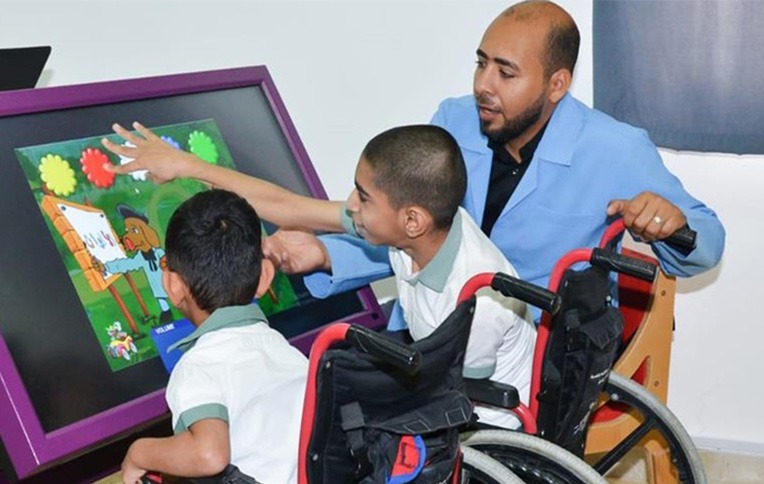

MUSCAT: The Ministry of Social Development represented by the Vocational Assessment and Rehabilitation Center of the General Directorate for Persons with Disabilities has implemented a number of awareness sessions during Ramadan for the disabled and their families.
The sessions, which will be held online from 11 am until 1 pm, will also be beneficial for workers in this field, various members and institutions.
The first episode of the sessions named Adolescence and Persons with Disabilities will be broadcasted starting on Tuesday, April 5. It’ll be presented by Dr Ghania bint Saif Al-Ghafria, a psychiatric consultant at Ibri Hospital, and Naqaa bint Juma Al-Lawati, community awareness and programs specialist. The seminar revolves around the concept of disability and the psychological problems associated with it and its impact on persons with disabilities and how to reduce them.
Read More
- Oman, Iran agree framework for safe shipping corridor through Strait of Hormuz
- Thunderstorms, strong downdraft winds sweep parts of Oman
- Saudi Crown Prince sends written message to His Majesty Sultan Haitham
- Oman FM arrives in Tehran, discusses safe passage of ships through Strait of Hormuz
- CPA seizes 1,668 soft drinks, 177 expired juice cans in Oman
The second episode will be related to Marriage for People with Disabilities which will be from a legal perspective, focusing on the rights guaranteed to them by the true Islamic religion. It’ll be presented by Dr Abdul Majeed bin Hammoud Al Rawahi and Abdullah bin Muhammad Al Zaabi.
The third episode will be The Qur’an and the Lord’s Gifts for Autism Spectrum Disorders, presented by Dr Ahmed bin Saeed Al Busaidi. He would be focusing on defining this disorder, its causes, the most important factors which are characterised under autism spectrum disorders and how to develop awareness about them.
In the fourth episode, a seminar will be presented on the Employment of Persons with Disabilities and the Work of Women with Disabilities. It’ll review laws and legislation such as the Omani Penal Code and indicators and data related to employment under this category and the reasons that prevent women with disabilities from working.





