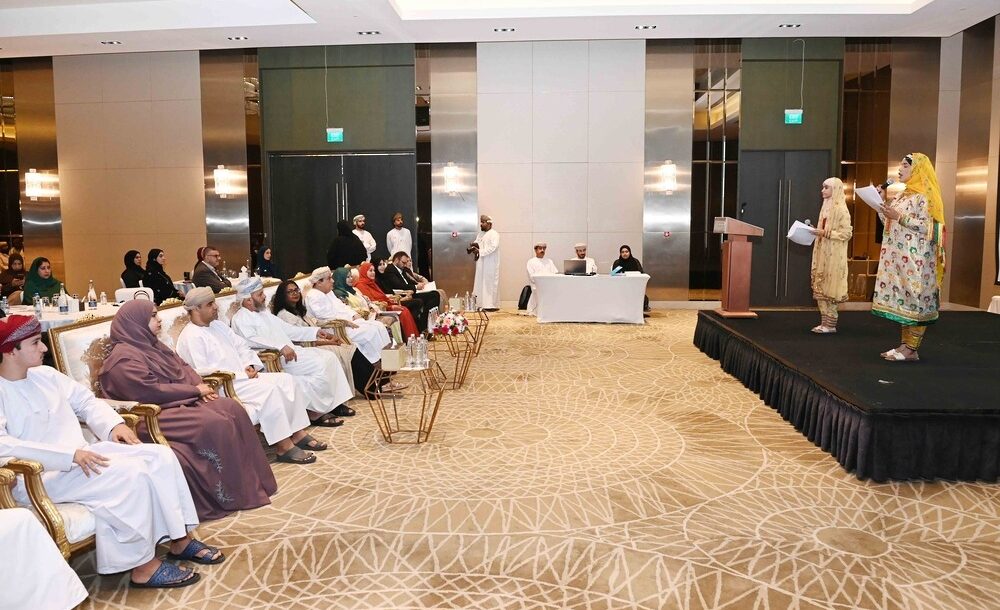

MUSCAT – The study, which includes a five-year executive action plan, aims to consolidate inclusive, high-quality educational standards across all governorates.
The assessment, prepared in 2025 under the supervision of a technical steering committee comprising the Ministry of Education, the Ministry of Social Development, the Ministry of Health, and the Oman Vision 2040 Implementation Follow-up Unit, examines the extent to which the child-friendly education approach is relevant and effective across various components of the education system in Oman.
The Child-Friendly Education Initiative was jointly developed by the Ministry of Education and UNICEF to create an engaging and supportive learning environment for children, placing them at the centre of the educational process while promoting inclusivity and participation.
The initiative contributes directly to the achievement of the United Nations Sustainable Development Goals, particularly Goal 4, which seeks to ensure inclusive and equitable quality education and promote lifelong learning opportunities for all.
Since its pilot phase in 2012, implemented in nine schools across three governorates, the initiative has expanded steadily and was rolled out nationwide across educational governorates in 2022.
The assessment was conducted in a participatory and comprehensive manner, including field consultations and visits to several educational governorates in the Sultanate of Oman. It involved children, including those with disabilities, as well as parents, school principals and teachers, thereby enriching the process with diverse perspectives and ensuring alignment with real school experiences.
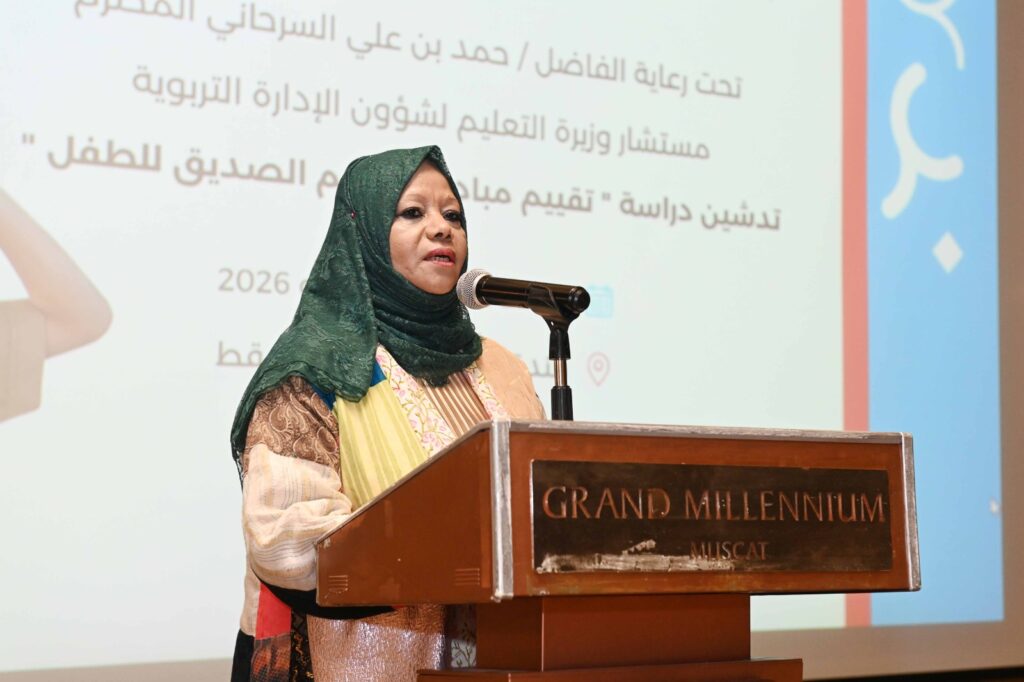
Shununa bint Salem Al Habsi, the Sultanate of Oman’s representative to the UNICEF Executive Board at the United Nations in New York and Assistant Director General for Special Education at the Ministry of Education, delivered a speech highlighting the strong strategic partnership between Oman and UNICEF, which has supported the implementation of key initiatives focused on children and adolescents, including those with disabilities.
The event also featured a review of the experiences and aspirations of children and young people regarding the second edition of the Child-Friendly Education Guide, alongside a presentation of key findings from the initiative’s evaluation, underscoring the importance of child and community participation in shaping more inclusive educational environments.
A workshop was held with the participation of specialists from relevant child development institutions, as well as members of the Arab Parliament for Children in Oman, to develop a five-year executive action plan aimed at translating the report’s findings and recommendations into practical and sustainable programmes and initiatives.
The workshop included discussions and multi-sectoral working sessions to establish a general framework for the action plan, including key performance indicators, priorities, responsibilities and coordination mechanisms.
The outcomes of the workshop will contribute to the development of the second version of the Child-Friendly Education Programme, aligned with the School Education Law issued in 2023, the priorities of Oman Vision 2040, and the Eleventh Five-Year Plan (2026–2030), as well as ongoing developments in the education sector in Oman.
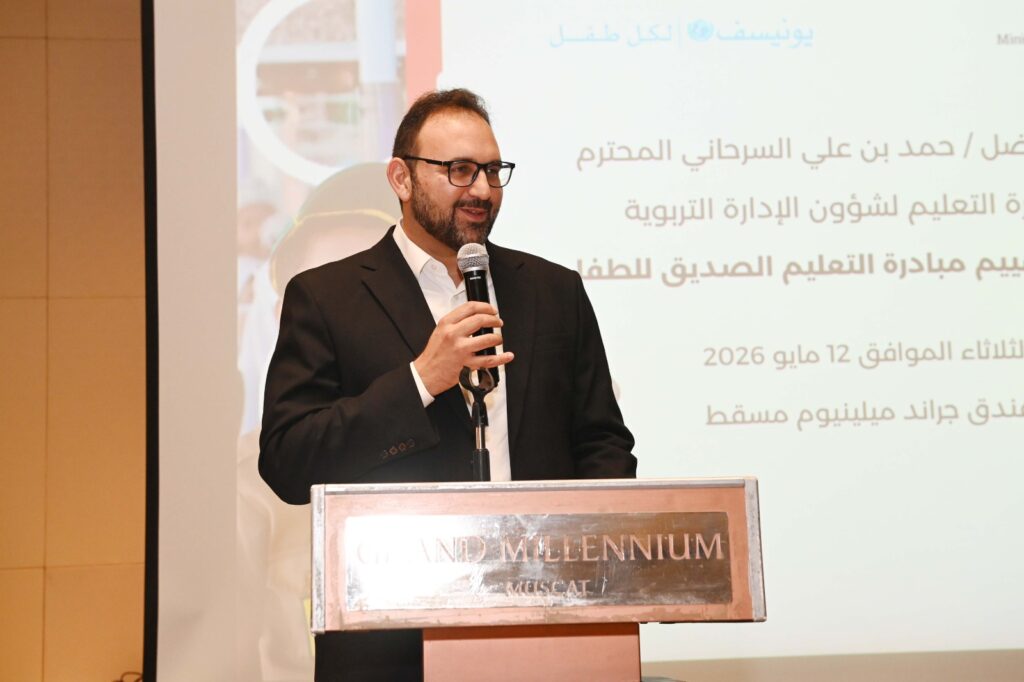
On the other hand, Hamad bin Ali Al Sarhani, Advisor to the Minister of Education for Educational Administration Affairs, said Oman places strong emphasis on the child as the centre of development and the foundation for building the future. He noted that the Ministry of Education is working to develop safe, stimulating and inclusive learning environments that guarantee children’s right to quality education aligned with global changes and future skills requirements. He added that the evaluation study represents an important step towards enhancing education quality and strengthening evidence-based policy and practice.
Sumaira Chowdhury, UNICEF Representative to the Sultanate of Oman, said every child has the right to learn in a safe, inclusive and supportive environment. She stated that the assessment and subsequent planning reflect Oman’s continued commitment to ensuring that the education system responds to the needs and rights of all children, adding that UNICEF is proud to continue supporting the Ministry of Education in this national effort.
The launch marks a significant milestone in Oman’s efforts to strengthen child-friendly education standards, enhance cross-sector coordination, and ensure that national education policies remain evidence-based, child-centred and future-oriented.
Read More
- Indian crew injured in MT On Peace attack recovering in Oman, embassy says
- Oman, Italy discuss tourism cooperation to boost visitor numbers
- Oman’s Urban October event draws over 60,000 visitors, records more than 230 deals
- Oman condemns Saudi airport attacks, urges restraint
- Oman convenes global experts to advance AI innovation in mental healthcare





