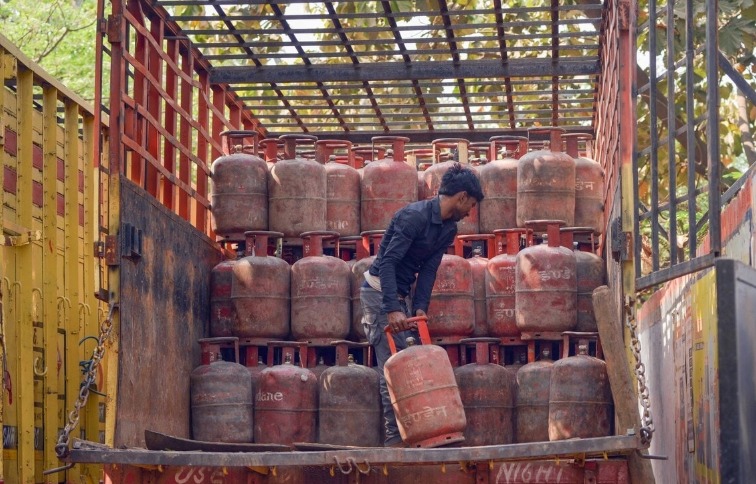

MUMBAI : The escalating Iran–Israel war, now in its 11th day, has triggered serious concerns over fuel supply chains after shipments of petroleum products through the Strait of Hormuz reportedly came to a halt. The disruption has raised fears of a major LPG shortage across India, where a significant portion of the country’s fuel supply depends on imports from West Asian nations.
Industry groups say the situation on the ground contradicts official assurances that supplies remain stable. The National Restaurant Association of India (NRAI), which represents more than 500,000 restaurants nationwide, said restaurants are already facing difficulty securing commercial LPG cylinders despite government claims that supplies remain uninterrupted.
According to the association, the shortage is affecting food service operations and could soon impact the availability of food as an essential service for citizens. Restaurants and hotels in major cities including Chennai, Mumbai and Bengaluru have warned that they may be forced to shut down within 72 hours if LPG refills are not supplied.
Read More
- Drone attack sparks fire at Kuwait border crossing
- Trump says Saudi nuclear deal requires Abraham Accords entry
- US strikes Iran for 12th night as regional tensions spread
- Record heat intensifies Europe’s drought crisis, France reports over 5,700 heatwave deaths
- World Bank warns escalating US-Iran conflict could fuel inflation, slash global growth to 1.3%
In Coimbatore, the well-known Annapoorna restaurant chain has reportedly reduced its menu options to conserve fuel, while a restaurant in Bengaluru has announced it will temporarily serve only tea and coffee due to limited gas supply. Similar reports are emerging from several cities across the country.
Alarmed by the situation, Tamil Nadu Chief Minister M.K. Stalin convened an emergency meeting on March 10 to discuss measures to address the potential shortage. He urged the Union government to ensure that the LPG crisis arising from the West Asian conflict does not affect households, commercial establishments or MSME industries in the state.
Stalin also called for alternative arrangements for restaurants affected by the shortage and measures to secure additional power supply if businesses shift to electric alternatives.
The impact of the shortage could extend beyond the hospitality sector. In cities such as Mumbai and Delhi, residents of high-end apartment complexes that rely on piped gas systems are facing uncertainty about whether supplies will continue uninterrupted. In several towns, waiting periods for LPG cylinders have reportedly stretched to nearly a month.
The crisis is already affecting other services as well. Reports from Pune indicate that gas-based crematoriums in the city have been forced to shut down due to lack of fuel supply. At the same time, reduced restaurant operations could affect lakhs of gig workers involved in food delivery and related services.
The concerns have also reached Parliament. Leader of the Opposition Rahul Gandhi raised the issue in the Lok Sabha and demanded a discussion on the emerging crisis, but Speaker Om Birla reportedly declined the request. Congress MP Vijay Vasanth criticised the government’s response, saying the concerns of ordinary citizens were being ignored.
Meanwhile, global trade disruptions linked to the conflict are beginning to affect India’s exports as well. Maersk, one of the world’s largest container shipping companies, has suspended shipments to West Asia, impacting exports from India to countries including Bahrain, Saudi Arabia, the UAE, Oman, Iraq, Kuwait, Jordan and Qatar.
India’s dependence on imported LPG adds to the challenge. According to government data, the country has about 33.2 crore active domestic LPG connections and consumes roughly 31.3 million tonnes of LPG annually. Nearly 65 per cent of the country’s LPG requirement is met through imports, with 85 to 90 per cent sourced from West Asian nations such as the UAE, Qatar, Kuwait, Saudi Arabia, Oman and Bahrain.
In response to the situation, the government recently directed refiners to prioritise propane and butane for LPG production and supply it primarily to Indian Oil Corporation and Hindustan Petroleum Corporation Ltd. Media reports indicate that the order was later revised to instruct all domestic and SEZ refining companies to maximise LPG production.
Despite the uncertainty, government sources have indicated that petrol and diesel prices are unlikely to increase immediately due to adequate stock levels, though no official announcement has been made. However, the government recently raised the price of domestic cooking gas by Rs 60.
The current price of domestic LPG cylinders now ranges between about Rs 910 and Rs 1,002 across major cities, while commercial LPG cylinders are priced between roughly Rs 1,836 and Rs 2,133 depending on location.
Even as India grapples with the potential energy crunch, the country continues to export around 5,000 tonnes of diesel to Bangladesh through the Parbatipur pipeline, highlighting the complex dynamics of the global energy market.
For all the latest news from Oman and GCC, follow us on Twitter, Instagram and LinkedIn, like us on Facebook and subscribe to our YouTube page, which is updated daily.





