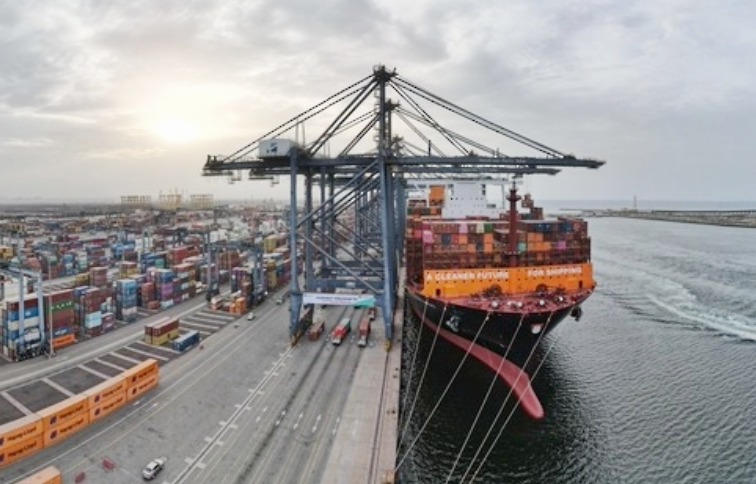

MUSCAT : Oman is accelerating its transformation into a competitive regional and global logistics hub, driven by sweeping reforms in customs procedures, major investments in strategic ports, and rapid progress in digital trade and e-commerce infrastructure.
Significant investments have been directed towards upgrading port infrastructure and improving operational and digital efficiency to accommodate growing trade volumes. Parallel to this, the Royal Oman Police, represented by the General Directorate of Customs, has recorded a qualitative leap in customs services, aimed at facilitating trade, encouraging foreign investment, strengthening supply chains, and enhancing the overall logistics ecosystem.
A key milestone in this transformation is the launch of the “Bayan” customs system, a fully integrated electronic platform linking 74 government and private entities. The system offers 496 electronic services, allowing businesses to complete customs transactions without visiting customs offices. These include pre-clearance services, electronic and deferred payments of customs duties, clearance under bank guarantees, refunds, licence renewals, temporary imports, and goods-splitting requests.
Read More
- Over 25,700 unlicensed, non-compliant goods seized by Oman’s CPA in Barka
- Oman rises 8 places in global innovation inputs ranking
- TAS Media Group expands operations, launches new office in India
- Oman reaffirms commitment to global efforts against racism at UN meeting
- HH Sayyid Bilarab reviews health services and development priorities in Muscat
These reforms have delivered tangible global recognition. Oman ranked first in the Gulf in the Cross-Border Trade Index in the Doing Business 2020 report issued by the World Bank, supported by infrastructure upgrades at Sohar Port, the introduction of electronic risk-based inspections, and the development of advanced customs audit systems.
To further ease the movement of goods, the General Directorate of Customs launched the Secure Customs Corridor initiative, linking ports with free zones and economic zones. Salalah Port is connected with Salalah Free Zone and Al Mazunah Free Zone, while Sohar Port and Duqm Port are linked with their respective free and special economic zones. Sea and air ports have also been integrated with investment customs warehouses through secure corridors, enabling faster and safer cargo movement.
Complementing these efforts is the “Electronic Air Waybill” initiative under the Bayan system, allowing air carriers and airport handling authorities to submit shipping documents electronically, significantly speeding up clearance procedures at airports across the Sultanate.
These logistics reforms align closely with Oman’s wider digital transformation drive. The e-commerce sector has expanded rapidly, with the market estimated at around US$575 million in mid-2023 and projected to reach US$1.1 billion by 2028, growing at an annual rate exceeding 13 percent. The pandemic accelerated this shift, with active internet users surpassing five million and penetration rates exceeding 90 percent of the population.
Government initiatives to promote cashless transactions have also yielded results, with electronic transaction volumes rising by 40 percent during the year, supported by the national payment gateway and the widespread adoption of digital wallets. Oman has additionally begun coordinating with neighbouring countries to regulate the rising flow of international parcels, in line with similar e-commerce facilitation initiatives in the region.
Engineer Abdullah bin Ali Al Busaidi, Director General of the Oman Logistics Center at the Ministry of Transport, Communications and Information Technology, said the government continues to enhance international trade volumes by building an integrated and flexible logistics system. In statements to the Oman News Agency, he noted that improving port efficiency, border crossings, multimodal connectivity, and digital solutions has helped reduce the cost and time of goods movement, strengthening Oman’s competitiveness as a global logistics hub.
Meanwhile, Omar bin Mahmoud Al Mahrazi, CEO of Asyad Ports and Free Zones, confirmed that the maritime transport sector recorded a compound annual growth rate of about 12 percent between 2018 and 2024. He said Omani ports are now connected to 86 commercial ports in 40 countries through around 200 direct weekly services, significantly boosting their global reach and attractiveness.
Al Mahrazi added that recent digital advancements, including pre-clearance of goods through the Bayan system, have enabled cargo release within hours of ship arrival, reduced inspection rates to globally competitive levels, and lowered storage and operating costs. He highlighted that ports, free zones and economic zones now offer attractive investment incentives, including exemptions on equipment and raw materials, no minimum capital requirements, and full repatriation of profits.
For all the latest news from Oman and GCC, follow us on Twitter, Instagram and LinkedIn, like us on Facebook and subscribe to our YouTube page, which is updated daily.





