
MUSCAT – The Authority aims to accommodate 40 million passengers and transport one million tons of air cargo by 2040, supported by cumulative private sector investments exceeding 1 billion Omani Rials.
Speaking at the media briefing, His Excellency Eng. Naif bin Ali Al Abri, President of the Civil Aviation Authority (CAA), confirmed that the newly launched National Aviation Strategy 2040 acts as a roadmap to transform Oman into a global logistical powerhouse.
His Excellency described the strategy as a comprehensive roadmap for a sustainable and competitive aviation sector, aligned with Oman Vision 2040. The plan is built on nine guiding principles and implemented in three phases through 39 initiatives, covering safety, economic development, national competency building, innovation, digital transformation, and sustainability.
Read More
- Indian expat airlifted to hospital after road accident in Oman
- Truck carrying steel coils triggered deadly 15-vehicle Samail crash: Royal Oman Police
- Global experts to gather in Oman to combat water and climate challenges
- Oman orders investigation into horrific Samail crash that killed six
- Over 220 Raqaq bread packs seized in Oman over alleged expiry date manipulation
Highlighting Oman’s operational achievements, the CAA reported a 94.4 percent compliance rate under the Universal Security Audit Program with Continuous Monitoring Approach (USAP-CMA), and 100% compliance with facilitation requirements, ranking Oman fourth among G20 countries and third in the Middle East. The authority also signed eight international air transport agreements, conducted 21 bilateral talks, issued over 18,000 airline and diplomatic permits, and granted 3,627 aviation obstacle permits.
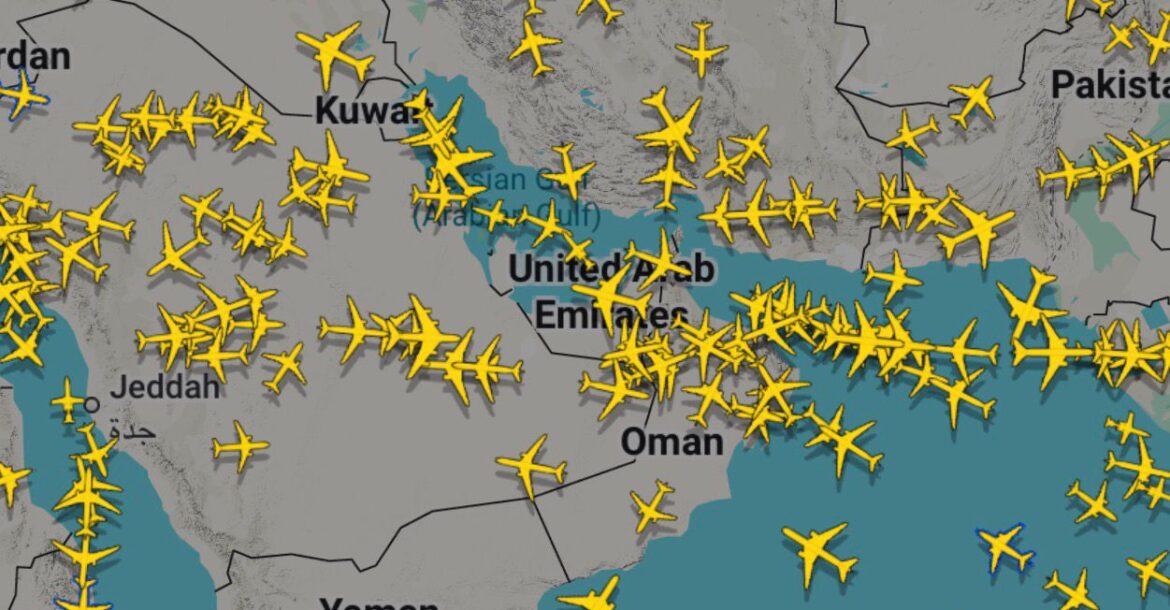
In 2025, Oman’s airspace handled 585,357 aircraft, contributing to a total air traffic of 643,069 flights, while 15.2 million passengers travelled through Omani airports. Daily, approximately 2,000 flights cross the Sultanate’s airspace, underscoring Oman’s strategic location as a key corridor connecting Asia, Europe, and Africa.
Financially, the CAA recorded OMR 107 million in revenues, the highest in its history, reflecting sustainable growth and enhanced efficiency. The authority also focused on workforce development, hiring 101 Omani nationals and providing training to 139 university students.
Infrastructure development remains a priority, with the Aircraft Maintenance Building at Muscat International Airport inaugurated and the Sohar Airport terminal construction tender launched, aiming to expand passenger capacity and improve service quality in northern Oman.





