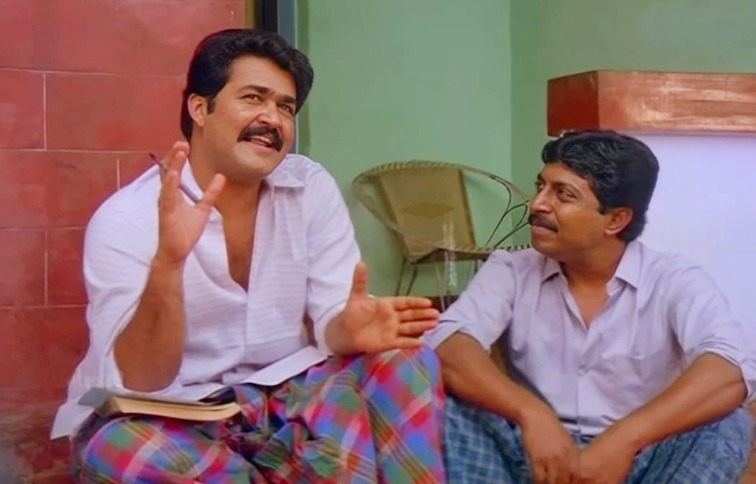

In a cinema culture often drawn to spectacle and heroism, Sreenivasan chose a different path. He wrote about awkward men, fragile egos, moral compromises and social hypocrisies. He acted as the neighbour you recognised, the colleague you argued with, the relative who annoyed you, and the friend who made you laugh before making you think. With his passing at 69, Malayalam cinema loses not just an artist, but a conscience.
Part of our childhood, part of our lives
For generations of Malayalis, Sreenivasan was not merely a screen presence he was a constant companion through childhood and youth. His films played endlessly on television during school holidays, family gatherings and quiet afternoons at home. Long before we understood politics, patriarchy or social hypocrisy, we understood his humour. We laughed at his characters without realising that we were also learning to question the world around us.
From crowded living rooms to flickering television sets, from Doordarshan evenings to cassette-recorded films replayed countless times, Sreenivasan grew up with us. His characters felt familiar because they were drawn from the same households, anxieties and conversations we witnessed every day. He didn’t belong only to cinema he belonged to memory.
Read More
A storyteller rooted in the ordinary
Sreenivasan’s genius lay in his ability to extract drama from the everyday. His worlds were populated by middle-class homes, rented rooms, struggling migrants, insecure husbands, failed dreamers and politically confused citizens. These were not side characters they were the story.
In films like Nadodikkattu, beneath the laughter and chaos, lay a sharp portrait of economic desperation, migration dreams and the quiet dignity of survival. What appeared as comedy carried the ache of aspiration and failure themes that resonated deeply with ordinary lives.
His writing dismantled false respectability. Marriage was not sacred by default. Politics was not noble by design. Masculinity was often insecure, sometimes absurd and frequently damaging. Yet his critique was never cruel. It was layered with empathy, irony and a deep understanding of human weakness.
The writer who changed the language of satire
As a screenwriter, Sreenivasan reshaped Malayalam cinema’s relationship with satire. Films like Sandesham didn’t merely mock politics they exposed how ideology becomes performance, how morality bends under convenience, and how loud convictions often conceal empty ethics. It remains one of Indian cinema’s sharpest political commentaries, still relevant decades later.
Vadakkunokkiyantram and Chinthavishtayaya Shyamala explored male insecurity and emotional immaturity long before such conversations entered mainstream discourse. His scripts trusted the audience. Jokes carried consequences. Silences carried meaning. And laughter often arrived with discomfort.
The actor who perfected understatement
On screen, Sreenivasan rejected grand gestures. His performances were restrained, conversational and profoundly real. Whether playing the perpetually conflicted husband, the sharp-tongued friend, or the weary intellectual, he brought dignity to characters cinema often ignored.
He didn’t need heroic arcs. His characters endured, compromised and adapted much like real people do.
The director with moral urgency
As a director, Sreenivasan was selective but uncompromising. His films were intimate, uncomfortable and honest, driven not by spectacle but by ethical urgency and emotional truth.
A voice that refused to soften
Even in later years, as health challenges mounted, Sreenivasan remained outspoken questioning blind faith, political convenience and social doublespeak. He was often controversial, sometimes misunderstood, but never insincere. He believed cinema and culture must disturb complacency.
That refusal to soften truth for comfort defined him.
A legacy that endures
Sreenivasan leaves behind a body of work that continues to educate, entertain and provoke. His influence lives on in generations of filmmakers who value writing, realism and moral inquiry.
Malayalam cinema will evolve. Styles will change. Technology will advance.
But artists who grow up with an entire generation who become part of childhood, memory and moral awakening are rare.
Sreenivasan made us laugh.
He made us uncomfortable.
He made us think.
And in doing so, he ensured that cinema was never just entertainment but a quiet, enduring act of social honesty.





