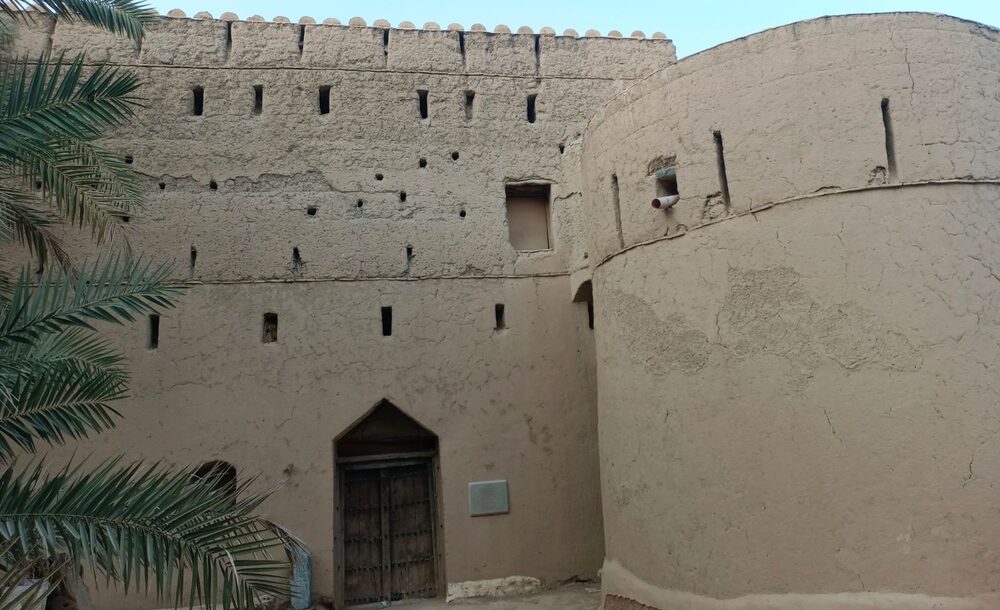

Bait Al-Oud, or the House of Oud, is not merely a structure; it is a living archive of Oman’s heritage, a perfume of memory rising from South Al-Batinah’s rugged heart. Today, it welcomes curious travellers, history lovers, and wanderers seeking the romance of a past that still breathes.
Over the last year alone, from October 2024 to the end of October 2025, more than 1,000 visitors of various nationalities stepped through its Allan-wood doors, drawn by its story, its scenery, and its soul. And according to one of the house’s owners and its supervisor, Humaid bin Rashid bin Humaid Al Rajhi, this is just the beginning. The winter season, he believes, will bring an even stronger visitor wave as local tourism companies begin promoting the house alongside guided hikes through nearby Wadi Al-Himli.
But to understand why Bait Al-Oud captivates so many, you need to step into its past.
Read More
Founded at the end of the Ya’ariba State and the beginning of the Al-Bu Said era by Sheikh Rashid bin Khamis Al-Rajhi, who passed away in 1188 AH, the House of Oud was built as a defensive fortification. Its strategic layout, square architecture, two opposite towers (one of which was lost to time), and carefully engineered shooting holes, reflects a period when every structure had a purpose beyond shelter.
Inside, the house reveals five main rooms, a corridor, and a rooftop chamber. Honey-drop installations, an ancient defensive mechanism, still hint at Oman’s ingenious architectural heritage. The walls, thick and self-contained, have outlasted centuries, weathering shifts in politics, climate, and human history.
The house has been restored several times across generations, with the most recent renovation completed in the traditional Omani style and inaugurated on 15 December 2018 under the patronage of His Highness Sayyid Malik bin Shihab bin Tariq Al Said. Today, the house serves as a charming archaeological exhibit holding old manuscripts, Saadiyya artefacts, traditional household items, doors, and documents, some of which record details of its own restorations written by Ahl al-Bayt.
While the House of Oud stands as a sentinel of memory, its beauty is magnified by the surrounding landscape of Wadi Al-Himli in the Wilayat of Rustaq. One of South Al-Batinah’s most alluring natural escapes, Wadi Al-Himli is a place where nature and history intertwine seamlessly: rock inscriptions carved by ancient hands, palm-shadowed water ponds, farming paths, and villages branching like tributaries, Hail Al-Ghafa, Al-Qarya, Al-Himli, Al-Gharwa, Hail Al-Majaz, and Al-Buwaireq.
According to Dr. Al-Muatasem bin Nasser Al-Hilali, Director of Heritage and Tourism in the governorate, Wadi Al-Himli harbours some of Oman’s most fascinating archaeological narratives. Ancient stone inscriptions depict scenes of hunting and transport, while newer carvings, dating back as early as the 9th century AH, add another layer to this natural museum.
Adventure enthusiasts often take the old 6-kilometre walkway through the valley, passing traditional lanes, shaded oases, and rugged rock formations.
The trail includes several rest spots, including the iconic Hamsan Caves, which once offered respite to farmers during harvest seasons. Much of the valley’s life springs from its falaj systems, Al-Qarya, Al-Khutwa, Hail Al-Ghafa, Al-Gharwa, Hawail Al-Majaz, Al-Buwairiq, each one a lifeline for farms and families.
In the middle of this valley tapestry, Bait Al-Oud complements the natural beauty with cultural depth. The house now includes a mini-exhibition showcasing local crafts, old Omani weapons, and features of traditional domestic life. Villagers have worked tirelessly to preserve it, knowing that such places are neither museums nor monuments.
Visitors can experience stories carved into plaster and stone. They walk through the same corridors once used by tribes defending their homes. They feel the cool shadow of walls built with intention, wisdom, and survival in mind.
The increasing number of visitors proves that travellers now seek experiences rooted in meaning. Bait Al-Oud’s revival blends history with hospitality, culture with community pride, and nostalgia with modern tourism. It is a reminder that Oman’s most powerful stories live not only in forts and palaces but in the intimate spaces that once housed families, protected livelihoods, and watched centuries pass.
Whether you’re a history lover, an adventure seeker, or a traveller in search of places that linger long after you leave, the House of Oud and Wadi Al-Himli offer a rare combination: untouched nature, deep heritage, and a sense of connection that transcends time.





