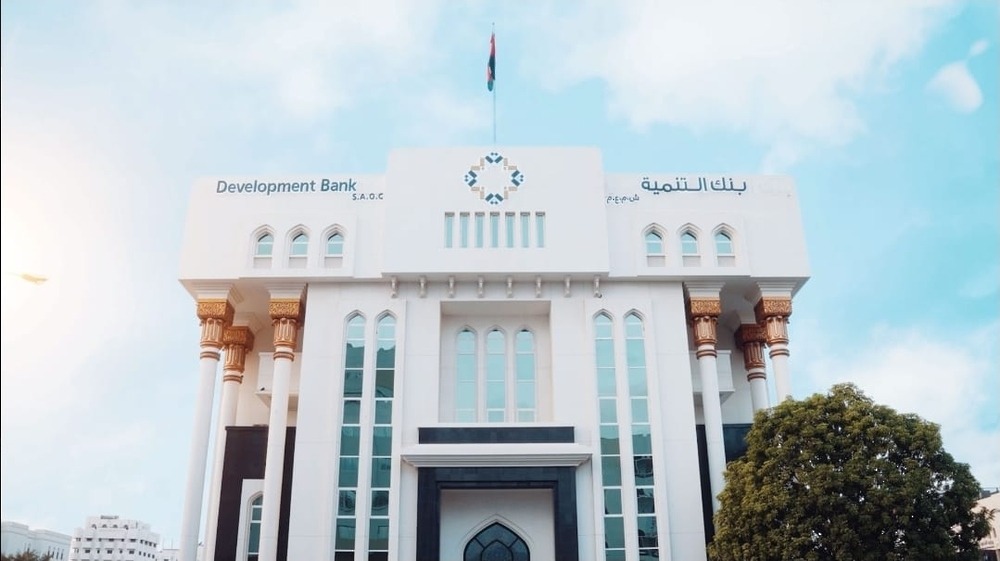

MUSCAT – The bank has financed more than 20,000 small projects in various production and service sectors, distributed across all governorates of the Sultanate of Oman, reflecting the developmental balance among all governorates.
This achievement underscores the government’s commitment to empowering small enterprises, in line with directives from the Ministry of Finance and the broader objectives of Oman Vision 2040, which places human capital at the centre of sustainable development.
The Ministry of Finance plays a critical role in enabling the Bank’s mission. This includes supporting the establishment of the bank as a national financing arm for development, steering financing policies toward priority segments, and subsidising interest costs for individuals fully dedicated to running their businesses.
Read More
- Oman, Angola call for immediate ceasefires in conflicts across Middle East, Africa and Eastern Europe
- Angola President hails African Bank of Oman as milestone in growing economic partnership
- Oman, Angola sign five agreements and eight MoUs during His Majesty’s State Visit
- His Majesty Sultan Haitham concludes two-day State Visit to Angola
- His Majesty Sultan Haitham, Angola President exchange commemorative gifts
According to ODB data, the micro-enterprise portfolio is distributed across key economic sectors. These include fisheries sector with 8,761 loans, worth approximately Ro 38.5 million; agriculture and livestock sector with 3,805 loans, representing 19 percent of the total portfolio; and the crafts sector with 2,898 loans, representing 10 percent of the total financing.
These sectors are prioritised due to their vital role in achieving national food security and their deep-rooted cultural and economic significance, particularly in rural and coastal communities.
His Excellency Mahmoud bin Abdullah Al-Owaini, Chairman of the Board of Directors at the Development Bank, explained that the government attaches great importance to small enterprises as an effective tool in promoting economic and social development, and a means of empowering citizens and achieving stability for families.
He further noted that the Development Bank is fully prepared to continue expanding support for small businesses, with an aim to double financing figures in the near future. He highlighted the importance of providing targeted support to youth, women, and other priority groups looking to build their professional futures.
The Development Bank offers a range of flexible financing models tailored to different types of entrepreneurs: interest-free loans of up to RO 15,000 for full-time entrepreneurs (90 percent of project cost), comprising 68 percent of the portfolio; loans at 3 percent interest for part-time entrepreneurs (up to 80 percent of project cost), representing 32 percent of the portfolio; working capital loans of up to 20 percent of the project value; and flexible grace periods based on project type and cash flow.
In response to evolving needs, the bank has implemented a full digital transformation of its operations. Entrepreneurs can now apply for and track their loan applications online, improving access to funding and reducing processing times.
This digital shift has contributed significantly to the acceleration of loan growth and enhanced service delivery, particularly for remote areas.
The bank’s programs have had far-reaching economic and social impacts. These include empowering women and housewives to establish their own businesses; supporting youth and graduates to build their professional ventures; providing sources of income for retirees and job seekers; creating direct and indirect job opportunities in various states; and increasing local production in non-oil sectors.
The Development Bank believes that integration between various government, private, and community entities is the foundation for achieving effective and sustainable empowerment of this segment through an integrated enabling environment.





