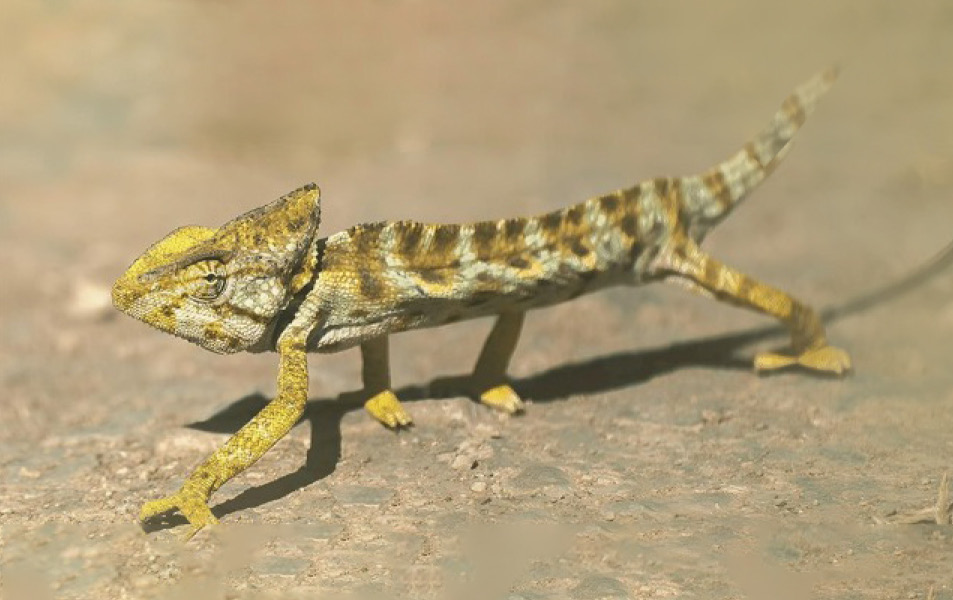

MUSCAT – In a statement highlighting the importance of biodiversity, the Authority described the Arabian chameleon as a vital part of Oman’s natural heritage, one that harmoniously blends into its lush surroundings, yet remains vulnerable due to human interference.
“The Arabian Chameleon is an important part of biodiversity; we must protect it and preserve its environment, and we remind you that hunting, harming, or relocating any living creature from its natural habitat is strictly prohibited,” it stated.
Although not globally endangered, the species is at risk locally, prompting the Environment Authority to reinforce its ban on capturing, harming, or transporting the Arabian chameleon, or any wildlife, from its natural habitat. Violations of this regulation are considered a breach of the Environmental Protection and Pollution Control Law, and offenders will face legal consequences.
Read More
- Regional conflicts disrupt trade, Oman transport minister urges supply chain investment
- Taxi drivers call for fare review in Oman as low app prices squeeze earnings
- Oman hosts maritime forum to strengthen global trade and supply chains
- Oman’s Energy Minister HE Salim Al Aufi to preside over sixth TAS Conclave
- OQ commits RO20 million to build flagship Youth Centre in Muscat
Explaining about this distinctive species, the Authority highlighted its distinguishing features as follows:
• Eyes capable of moving 360 degrees
• A long, sticky tongue used to catch prey
• Pincer-like limbs for grasping branches
• A prehensile tail for balance and clinging
• The ability to change colour to camouflage, communicate, regulate body temperature, or express emotions such as fear or anger
• A slow, deliberate movement pattern that mimics the swaying of leaves to enhance concealment
The species primarily feeds on insects such as grasshoppers, flies, beetles, and spiders, as well as some small plants and fruits. Female chameleons lay their eggs in moist soil, where they incubate for six to twelve months.
The Arabian chameleon can be found in forests, agricultural lands, parks, and even urban areas. Its survival, however, depends on the protection of its natural ecosystem.





