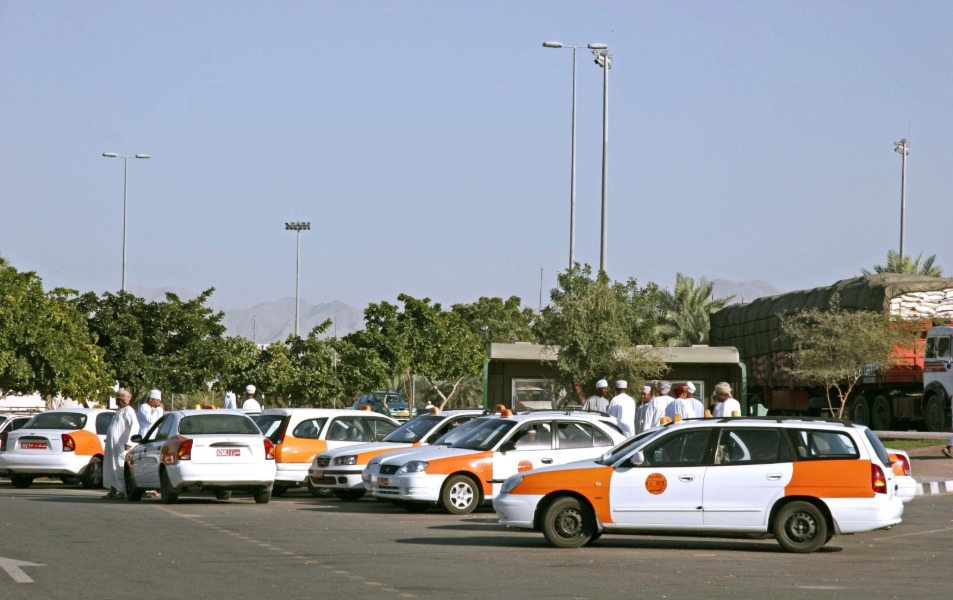

MUSCAT : Taxi drivers in Oman are calling for a review of fares charged through ride-booking platforms, saying low starting prices, operator commissions and vehicle expenses are making it difficult to earn a sustainable income.
Taxi driver Mohammed Sulaiman Al Harrasi, outlining concerns he said were shared by colleagues, urged the Ministry of Transport, Communications and Information Technology to bring drivers and operators together to discuss a pricing structure that balances affordable travel with drivers’ operating costs.
In an interview with Al Wisal, Al Harrasi said some operators offered starting fares of just 500 baisas, while others began at about 770 baisas. Such prices, he argued, left drivers struggling to cover fuel, maintenance, vehicle inspections and other expenses.
Read More
- Oman hosts maritime forum to strengthen global trade and supply chains
- Oman’s Energy Minister HE Salim Al Aufi to preside over sixth TAS Conclave
- OQ commits RO20 million to build flagship Youth Centre in Muscat
- Oman sets December dates for fourth-term municipal council elections
- Oman adds three historic forts to Arab architectural heritage register
Some drivers worked from 6am until 9pm to generate sufficient income, he said, with operators deducting about 16% from the value of each journey in some cases.
The more pressing concern, however, was the starting fare itself.
Al Harrasi said the base fare with some operators covered journeys of up to five kilometres. He suggested that an appropriate charge for that distance would be at least RO2, potentially rising to RO2.500.
He said fares below RO1 provided little room to meet operating expenses once the operator’s share was deducted.
According to his account, some operators charged about 80 to 90 baisas for each additional kilometre. A journey of roughly 30 kilometres from Al Maabela to Al Khuwair could generate between RO2.500 and RO3, and sometimes up to RO4, he said.
The prices cited reflect his account of fares offered by different operators.
The distance travelled to collect passengers added to the financial pressure. A driver could travel five kilometres to reach a customer before completing a five-kilometre booking, effectively covering 10 kilometres while receiving payment for only the passenger’s journey, Al Harrasi said.
Some longer bookings were also financially unattractive when the cost of reaching the pickup point was taken into account, he added.
Al Harrasi attributed differences in operators’ fares to competition for customers, saying drivers were bearing the impact of efforts to offer cheaper journeys.
He called for fares to be reviewed before operator commissions, arguing that a higher starting price was essential to making the work financially viable.
Drivers had sought to raise their concerns with the authorities through direct approaches, complaints on the Tajawob platform and social media, he said. Attempts to boycott some operators had produced limited results because participation was uneven.
Al Harrasi urged the transport ministry to arrange a direct meeting with drivers and operators, saying those working daily on the roads should have a role in discussions affecting their earnings.
The pressure extended beyond finances, he said. Long working hours meant some drivers left home before their children woke up and returned after they had gone to sleep.
He also described fatigue, physical discomfort and stress among colleagues as they tried to balance household needs with the demands of remaining on the road for extended periods.
Al Harrasi said the objective was a fare structure that remained fair to passengers while covering drivers’ expenses and providing a reasonable income.
For all the latest news from Oman and GCC, follow us on Twitter, Instagram and LinkedIn, like us on Facebook and subscribe to our YouTube page, which is updated daily.





