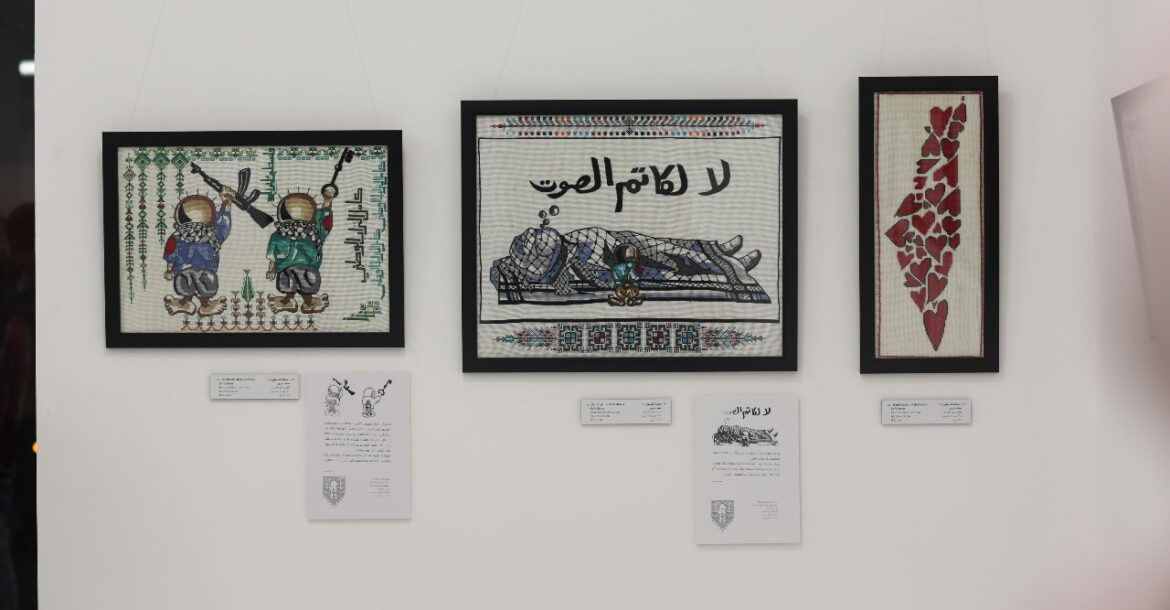

Muscat: This unique showcase intertwines the legacy of Palestinian cartoonist Naji Al Ali with the intricate embroidery of artist Safaa Surour, celebrating both the historical and political significance of Palestinian art.
The exhibition juxtaposes Al Ali’s bold, realistic cartoons with Surour’s meticulous embroidery, offering a multifaceted exploration of Palestinian identity and resistance. Al Ali, one of the most prominent Palestinian artists (1938–1987), is best known for his creation of Hanthala, the barefoot child who stands as a symbol of protest and hope. Hanthala first appeared in a Kuwaiti newspaper in 1969 and became synonymous with Al Ali’s work, embodying the silent resistance of Palestinians against occupation.
Safaa Surour’s embroidery complements Al Ali’s powerful imagery by spotlighting the artistry and resilience of Palestinian women. Her intricate creations, steeped in centuries of tradition, connect the past to the present, symbolizing steadfastness and the preservation of cultural identity.
Read More
- Oman expects to exceed 60,000 job opportunities in 2026, Labour Ministry says
- 17 expats arrested in Khasab and Dibba for illegal entry into Oman
- Expat arrested in Oman’s Al Dhahirah oil concession area for illegal tobacco trafficking
- Oman appeal court overturns Sohar Flour Mills bankruptcy ruling, records settlement
- Oman reduces prices of 290 medicines by up to 88%, easing costs for patients
Bait Al Zubair Foundation expressed its pride in hosting the exhibition, noting that Al Ali’s work represents more than art; it is a “window into the suffering of his people and their ongoing struggle.” With over 40,000 cartoons to his name, Al Ali’s sharp critiques have left a lasting impact, fostering social and intellectual awareness among supporters of the Palestinian cause.
The exhibition serves as a form of solidarity with Palestine, introducing Oman’s audience to Al Ali’s profound legacy and Surour’s craft. It also aims to deepen connections with the artist’s family and revive Palestinian art within the Sultanate’s cultural landscape.





