
MUSCAT: Oman expects to exceed its target of providing 60,000 job opportunities in 2026 after achieving more than 95% of its annual employment goal, according to a top Labour Ministry official.
Ammar bin Salem Al Saadi, a director-general and the ministry’s spokesperson for labour affairs, said progress had been driven by direct recruitment, training linked to employment and on-the-job training, alongside efforts to better match Omani jobseekers with vacancies.
The ministry had recorded 53,525 job opportunities by the end of September, equivalent to about 89% of its annual target. That proportion exceeded 95% by the end of November, he said during the station’s “Midday Hour” programme.
Read More
- 17 expats arrested in Khasab and Dibba for illegal entry into Oman
- Expat arrested in Oman’s Al Dhahirah oil concession area for illegal tobacco trafficking
- Oman appeal court overturns Sohar Flour Mills bankruptcy ruling, records settlement
- Oman reduces prices of 290 medicines by up to 88%, easing costs for patients
- Expat workers in Oman welcome savings scheme, citing concerns over unpaid gratuity
Al Saadi said the results put the ministry on course to surpass its full-year target, with the remaining work focused on private-sector recruitment, expanding employment-linked training and improving the placement of jobseekers.
Funding allocated to training has been increased to RO100 million to help prepare Omanis for roles employers need to fill, he said.
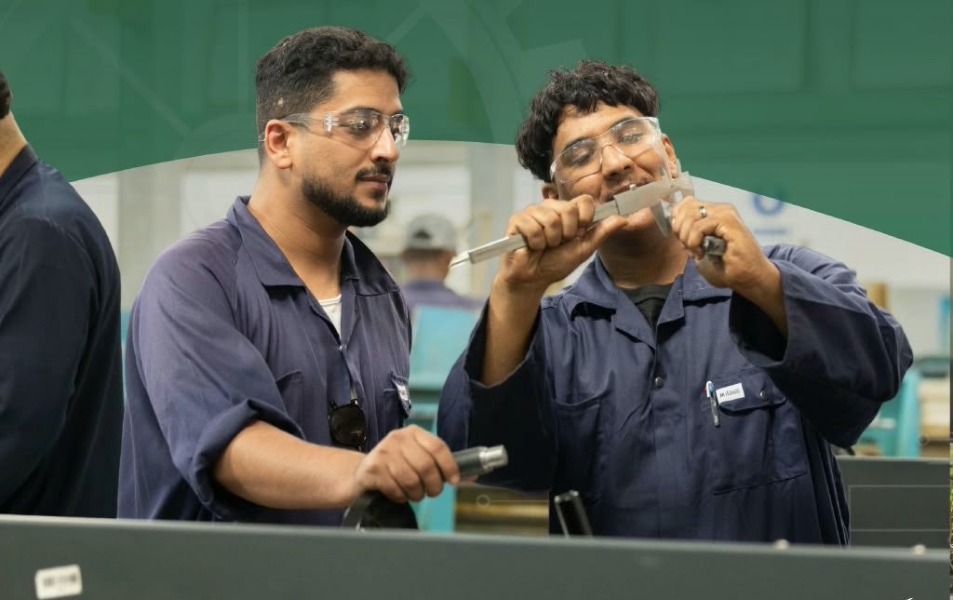
Under the employment-linked training programme, a specific role is identified at a participating organisation before training is designed to equip a jobseeker with the technical knowledge and practical skills needed to take it up.
Al Saadi said this approach aimed to ensure training led directly to employment rather than providing general instruction without a corresponding vacancy. The ministry had achieved more than 74% of the target for this programme during the reporting period, he added.
The private sector was central to the employment plan, both as a source of jobs and as a partner in identifying future workforce requirements, Al Saadi said.
Cooperation with employers begins before vacancies are advertised, allowing the ministry to assess the qualifications and skills businesses require and match them with jobseekers’ backgrounds.
It also extends to developing training programmes tailored to individual employers, with the aim of improving job suitability and retention.
Al Saadi attributed progress to coordination between government bodies, sectoral committees, private companies, the Oman Chamber of Commerce and Industry, and the General Federation of Oman Workers.
He said the effectiveness of the employment plan would be assessed through job sustainability, employment stability and Omanis’ participation in different sectors, as well as the number of opportunities provided.
The ministry is also using labour market data and indicators of supply and demand to anticipate changes in recruitment needs as economic and technological developments reshape jobs.
Coordination with employers, economic sectors and education and training institutions is intended to identify growing demand for particular specialisations and address skills shortages before they become barriers to recruitment.
Al Saadi said the ministry wanted to move towards anticipating workforce needs, allowing Omanis to prepare for emerging roles rather than waiting for vacancies to arise.
Priorities for the remainder of 2026 include delivering outstanding opportunities under the national employment plan, strengthening private-sector recruitment and improving monitoring of employment programmes.
The ministry will use both numerical results and measures of job quality to assess performance and identify areas for improvement, he said.
For all the latest news from Oman and GCC, follow us on Twitter, Instagram and LinkedIn, like us on Facebook and subscribe to our YouTube page, which is updated daily.





