
The Total-Body Reconstruction Plan’s central tenet is the mind-muscle connection.
This comprehensive guide will help you create a successful at-home workout routine this
year.
1) Determine Your Objectives
Identifying your fitness objectives is essential before beginning any exercise program.
Whether your goals are to increase general fitness, increase muscle mass, increase
flexibility, or reduce weight, establishing specific goals can help you stay motivated and
make smart exercise decisions.
2) Evaluate Your Area
A benefit of working out from home is that you can work out wherever it’s convenient.
Examine the area that you have in your house, taking into account things like:
Go for a level, non-slip flooring option. Certain activities may be OK in carpeted
environments, but make sure you have enough room to move about comfortably.
Ventilation: To stay calm when working out, make sure the space is well aired.
Equipment Storage: Set aside a location to keep your exercise gear, ensuring it’s
conveniently accessible and out of the way.
3) Select Your Gear
While you may work out effectively with many different types of equipment, adding a few
simple items to your program can give it more variation and intensity. Think about making an
investment in:
Dumbbells: Adjustable dumbbells are flexible and let you change the weight for various
workouts.
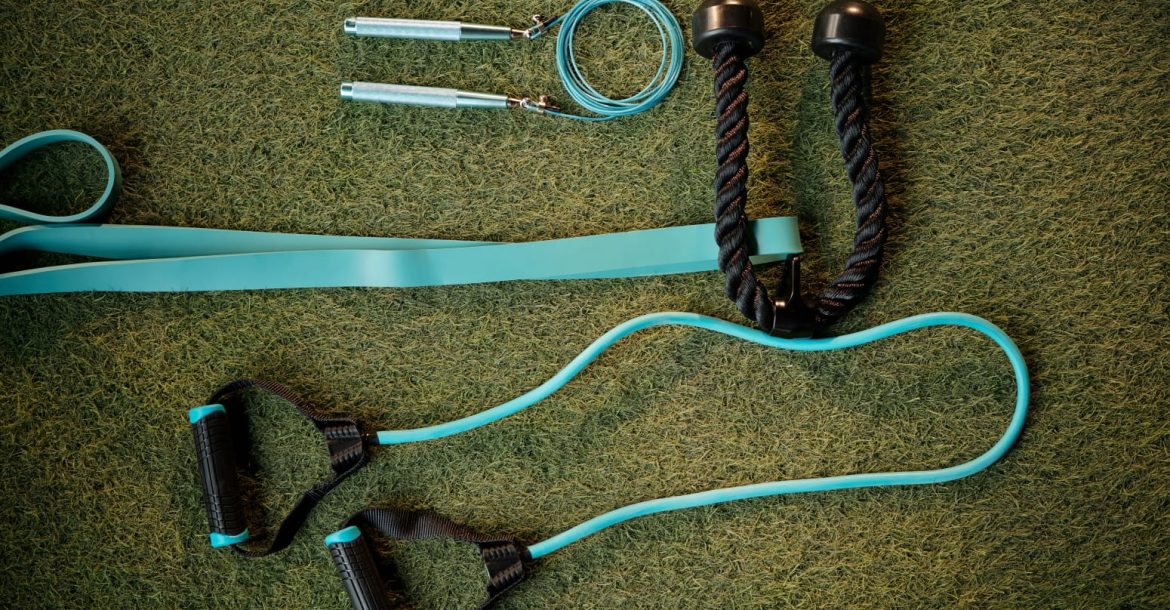
Resistance bands: These are great for strength training since they efficiently target particular
muscle areas.
Yoga Mat: Great for yoga poses, stretching exercises, and floor work.
Cardio Equipment: For cardiovascular exercises, think about using a treadmill, stationary
bike, or jump rope if your space and finances permit.
4) Create a Workout Schedule
You can achieve goals and remain consistent with a structured fitness program. Here’s a
fundamental framework to think about:
Warm-up (5–10 minutes): To prepare your body for activity and avoid injuries, begin with
dynamic stretches or gentle cardio.
Exercise for Strength (20–30 minutes): Include movements that work the main muscles in
your body, such as lunges, rows, push-ups, and squats. Use the equipment of your choice to
adjust the resistance and intensity.
Cardiovascular Exercise: To raise your heart rate and burn calories, try burpees, high knees,
running in place, or utilising your preferred cardio equipment for 20 to 30 minutes.
Ten to fifteen minutes of flexibility and cool-down: Stretches focusing on your main muscle
groups will help you loosen up and recover from your workout.
5) Remain Motivated and Involved
Sustaining motivation is critical to long-term achievement. Here are some pointers to make
your workouts exciting and fun:
Variety: To keep your body challenged and avoid monotony, switch up your workouts,
routines, and fitness methods.
Set Milestones: To monitor your progress and maintain motivation, set short- and long-term
goals and mark significant events along the route.
Enroll in virtual programs: Investigate online exercise platforms that provide a range of
programs taught by qualified teachers who give support, inspiration, and a feeling of
community.
Include Friends or Family: Motivate your loved ones to participate in your exercises with you
or set up friendly challenges to promote mutual support and responsibility.
6) Make rest and recuperation your number one concern
To maximise performance, avoid injuries, and maintain long-term adherence, you must
include rest and recuperation in your program. Here’s how you should order your recovery:
Rest Days: Schedule rest days into your weekly routine to give your muscles time to repair
and regenerate.
Active Recovery: On days off, take part in low-intensity exercises like foam rolling, mild yoga,
or walking to increase blood flow and reduce muscle pain.
Aim for 7–8 hours of sound sleep every night to promote hormone balance, muscle
restoration, and general well-being
Read More
- Oman lays foundation stone for genome centre costing more than RO 4.2 million
- Nearly 60% of high blood pressure cases go undiagnosed, Oxford study finds
- ADHD: An emerging discussion on a shared disorder
- Matcha Mania: Is the green drink really as healthy as it seems?
- Oman marks World Health Day, highlights commitment to health innovation and digital transformation





