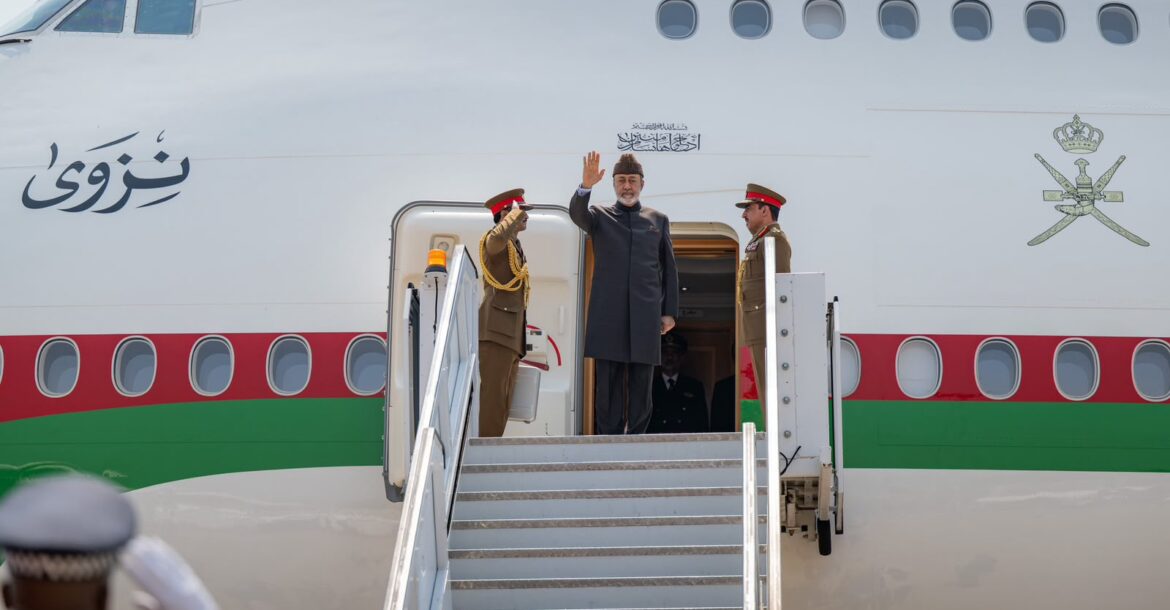

MUSCAT — His Majesty Sultan Haitham bin Tarik left Oman on Monday for a state visit to the United Kingdom at the invitation of King Charles III, with talks set to focus on expanding bilateral cooperation and regional and international developments.
The visit underscores the longstanding relationship between the two countries and their efforts to deepen cooperation in investment, trade, defence, clean energy, technology and education.
His Majesty is accompanied by a high-level official delegation that includes His Highness Sayyid Shihab bin Tarik Al Said, Deputy Prime Minister for Defence Affairs, and His Highness Sayyid Theyazin bin Haitham Al Said, Deputy Prime Minister for Economic Affairs.
Read More
- Oman Customs foils attempt to smuggle over 4kg of marijuana in postal parcel
- Bilarab bin Haitham Initiatives to host Muscat Art 2026 featuring over 300 artists
- HH Sayyid Theyazin to accompany His Majesty on UK state visit, his first since appointment as Deputy PM for Economic Affairs
- Tropical depression forms over Arabian Sea; no direct impact on Oman expected
- Consumer gets RO 1,500 refund after contractor dispute in Oman’s North Al Batinah
Other members include Foreign Minister Sayyid Badr bin Hamad Al Busaidi and Anwar bin Hilal Al Jabri, Minister of Commerce, Industry and Investment Promotion.
Economic ties form a substantial part of the relationship. British direct investment in Oman reached RO 16.8 billion by the end of June 2026, accounting for more than 52% of the Sultanate’s accumulated foreign direct investment, according to figures cited by Oman News Agency.
Bilateral trade totalled RO 387.9 million in the first seven months of 2026, surpassing the RO 384.7 million recorded for the whole of 2025.
Oman’s Ambassador to Britain, Badr bin Mohammed Al Mantheri, said ahead of the visit that both countries were seeking partnerships in clean energy, green hydrogen, technology, industry, financial services and tourism.
British Ambassador to Oman Liane Saunders said priorities included deepening economic and investment ties, modernising the defence relationship and expanding cooperation in education, skills, culture and heritage.
Regional security will also feature in discussions, including diplomatic efforts to ease tensions, maritime security and freedom of navigation.





