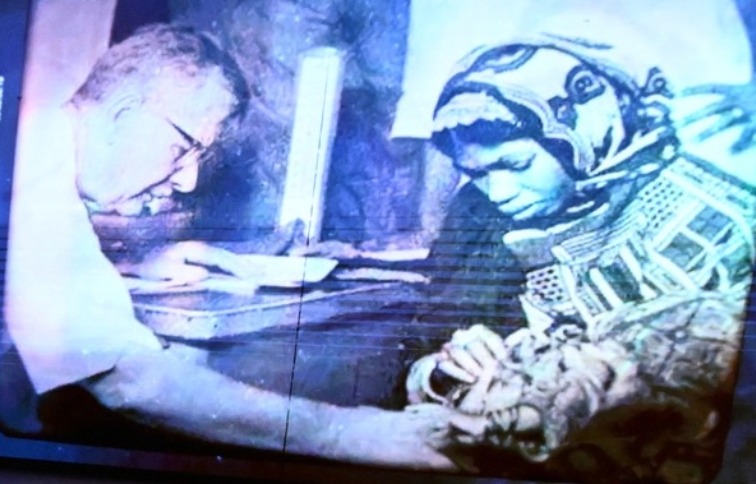

MUSCAT : His Excellency Dr. Abdullah Nasser Al Harrasi, Minister of Information, stated in a press release that the documentary Dakhtar Thoms emerges from the Ministry’s broader initiative to chronicle Omani history and illuminate the humanitarian and civilisational dimensions of Omani society. This is achieved through the creation of media and documentary works rendered with a contemporary vision and executed to modern production standards.
His Excellency Al Harrasi added that in recent years, the Ministry has cultivated a distinguished slate of documentary films and programmes, most notably the sweeping Beit Al Ajaib (House of Wonders) trilogy, the series Walana Athar, and other works devoted to safeguarding cultural heritage and national memory. These are brought before new generations and audiences across the Arab world and beyond in a compelling, contemporary visual language.
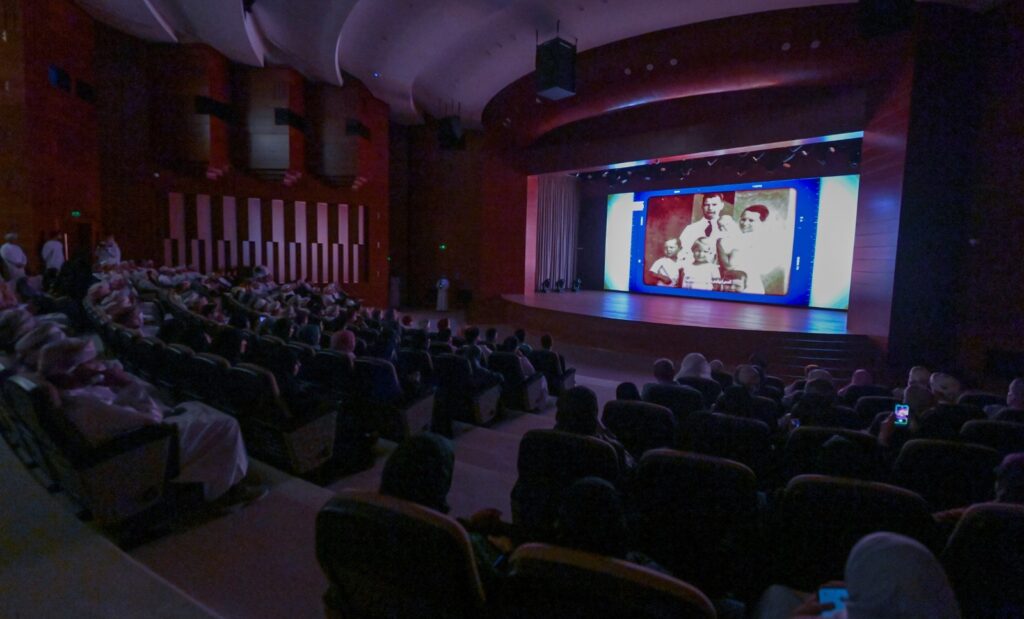
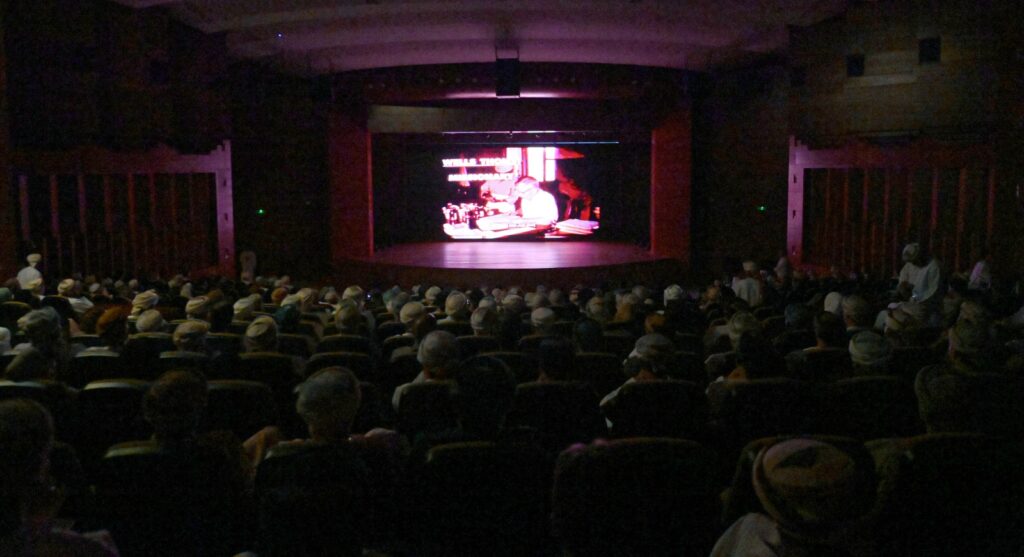
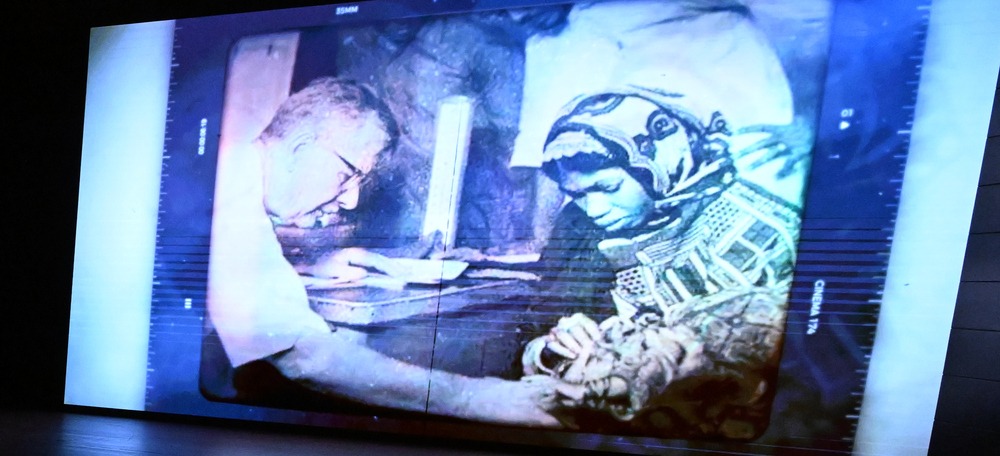
The Minister of Information noted that the film turns its lens on the figure of the American physician Dr. Wells Thoms — known with deep familiarity as ‘Dakhtar Thoms’ — whose humanitarian and medical legacy remains etched into Oman’s collective memory. The work traverses a formative chapter in the evolution of the Sultanate of Oman’s health services, weaving historical documentation with dramatic intimacy and profound human depth.
He added that the act of chronicling national history is a cornerstone of the Ministry of Information’s cultural and media mandate — a solemn undertaking that fortifies national consciousness, deepens Omani identity, and entrusts the nation’s memory intact to the generations yet to come.
A number of specialists in cultural and artistic affairs in the Sultanate of Oman confirmed that the Ministry of Information’s cinematic documentation of Dr. Thoms’s journey within a visual context constitutes a knowledge asset and a mirror reflecting institutional efforts in monitoring social and cultural transformations and reviewing visual archives. This enables current generations to learn about the important experiences achieved on the land of the Sultanate of Oman.
Omani film director Mohamed Ali Al Kindi said that the film Dakhtar Thoms’’ can be viewed as a model for the concept of a documentary that does not merely narrate a story, but rather reshapes awareness toward it. When a documentary film deals with a character or a social issue, it grants it a deep human space that transcends direct classification, revealing the details of daily life, anxieties, relationships, and cultural transformations that traditional media may not capture. Here lies the power of the documentary, as it makes the viewer live the experience rather than just hear about it.
He pointed out that a documentary film is capable of reflecting societal cultural diversity in a highly profound manner because it deals with culture as a living practice, not a theoretical slogan. It documents customs, dialects, clothing, patterns of thinking, and even the details of the place as living elements in building identity. Through these elements, the film’s vision and objectives are formed, as the documentary becomes a space for preserving cultural specificity and, at the same time, a window for dialogue with other cultures. Therefore, some documentary films turn into a humanitarian bridge linking societies, because they allow the other to see a human being who is different in terms of circumstances, yet shares the same dreams and common fears.
He emphasised that the role of documentary films in preserving community memory has become more important than ever, especially in light of the rapid transformations the world is witnessing. It resembles a living visual archive, but it does not only preserve facts; it also preserves emotions—namely, the way people lived those moments. Documentary films also contribute to enhancing cultural and historical communication between different generations, because they transmit human experience from one generation to another through the language of the image. New generations may not live through the major events that societies experienced, but through the documentary, they can get closer to their psychological and social details, and understand their impact on shaping collective identity.
He pointed out the importance of the Ministry of Information producing a dramatic documentary film about “Dakhtar Thoms” as a project that transcends the traditional artistic or documentary dimension to become a cultural, national, and humanitarian act that re-reads an important part of modern Omani memory. This type of work does not merely present a historical figure, but also documents a social and health phase experienced by Omani society during a time of major transitions before and after the modern Renaissance. Through the character of “Dakhtar Thoms,” one can evoke the image of the Omani person, the nature of daily life, health challenges, and the human relationships that were formed during that stage.
Dr. Sulaiman Umair Al Mahdhouri, a researcher in historical affairs, stated: “These works document prominent aspects of Omani history, including health history, which requires this type of documentation. It tells the story of a Physician, Dr. Thoms, who provided health and humanitarian services in Oman, especially during the first half of the twentieth century. This is an important period that marks the beginnings of the establishment of health services in the Sultanate of Oman.”
On his part, film director Mohammed Abdullah Al Ajmi said: “I believe that the documentary Dakhtar Thoms represents an important experience within the trajectory of the Omani film industry, especially in its approach to addressing topics related to human and social memory in the Sultanate of Oman. Such works add a cultural and cognitive dimension to local cinema because they do not merely rely on artistic narrative but also contribute to documenting stories and experiences that carry historical and human value for society.”
For all the latest news from Oman and GCC, follow us on Twitter, Instagram and LinkedIn, like us on Facebook and subscribe to our YouTube page, which is updated daily.
Read More
- Oman, Italy discuss tourism cooperation to boost visitor numbers
- Oman’s Urban October event draws over 60,000 visitors, records more than 230 deals
- Oman condemns Saudi airport attacks, urges restraint
- Oman convenes global experts to advance AI innovation in mental healthcare
- HH Sayyid Theyazin chairs International Financial Centre of Oman board meeting





