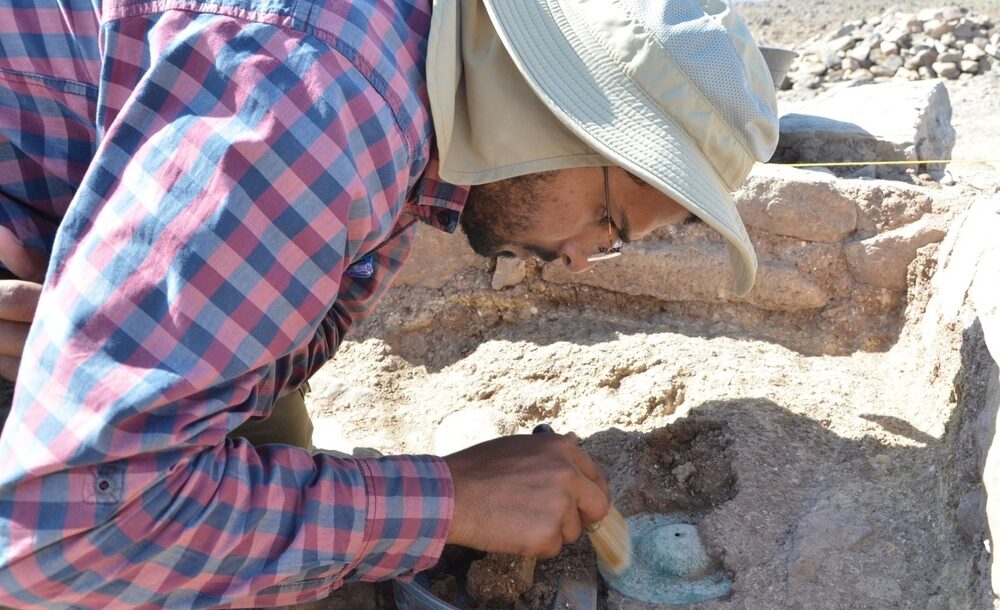

MUSCAT : The teams unearthed the oldest ever found in the Arabian Peninsula and the Levant at the Dahwa 7 site in the Wilayat of Saham, North Al Batinah Governorate.
The discovery, made during excavations on the outskirts of Wadi Al Sukhn, sheds new light on a thriving civilization that flourished between 2700 and 2000 BC. After lying hidden for over 4,000 years, the cymbals offer a rare glimpse into the religious and cultural life of Oman’s early inhabitants.
Archaeological evidence scattered across the surface suggests that Dahwa 7 was once a bustling settlement, with copper mining, agriculture—particularly date palm cultivation—and livestock breeding sustaining its economy. Excavations revealed a network of buildings, including an isolated temple structure perched on a high plateau, believed to be one of the oldest religious sites uncovered in Oman.
Read More
- Expat arrested for stealing vehicle after stopping to assist motorist in Oman
- Explained: Oman’s new law on combating cybercrime and what it means for you
- Oman-India CEPA comes into force, opening new opportunities for trade and investment: Ambassador
- Oman, Netherlands discuss regional peace and bilateral cooperation
- Oman condemns targeting of Kuwait, reaffirms support for security and stability
The temple’s architecture features a single rectangular room, a threshold entrance, and a stone table coated with yellow plaster, indicating its ritual significance. Notably, the copper cymbals were found within this ancient temple, reinforcing the link between music and religious ceremonies in early societies.
Geochemical analysis confirmed that the cymbals were crafted from local copper, likely sourced near Muscat. Similar instruments from the same era have been found in the Indus Valley city of Mohenjodaro and the Sumerian city of Ur, highlighting Oman’s historical ties not just in trade but also in cultural and religious exchanges with major civilizations.
The site also yielded large quantities of Indus Valley pottery, emphasizing close trade relations with the Harappan civilization. According to experts, the use of cymbals in religious rituals points to deep intellectual and spiritual connections between ancient Oman and the broader ancient world.
The significance of this discovery has been recognized internationally, with detailed findings recently published in the UK-based journal Antiquity.
For all the latest news from Oman and GCC, follow us on Twitter, Instagram and LinkedIn, like us on Facebook and subscribe to our YouTube page, which is updated daily.





