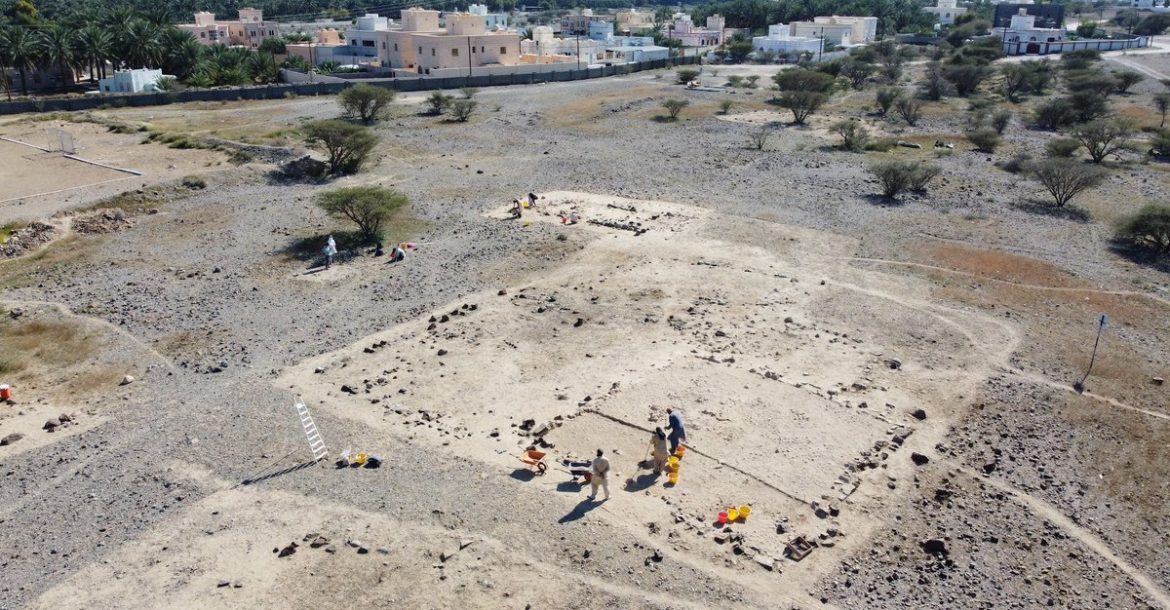
MUSCAT: Archaeological excavations in the Wilayat of Rustaq revealed a large and sophisticated settlement dating back more than four thousand years ago, and it includes a large number of huge buildings and burials.
The settlement was discovered in the Al-Tekha area, located on the outskirts of the Al-Hajar Mountains on the western bank of Wadi Al-Ghashab, near the confluence of Wadi Al-Sahtan with Wadi Al-Ghashab, by the joint archaeological mission between the Archeology Department of the College of Arts and Social Sciences at Sultan Qaboos University, represented by Dr. Khaled Douglas, and the University of Italian Pisa, represented by Dr. Sarah Pizzimenti, under the supervision of the Ministry of Heritage and Tourism.
The archaeological mission began excavating the site in the beginning of January, which is the first season of this mission, and there is a plan of action to follow up the research and excavation work at the site for several years in the future.
Read More
- Oman targets 30% local health manufacturing in three years and cut reliance on imports
- Oman and UK discuss bilateral ties, regional developments in Muscat
- Two expats arrested in Muscat over human trafficking, exploitation of woman
- Oman Meteorology issues thunderstorms, hail alert across Hajar Mountains and nearby areas
- Muscat Municipality urges safe use and disposal of detergents and pesticides
The results of the archaeological excavation showed that the site was inhabited for the first time in the third millennium BC during the Early Bronze Age, and represents one of the settlements of the Umm an-Nar culture, which witnessed a great and wide prosperity in the Sultanate of Oman.
The site represents a very large settlement that spread over a vast area of land more than 70 hectares, which makes the site one of the largest settlements of Umm Al Nar culture in the Sultanate of Oman.
A large number of residential buildings of various sizes were found in the centre of the settlement, in addition to a large number of circular burials spread on the western side of the settlement, the outer walls of which were elaborately built of white trimmed stones. A number of huge circular towers, some more than forty meters in diameter, were also discovered, built of mud bricks based on huge stone foundations that spread in different areas of the settlement.
The presence of public buildings and huge towers in the settlement indicates the importance of the cultural role played by the settlement during the Early Bronze Age, which may have represented a major and important cultural centre in the north of the Sultanate of Oman in general, and the Al Batinah Plain region in particular.
The pottery fragments and archaeological finds found by the excavation team indicate that the inhabitants of the settlement had close commercial relations with neighbouring civilisations such as the Harappan civilisation in the Indus Valley, and the civilisation of Mesopotamia.
The remains of copper furnaces that were found inside the settlement indicate that the population relied heavily on copper production, smelting, and trading in their economy. Copper mines from which copper was extracted have not yet been found, but the archaeological mission is seeking to search for it in the coming seasons.
In general, Al-Tekha is the first archaeological settlement to be excavated from the Early Bronze Age in the Governorate of South Al Batinah. Therefore, the site will be added to the tourist map of the Wilayat of Rustaq to give it a new cultural dimension that increases the wealth of the state in heritage and cultural sites.





