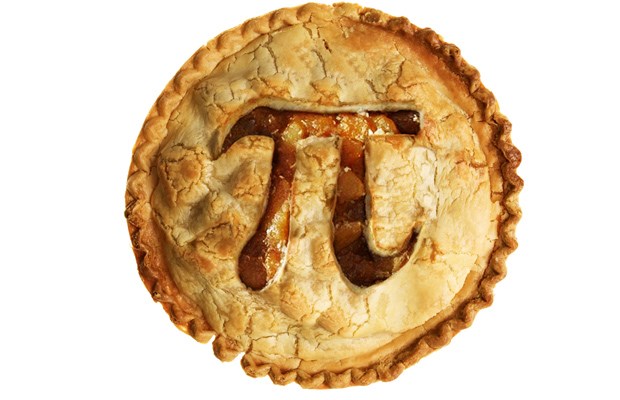
The 14th of March — or 3.14 in the US date format — is celebrated as Pi Day in the honour of the irrational number Pi (3.14) whose never-ending decimal representation does not settle into a permanent repetitive pattern.
The day was first celebrated as Pi Day in 1988 and was recognized as such in 2009 in the US.
Here are things you probably don’t know about Pi Day…
Read More
- IndiGo cancels Riyadh flights until October 31, 3 other Saudi routes until October 27 amid evolving security situation
- UAE closes all beaches in Umm Al Quwain after tanker oil spill detected
- Earthquake of Magnitude 7.0 Strikes Tibet; 16 Dead, 32 injured
- Nigeria reports first imported Ebola Bundibugyo case in Abuja: WHO
- US midterm voting begins in Texas as Democrats target historic gains
Origins of Pi
It is believed that the Babylonians between 1900-1680 BC were the first to approximate the value of π at around 3.
In 1650 BC, mathematicians in ancient Egypt calculated the value using a formula to be 3.1605.
In 287-212 BC, the first calculation by Archimedes was completed by using the Pythagorean theorem to be 3.142857.
Around the 5th century AD, Indian mathematics made a five-digit approximation and Chinese mathematics approximated π to seven digits, both using geometrical techniques.
The historically first exact formula for π, based on infinite series, was found in the 14th century- the Madhava–Leibniz series was discovered in Indian mathematics.
In the 20th and 21st centuries, mathematicians and computer scientists combined new approaches with powerful computers, extended the decimal representation of π to many trillions of digits after the decimal point.
22 trillion digits
In 2016, a Swiss scientist, Peter Trueb, used a computer with 24 hard drives and a program called y-cruncher to calculate pi to more than 22 trillion digits — the current world record for the enumeration of Pi. If you read one digit every second, it would take you just under 700,000 years to recite all those digits.
The first 50 decimal digits of Pi are 3.14159265358979323846264338327950288419716939937510…. Even a cursory glance shows the randomness of the digits!
World Record
At least since the 1970s, math geeks have competed informally to recite from memory as many digits of pi as possible. In 2015, Suresh Kumar Sharma, a former vegetable vendor from Jaipur, India (he’s now a memory coach), set a world record when he successfully recited more than 17,000 digits of pi — a feat that took 17 hours to complete.
The U.S. record is held by Mark Umile of suburban Philadelphia, who in 2007 recited more than 15,000 digits of pi.
Umile said he committed the digits to memory by writing them down and then reading them aloud into a voice recorder — and listening to the recording again and again. He said it was gratifying to use his “sliver of Asperger’s syndrome” — a condition he once viewed as debilitating — to mount “a successful endeavor that benefited my life and inspired others.”
The current Guinness World Record is held by Lu Chao of China, who, in 2005, recited a whopping 67,890 digits of pi!
Rounding off Pi
Though we know trillions of digits of pi, we don’t really need them. Even the engineers at NASA round pi off to 15 decimal places when calculating interplanetary trajectories. In fact, if you were trying to calculate the size of the observable universe, using 39 digits of pi would give you an answer off by no more than the width of a hydrogen atom.
Pi in books, movies
The protagonist of Carl Sagan’s 1985 novel “Contact,” astronomer Ellie Arroway, seeks evidence of extra-terrestrial civilizations by listening for signals from space — and later looks for hidden patterns in the digits of pi (the latter plotline was cut from the 1997 movie version).
Fans of the original “Star Trek” series might remember “Wolf in the Fold,” a 1967 episode in which Spock foils an evil computer by instructing it to compute pi to the last digit. And in Alfred Hitchcock’s 1966 Cold War thriller “Torn Curtain,” the secret network of agents that helps defectors escape the Soviet Bloc is codenamed “π.”





