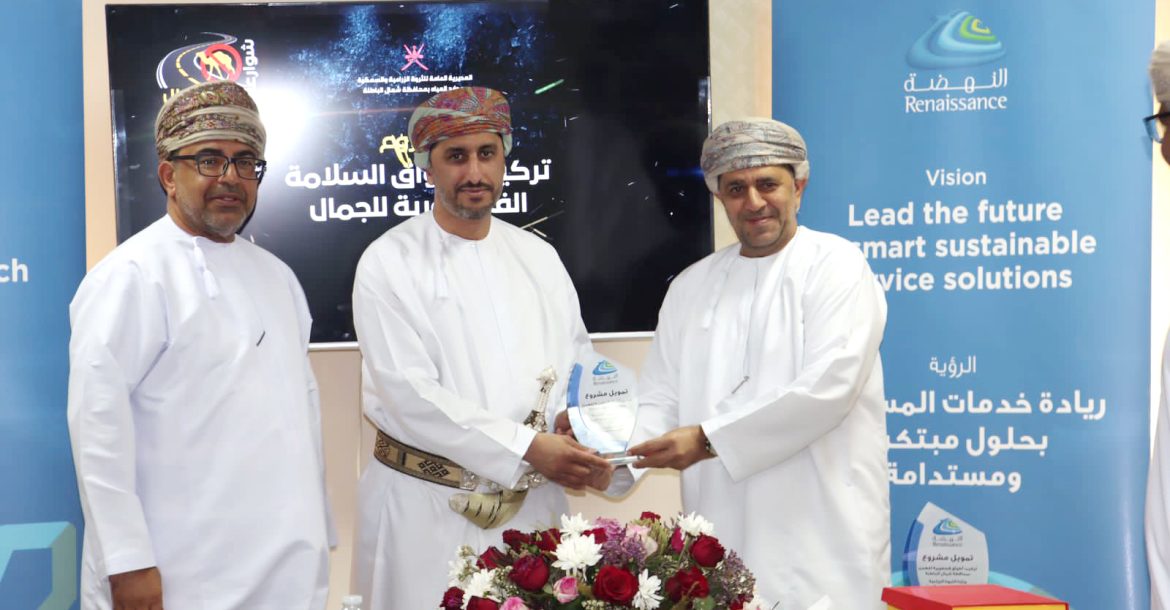

MUSCAT : Reiterating its commitment to create a positive local impact through its CSR initiatives, Renaissance has lent its full support to a project aimed at preventing road traffic accidents caused by stray camels and protecting motorists and this valued livestock from death and injury.
Renaissance has funded over 10,000 reflective collars for camels in North Batinah in recognition of the challenge faced by authorities to make camels visible in the dark. The project will be implemented in the wilayats of Shinas, Liwa, Sohar, Saham, Khabourah and Suwaiq. Besides reflective collars, the funds will be used to raise awareness among camel breeders and owners about the importance of this initiative.
Renaissance formalised this commitment with Eng Abdullah Al Hadabi, Director General for North Batinah in the Ministry of Agriculture, Fisheries and Water Resources at an event held on May 15, in the presence of H E Sheikh Mohammed Sulaiman Hamood Al Kindi, the Governor of North Batinah.
Read More
- Duqm Now explores customers abroad and suppliers at home
- Oman’s SOHAR Freezone ranks fourth globally, named Middle East’s best industrial zone for 2026
- Duqm forum explores AI for environmental monitoring and inspections
- Bank Muscat and Meethaq Islamic Banking celebrate new strategic partnerships with real estate developers to support urban development
- Dr Joy Alukkas announces ₹100 crore allocation to strengthen charitable initiatives
Khamis Al Balushi, Director General, Government Relations, Renaissance said, “At Renaissance, CSR is all about making a meaningful contribution to communities. We are proud and honoured to be part of this campaign which will contribute towards bringing down fatalities and injury to people and to camels.”
Road traffic accidents caused by stray camels have remained a growing concern. National Centre for Statistics and Information (NCSI) data for 2021 puts the number of accidents involving camels on the roads at 502. The same year, 11 people lost their lives and 45 were injured in related incidents, according to NCSI.





