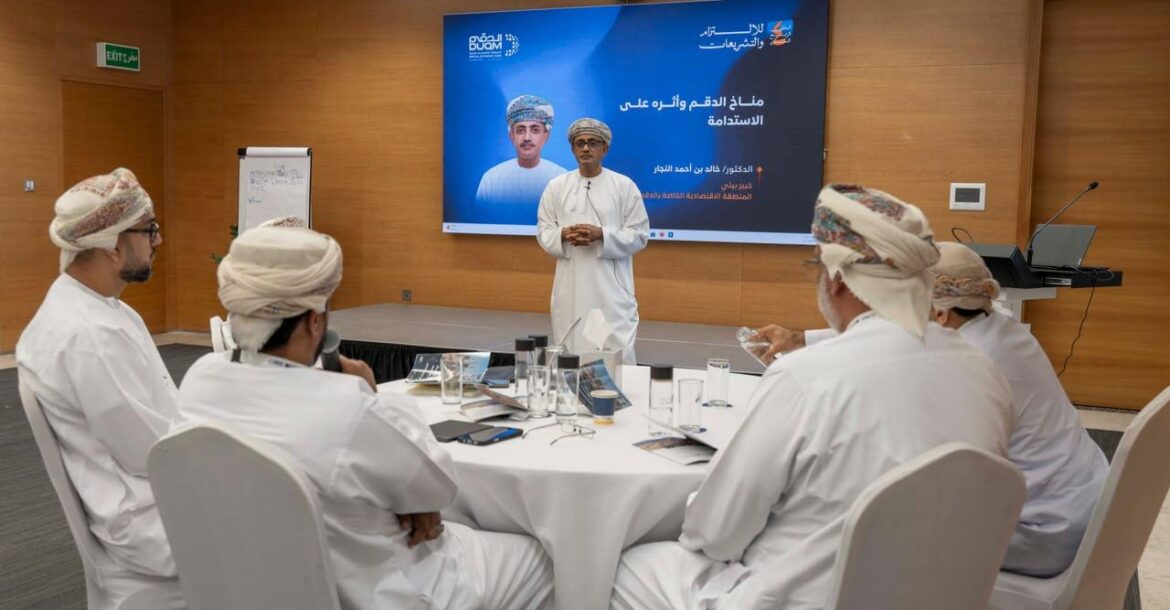

DUQM : Regulators and business representatives meeting in Duqm examined how artificial intelligence could help Oman’s economic zones detect environmental risks earlier and improve inspections, as part of a wider discussion on how to support industrial growth while protecting natural resources.
The Special Economic Zone at Duqm hosted the fourth Annual Compliance and Legislation Forum from November 2 to 4. The event brought together private-sector representatives and officials from special economic zones, free zones and industrial cities overseen by the Public Authority for Special Economic Zones and Free Zones.
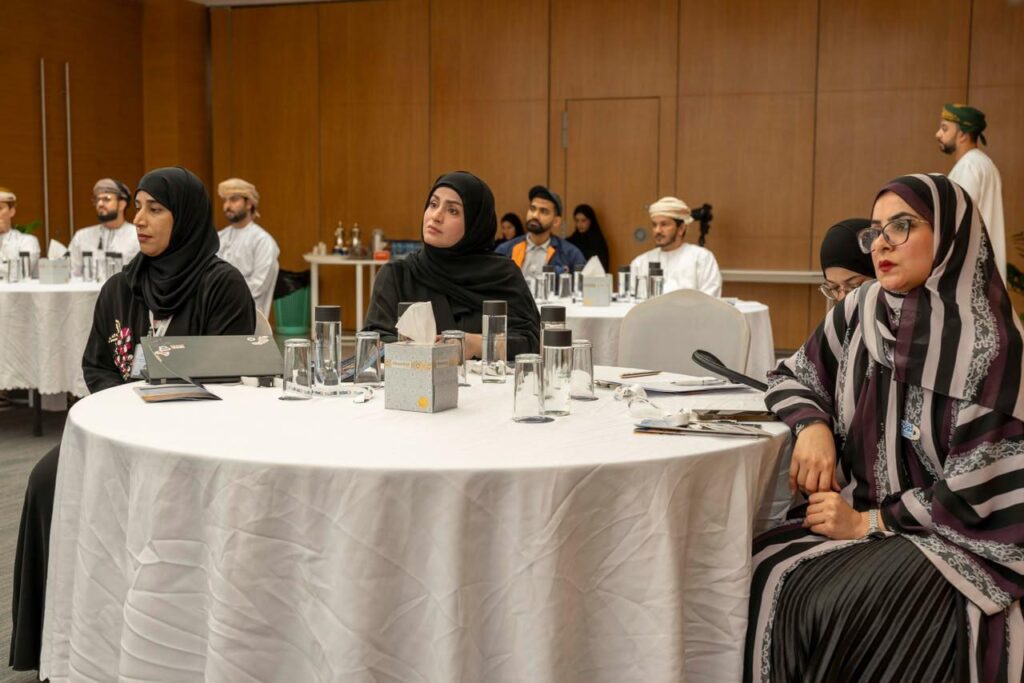
Mansour bin Nasser Al Barashdi, Duqm’s director of compliance and environmental affairs, said closer coordination among the zones could improve oversight and simplify procedures for investors. He said meeting regulatory and environmental requirements could also reduce project risks and improve how facilities operate.
Read More
- Bank Muscat and Meethaq Islamic Banking celebrate new strategic partnerships with real estate developers to support urban development
- Dr Joy Alukkas announces ₹100 crore allocation to strengthen charitable initiatives
- Sohar International signs three strategic agreements at the Investment Partnerships Horizons Conference, strengthening connections across Asia-Pacific
- Central Banks buy 321 tonnes of Gold in Q3, lifting 2026 demand to 675 tonnes: World Gold Council
- Oman’s trade surplus rises to RO 6.5 billion by end of August 2026
One of three panel discussions looked at how AI could help regulators analyse environmental data, predict risks and improve the accuracy of information used in inspections and enforcement decisions. The other panels examined common compliance challenges across the zones and how companies can improve workplace safety and reduce occupational and environmental risks.
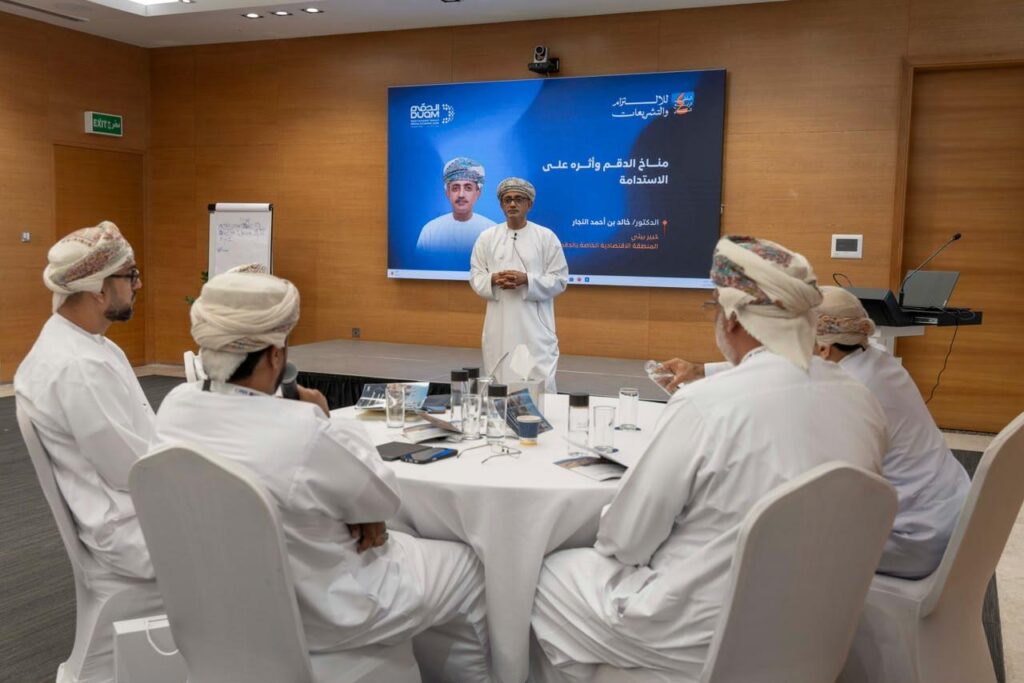
Dr Khalid bin Ahmed Al Najjar, an environmental expert at the Duqm zone, presented a paper on how local climate conditions should inform urban planning, investment decisions and facility design.
Mohammed bin Khalfan Ambusaidi, environmental affairs lead at Sohar Port and Freezone, said greener industrial zones could attract investment and make industry more competitive. He pointed to opportunities for companies to share resources, use energy and materials more efficiently, and adopt cleaner technologies and circular economy practices.
Imbusaidi said the transition would require cooperation between government and industry, backed by investment and regulatory policies. He linked those efforts to Oman Vision 2040 and the country’s goal of reaching net-zero carbon emissions by 2050.
Participants also visited the Port of Duqm and Asyad Drydock to learn about industrial and logistics projects in the zone. A final report will set out recommendations to strengthen oversight, improve environmental practices and expand cooperation between regulators and businesses.
For all the latest news from Oman and GCC, follow us on Twitter, Instagram and LinkedIn, like us on Facebook and subscribe to our YouTube page, which is updated daily.





