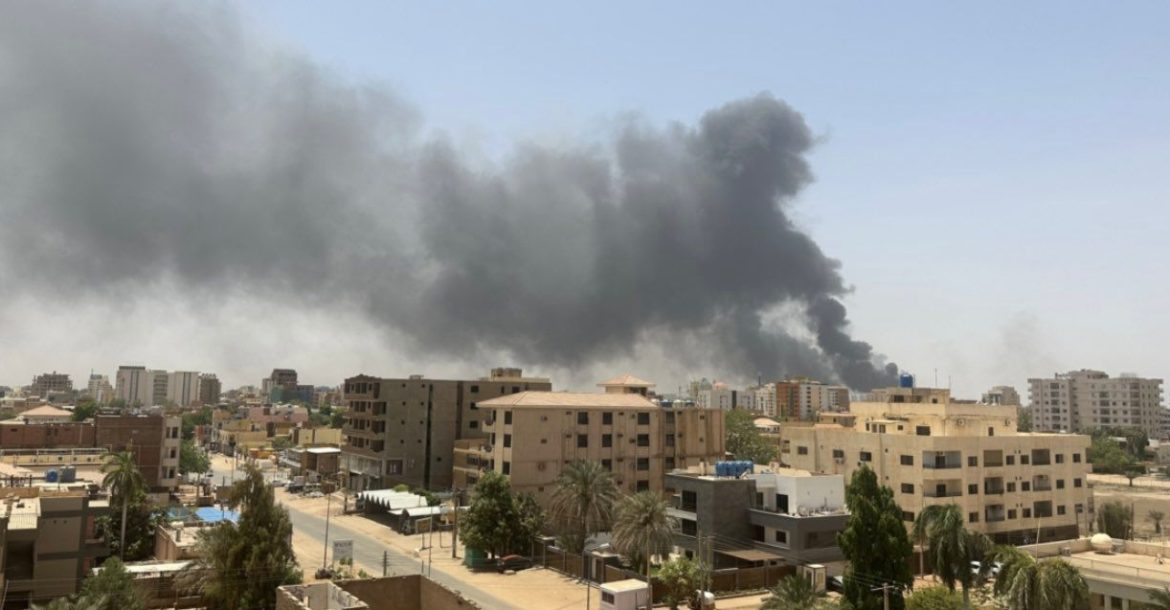

Albert Augustine, an ex-serviceman from Kerala working as HSE manager in Sudan, never expected a stray bullet would end his life. His wife Sybella and their daughter had just landed there a few days back for a short vacation and were with him at their apartment in Khartoum when the stray bullet broke the window, hit the wall and pierced the head of Augustine.
The first, and so far the only Indian casualty, in the war between two factions in Sudan. Although Sybella and her daughter escaped to a safer location there, they could not move Albert’s body due to the heavy gunfire. This heartbreaking story is not an isolated incident, and it highlights the devastation caused by the ongoing war in Sudan.
Unfortunately, war is not new to any part of the world, and as long as the desire for power guides our conscience and consciousness, it will persist. However, the situation in Sudan is particularly concerning, as the conflict between the two groups is ultimately a threat to the democracy that the country has been striving for.
Read More
- Before MBAs and marketing: Timeless business lessons from Prophet Mohammed
- What Shakespeare knew about economics before economists did
- Respect is earned, not expected: Rethinking the teacher-student relationship
- Never underestimate a woman who enjoys her own company
- Rethinking schooling in the age of Artificial Intelligence
Sybella’s desperate voice clips to her family back home illustrate the helplessness felt by many civilians caught in the middle of this war. As of now, Albert is the only known Indian casualty, but the conflict has already claimed countless lives and displaced many others.
It is essential to recognize that the fighting in Sudan threatens not only the stability of the country but also that of the surrounding region. The situation is dire, and it is imperative that the international community works together to bring an end to the conflict and restore peace to the region.
The tragic loss of Albert Augustine serves as a poignant reminder of the devastating toll of war on innocent civilians and the urgent need for a peaceful resolution to the ongoing conflict in Sudan.
Sudan, Africa’s third-largest country, has been wracked by violence and political instability for years, and the latest round of fighting threatens to plunge the country into a full-blown civil war.
The conflict is rooted in a power struggle between two main factions of the country’s military regime: the Sudanese Armed Forces, which support Gen Abdel Fattah al-Burhan as de facto ruler, and the Rapid Support Forces (RSF), a collection of paramilitaries led by former warlord Gen Mohamed Hamdan Dagalo (Hemedti).
The power struggle has its roots in the years before the 2019 uprising that ousted former dictator Omar al-Bashir. During his reign, Bashir deliberately set different security forces against each other, building up formidable security forces in the process.
When the effort to transition to a democratic civilian-led government faltered after Bashir’s fall, an eventual showdown between the two main factions appeared inevitable.
In recent months, tensions between the two factions have risen further, leading to clashes and violence in the streets of Khartoum and other cities.
Fighter jets have flown overhead, bombs have rattled the capital, and civilians have been caught in the crossfire. The conflict threatens to destabilize not just Sudan, but the wider region as well, and has drawn in major global powers such as the United States, the European Union, and Russia.
The Sudanese armed forces are broadly loyal to Gen Abdel Fattah al-Burhan, while the RSF follows Hemedti. The fact that he leads a powerful paramilitary group has only added to the tensions in the country.
RSF are changing into plain clothes and looting/robbing people on the streets, nice houses, banks according to the people fighting the odds in that war-torn country.
They have stopped and confiscated several diplomatic plated vehicles at checkpoints. They are considered desperate.
The international community has expressed concern about the ongoing conflict, with many calling for an immediate ceasefire and a return to negotiations between the two factions. However, it remains to be seen whether such efforts will be successful, given the deep-seated divisions within Sudan’s military regime and the complex geopolitical dynamics at play.
The ongoing conflict in Sudan has become a matter of concern for nations across the globe, including India. Despite holding high-level meetings chaired by Prime Minister Narendra Modi to discuss contingency evacuation plans and the safety of Indian citizens, the Indian government has yet to formulate an effective evacuation plan for the approximately 3,000 Indians living in Sudan.
The situation in Sudan is dire, with indiscriminate firing and bombing, shortages of electricity, food, and water, and widespread uncertainty about the future. The Sudanese ambassador to India has confirmed that the request for the evacuation of Indian nationals is being considered by the authorities, but urgent action is needed.
War can spread like wildfire and affect areas that are not directly involved, making it essential to act quickly. Brainstorming without effective action is futile, particularly if the situation worsens. As of now, there is no visible evacuation plan, and even the embassy of Sudan in many locations has lost contact with the foreign ministry, underscoring the severity of the situation. Military control over the country is limited, and internal fighting continues, further complicating evacuation efforts.
Multiple action plans must be formulated simultaneously, including using Dongola,Kasala Airport for evacuation since it is appropriate for operations and easily accessible by road.Why all are planning from port sudan .It will be really hard to reach port sudan by road Additionally, there are Sudan carriers parked in saudi Arabia and Ethiopia which can be positioned to these airport easily if permission granted for evacuation, Negotiations with government representatives and rebel factions are also necessary to help evacuate the stranded people to safety. Pressure must be exerted on GCC countries and neighboring countries to come to a decision immediately to save people’s lives.
Despite the announcement of a ceasefire by the warring factions during the occasion of Eid, isolated incidents of intense fighting are still being reported from different places, leaving the fate of those stranded uncertain. The gravity of the situation demands immediate and decisive action.





