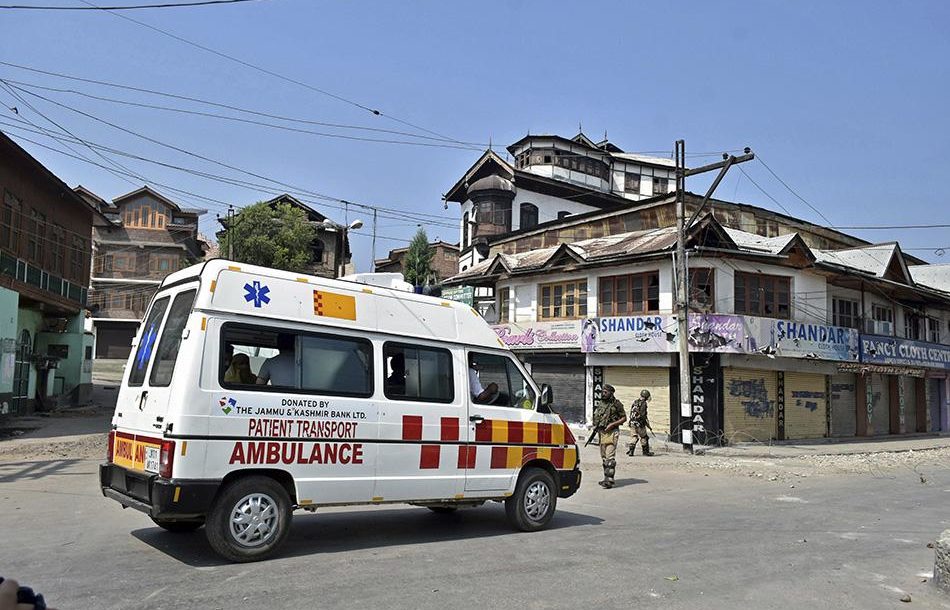

Srinagar: “This is not a protest. This is a request,” read the placard Dr. Omar Salim was holding outside a government hospital in Srinagar last week.
He wanted the Indian government to lift the shutdown on phones and internet in Jammu and Kashmir state, in place since August 5.
He felt the blackout was preventing patients from obtaining government health benefits. For this, the police promptly detained him, according to various reports.
Read More
- Oman police to review heavy vehicle safety standards and driving licence rules
- Broken-down truck disrupts Muscat Expressway traffic towards Seeb
- NASA’s Curiosity rover captures striking sunrise on Mars
- Dhofar Municipality gives 14-day deadline to remove illegal animal pens in Salalah
- SalamAir records 76% On-Time Performance in Q3 2026 as passenger numbers jump 51%
Salim is not alone in raising concerns that the security lockdown in Kashmir – which has restricted basic freedoms – is preventing people from getting proper health care.
In an August 16 letter in the medical journal BMJ, 19 doctors from across India asked the government to ease restrictions on communication and travel, saying they were “a blatant denial of the right to health care and the right to life” because they made it difficult for patients and staff to reach hospitals without hindrance.
The British medical journal Lancet also raised concerns over the health and safety of Kashmiris under the lockdown.
Indian authorities claim the restrictions are necessary to save lives by preventing violent protests. However, the government’s broad and indefinite denial of basic communications not only violates the right to share and receive information, it also infringes on other rights, such as ensuring the highest obtainable standard of health.
For example, a journalist from Kashmir wrote about his sister who suffered a miscarriage: “The doctors at the hospital regret that the ban on communication prevented them from real time communication to the senior gynecologist that could have saved the baby.” On August 9, a stillborn baby was born to parents who, with the suspension of transport, had to walk to a district hospital after developing complications.
From chemotherapy to dialysis, patients are struggling to access lifesaving treatment on time. Salim explained that poorer patients are unable to receive free medical care under a government insurance scheme because that requires phone or digital connectivity to access records. Srinagar’s district magistrate, however, took to Twitter to “assure everyone there is no healthcare crisis in Kashmir,” adding “Difficulties not denied but truth has to be upheld.”
The Indian government’s actions in Kashmir cannot be at the expense of Kashmiris’ rights. Shutting down doctors who speak out is not going to solve the real problem of lives at risk. Instead, the authorities should take all necessary steps to ensure people are able to obtain health care and emergency services.
Meenakshi Ganguly
HRW South Asia Director





