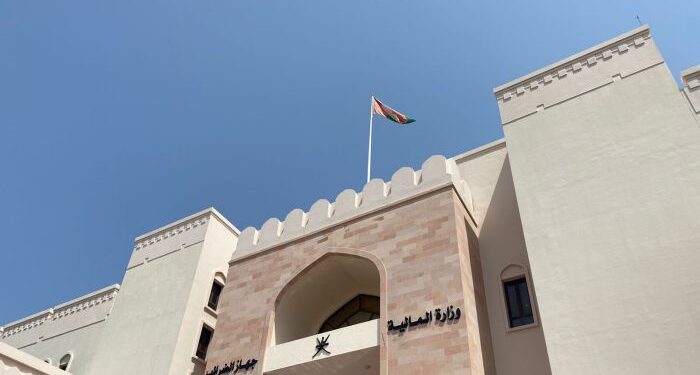

MUSCAT: The Sultanate of Oman’s Tax Authority issued Ministerial Resolution No. (456 / 2022) amending some provisions of the Executive Regulations of the Value Added Tax Law. These amendments aim to harmonize the controls related to some tax policies, such as controls for exempting financial services, determining the deadlines for issuing the tax invoice, and determining the place of supply of wireless communication services, on the Towards in line with international best practices related to value added tax.
The amendments also included adding some provisions related to the application of the electronic tax invoicing system, input tax refund and documentation requirements and amending the provisions for tax refund to foreign governments, diplomatic, consular and military bodies and missions, their presidents and members accredited to the Sultanate.
Where the decision referred to amending the text of Article 28 of the Executive Regulations related to determining the place of supply of telecommunications services, and this amendment comes in light of modern global practices in determining the place of tax liability for these services, in particular roaming services, where telecommunications and data roaming services will be subject to In the country from which the electronic chip used by the customer is issued, instead of being subject to it at the place of use and actual enjoyment of the service as stated in the provisions of the executive regulations before the amendment.
Read More
- Building completion in Oman to require telecom connection certificate under new rules
- Expat arrested over theft from commercial shop in Oman’s Bahla
- Oman exempts death cases involving citizens from healthcare service fees
- New Musandam road to cut Khasab–Dibba travel to 55 minutes for commuters in Oman
- Oman Across Ages Museum welcomes one million visitors
The controls for exempting financial services from tax from the executive regulations issued pursuant to Tax Authority Decision No. (53/2021) stipulated that, in applying the provision of Clause (1) of Article 47 of the Law, financial services supplied by licensed banks and financial institutions shall be exempted from tax. It is authorized by the Central Bank of Oman (CBO) or any of the competent authorities in which it is established to conduct banking business.
The amendments to the provisions of this article come with the exemption of the origin of the financial service exempted under the law, regardless of whether or not its provider is licensed by the competent authorities, and this applies – for example – financial services provided by business sectors (companies) other than financial institutions in the event that they provide financial services Exempt such as selling shares of its shares or providing loans to affiliated companies or other financial facilities that are exempt from tax.
The decision to determine the deadlines for issuing the tax invoice included amending the provisions of Article 143 of the Executive Regulations, by adding a text indicating that the tax invoice must be issued no later than 15 days from the date of making the taxable supply or the supposed supply (which is made between related persons) or receiving the consideration – in whole or in part – before the date of supply. The amendment also included Articles 146 and 150 of the Regulations in a manner that requires the issuance of the simplified tax invoice within 15 days as well, and that the summary tax invoice (issued from supplies made within one month) must be issued within 15 days of the end of the month.
The provisions of Article 202 of the regulation were also amended by adding the violation of not issuing the tax invoice in accordance with the requirements and the specified period to the violations for which the head of the agency may impose an administrative fine of no less than OMR 500 and not more than OMR 5000.
Article 55 of the Implementing Regulations for Input Tax Refunds and Documentation Requirements has also been amended, which stipulates that a taxable person can deduct input tax on the costs incurred only based on an original tax invoice, and the amendment was made in accordance with Article 144 so that all types of tax invoices are included (such as simplified tax invoices, and summary invoice), provided that other conditions for input tax deduction are met.
Some provisions have been added related to the application of the electronic tax invoicing system, which is proposed to be implemented in the Sultanate of Oman during the next few years, provided that the Tax Authority shall issue the necessary executive decisions to implement this system, including the obligations of taxable persons regarding this system and the dates and mechanisms of application. A definition of the electronic tax invoice has also been added to the first article of the regulation related to tariffs, as it is defined as a tax invoice issued in an electronic format organized through an electronic means, and this invoice must include, at a minimum, the information specified in this regulation and any other information specified by the Agency. The amendment included the provisions of Article 143 of the Regulations, where the amendment stipulated that the tax invoice must be issued in an approved electronic format in the cases specified by the Agency, provided that the Agency determines the additional requirements for issuing electronic invoices and the data that it must include.
In accordance with the obligations of the Sultanate towards international agreements regulating tax exemptions and exceptions granted to diplomatic and consular bodies and missions, international organizations and their heads and members, Articles 188 and 189 of the Regulations have been amended in a way that gives the tax authority flexibility in determining and amending the conditions, controls and procedures related to tax refunds to these category, in coordination with the Ministry of Foreign Affairs and the Ministry of Finance. The amendments authorized the Tax Authority to determine the conditions and controls for refunding the tax in coordination with the Ministry of Foreign Affairs, in a manner that is in line with the Sultanate’s obligations towards the international agreements regulating this matter.





