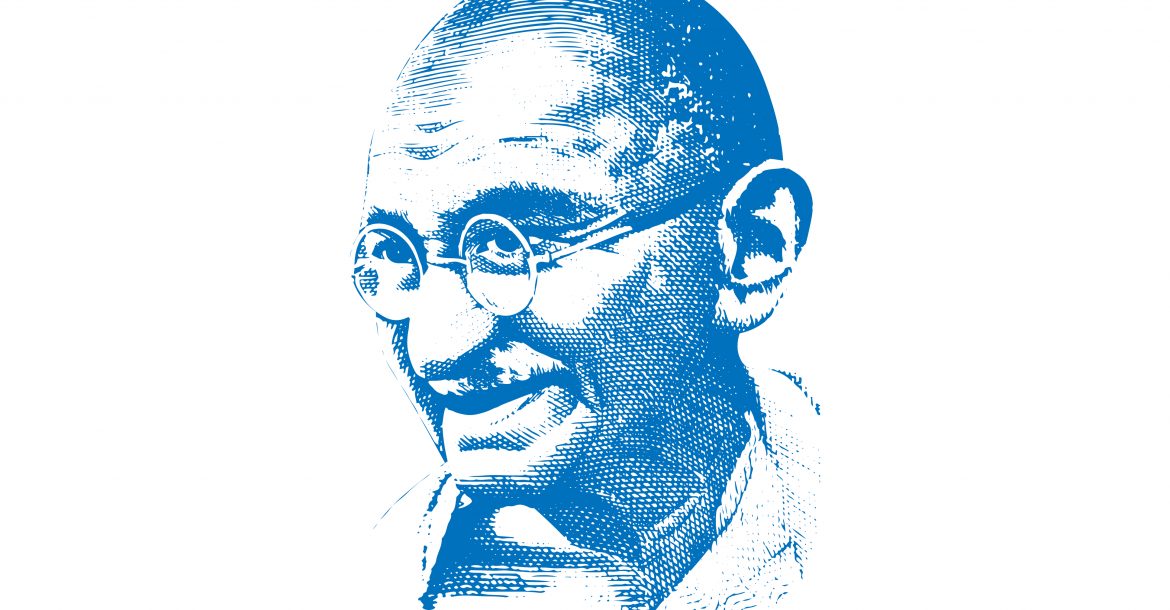

There are very few individuals whose ideals and world vision transcend their times and geographical boundaries. There are very few whose viewpoint is relevant in every aspect of life, be it, health, hygiene, education, technology, agriculture, urbanization, world peace, or whatever you think of under the sun.
It was about that man once legendary scientist Albert Einstein once wrote: “Generations to come, it may well be, will scarce believe that such a man as this ever in flesh and blood walked upon this earth.”
His name was Mohandas Karamchand Gandhi, the man of non-violence who was at the forefront of the Indian freedom struggle. Prior to that he had lead the fight for human rights and civil liberties in South Africa.
Read More
- What Shakespeare knew about economics before economists did
- Respect is earned, not expected: Rethinking the teacher-student relationship
- Never underestimate a woman who enjoys her own company
- Rethinking schooling in the age of Artificial Intelligence
- Reeling from endless social media content? Pause the doomscroll, rewind to screen-free time
When the world observes the birth anniversary of that great soul on October 2, I feel it’s time to assert his relevance and the importance of his philosophy that never goes obsolete.
That is why he has a respectable place in any part of the world and there is hardly any country in the world where something or the other is not done in the name of that man who influenced us so deeply.
Gandhi was a human being who believed in the Hindu practices of life, but it is not his religion that made him a world leader who showed light on everyone.
Being a man of global peace, he strictly maintained that race, religion or national identity come on way of one’s political engagement. His vision was rooted in humanism, and that makes him relevant even today. This is because he did not just preach non-violence, but practiced it to the core.
When the world came under the grip of COVID-19 pandemic in the recent times, it was his name that many people referred. In the backdrop of the pandemic, there were debates that we should think and rethink about the indiscriminate urbanization and the indiscriminate exploitation of the natural resources. When the nature is unable to withstand such exploitations it results in the unleashing of such viruses, many people argued.
Being a staunch critic of industrialization, he believed that we prefer an industrialized world because of greed. “There is enough to meet every one’s need but not greed,” he said once. Though it might sound impractical to follow this philosophy, it is a fact that our greed has resulted in many unwanted elements in our life.
Even in the industrialized world his ideals can be implemented effectively, especially when it comes to eco-friendly development.
Gandhi’s ideology is relevant even today because his philosophy of non-violence was against all kinds of unjust laws authoritarian governments.
“Non-violence is a tree of slow growth. It grows imperceptibly but surely,” he sued to say. This in a way is related to his economic vision as well. His concept of development was based on the judicious use of the natural resources. The world is today thinking of the development in those terms only.
Further, he also wanted the world to respect others irrespective of race or religion. This was the point we discuss even today in the backdrop of India-Pakistan partition. He was a man of human values who wanted transparency in the public deals and the idea of social auditing has its roots there.
An effective communicator, he had that magic skill of winning the people’s heart through his empathetic approach. He was very young at heart and even now the world leaders are inspired by him. Former US president Barack Obama once noted, “In my life, I have always looked to Mahatma Gandhi as an inspiration, because he embodies the kind of transformational change that can be made when ordinary people come together to do extraordinary things.”
Yes, Gandhi is a phenomenon that transcends times. As eminent Indian cartoonist E.P Unny has noted, “When something goes terribly wrong, Gandhi keeps coming back.”





