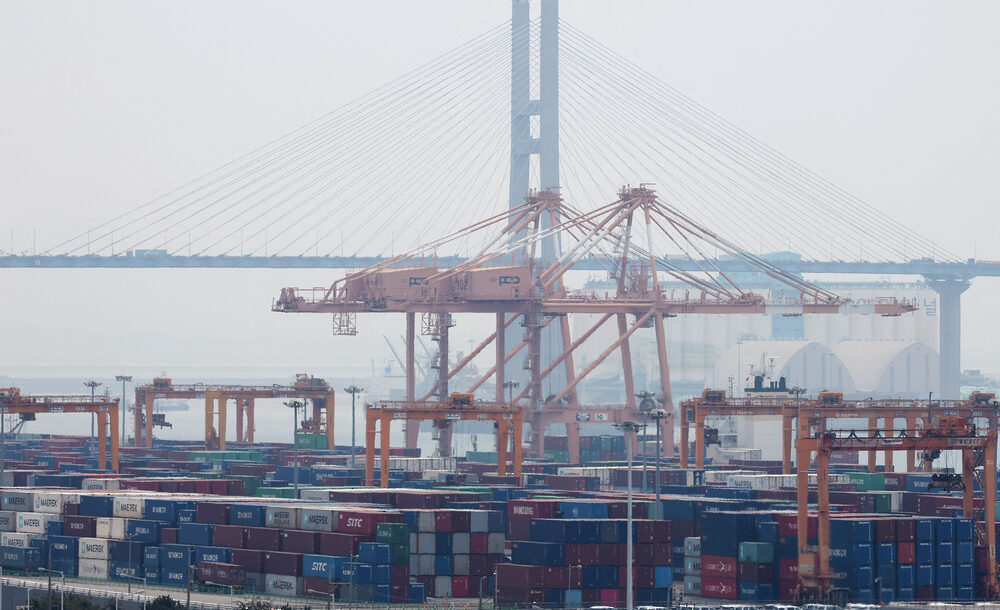

SEOUL: The increase exceeded the 93.2 percent growth forecast by analysts and accelerated from an 83.7 percent rise in September. It was the strongest annual growth rate since January 1974, partly supported by a higher number of working days compared with the same month a year earlier.
The export performance reflects the global AI investment boom, which has boosted demand for advanced semiconductors and strengthened South Korea’s technology-driven economy. The country’s economic growth also exceeded expectations in the third quarter, supported by robust exports and semiconductor investment, while major chipmakers Samsung Electronics and SK Hynix reported significant profit increases.
“With exports continuing to achieve strong growth and exceeding $110 billion in October, it is certain that annual exports will reach $1 trillion this November,” said Kim Jung-kwan, South Korea’s Minister of Trade, Industry and Resources.
Read More
- Bank Muscat launches transfer to Visa Cards Service through digital channels
- Chinese investors see new opportunities for Oman-China economic partnership
- Abdullah Al Hinai resigns as National Bank of Oman CEO
- Bank Muscat supports Omani women towards empowerment and leadership
- Indian Railways to replace LPG, diesel with PNG at 22 sites under pact with IGL
South Korea’s exports totalled $930 billion between January and October last year, according to the reported figures. Achieving annual exports of $1 trillion would place the country among a small group of economies to reach the milestone.
Semiconductor exports were the main growth driver, jumping 259.4 percent year-on-year to $56.44 billion in October, as prices and shipment volumes remained strong amid continued investment by major global technology companies in AI infrastructure.
Computer exports also surged 496.6 percent, driven by increased demand for servers supporting AI services.
By destination, shipments to China rose 133.6 percent, while exports to the United States increased 185.8 percent. Exports to Europe and Southeast Asia grew 56.4 percent and 128 percent, respectively.
Meanwhile, South Korea’s imports increased 36 percent year-on-year to $72.78 billion, following a 26 percent rise in September. This marked the largest annual increase since January 2022, driven by higher oil prices and increased demand for semiconductor manufacturing equipment and automobiles.
The country recorded a trade surplus of $42.50 billion in October, down from a record $49.97 billion in the previous month.





