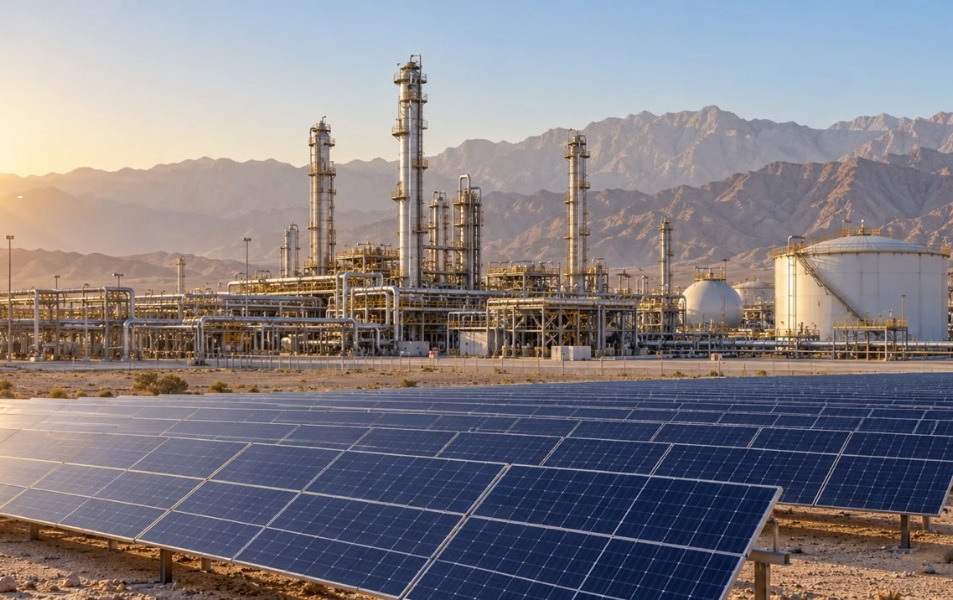

MUSCAT : Oman’s oil and gas producers face growing pressure to improve efficiency and reduce emissions as environmental performance increasingly influences access to markets and financing, according to a report released by Oxford Business Group in partnership with Petroleum Development Oman.
The report, titled “The Energy Transition and National Transformation in Oman”, examines how the country is aligning its energy sector with Oman Vision 2040 and national net-zero ambitions while maintaining hydrocarbons production.
Oil and gas remain central to Oman’s fiscal stability, energy security and industrial development. But producers’ ability to reduce emissions intensity, curb flaring, manage methane and provide credible reporting is becoming increasingly important to their long-term competitiveness, the report said.
Read More
- His Majesty Sultan Haitham issues two Royal Decrees ratifying agreements with Angola
- Omani-Saudi Business Council discusses ways to boost trade exchange
- Oman Air boosts winter flights, triples Zurich capacity and expands codeshare network
- Oman steps up disaster readiness to protect lives and essential services
- Over 700 non-compliant cosmetics, toys and supplements seized in Muscat markets
“Producers face the dual challenge of maintaining cost competitiveness while meeting increasingly stringent emissions-reduction commitments,” PDO Managing Director Aflah Al Hadhrami said in an interview included in the publication.
For hydrocarbon-dependent economies such as Oman, that requires maximising the value of existing resources while diversifying the economy and developing lower-carbon industries, he said. These efforts demand substantial capital, investment in technology and sustained commitment.
The report identifies digitalisation as a key tool for improving operational performance. Real-time data, artificial intelligence and advanced analytics can help operators identify rising costs, underperforming assets and areas requiring intervention.
Such technologies can also support a shift from periodic reporting to continuous monitoring, helping companies make more informed decisions on production and resource use, it said.
The publication also examines the role of governance, workforce development and coordination between institutions in translating national energy strategies into measurable progress. International partnerships and technology adoption can support emissions reductions, efficiency improvements and economic diversification, it said.
Dana Agarbicean, OBG’s country director for Oman, said the country’s energy transition extends beyond the deployment of new energy sources to improvements in the performance of its existing hydrocarbons sector.
Stronger operational efficiency, digital technology and emissions management, alongside closer institutional coordination, can help support the sector’s competitiveness and Oman’s wider sustainability and diversification goals, she said.
For all the latest news from Oman and GCC, follow us on Twitter, Instagram and LinkedIn, like us on Facebook and subscribe to our YouTube page, which is updated daily.





