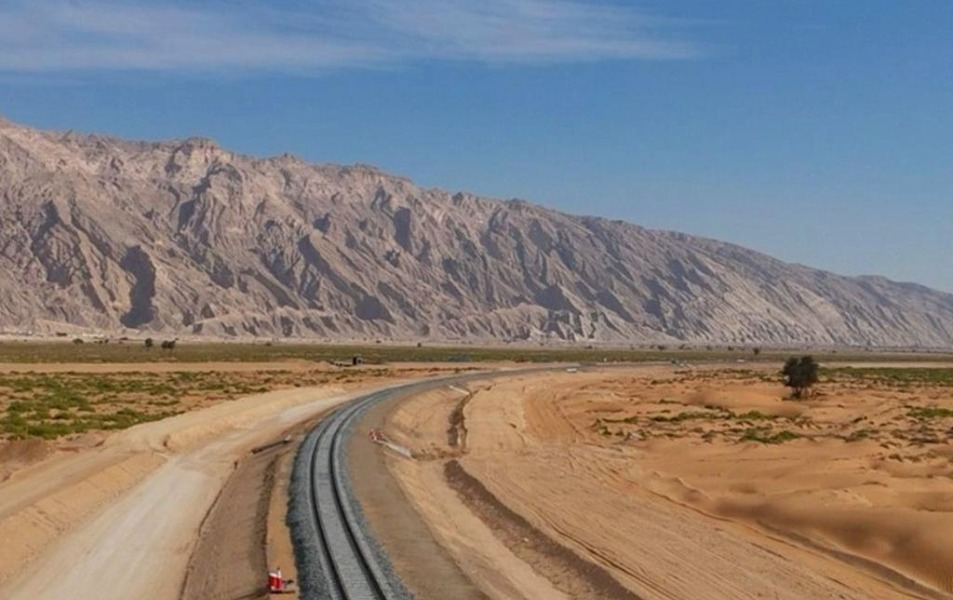

MUSCAT: His Majesty Sultan Haitham bin Tarik has ratified an agreement between the governments of Oman and the United Arab Emirates to develop their cross-border railway connection, advancing a $2.5 billion project designed to transform the movement of goods and people between the two countries.
The agreement was ratified under the ninth of 10 Royal Decrees issued by His Majesty on Thursday, according to the Oman News Agency.
At the centre of the agreement is Hafeet Rail, the company developing the first railway connection between Oman and the UAE. The venture brings together Oman Rail, Etihad Rail and Abu Dhabi sovereign investor Mubadala.
Read More
- Oman-UK: From historical legacy to future partnership
- Oman to showcase climate achievements at COP31 in Türkiye
- Oman’s Health Ministry issues regulations for overseas premarital medical screening
- Oman targets wider export markets as dates and honey exhibition opens
- His Majesty Sultan Haitham arrives in UK for four-day state visit
The 238-kilometre network will run from Sohar in Oman through Al Buraimi and Al Ain before connecting with the UAE’s national railway system, effectively linking one of Oman’s most important industrial and maritime hubs with the Emirates’ expanding logistics infrastructure.
The project is valued at about $2.5 billion and has secured $1.5 billion in project financing from a consortium of regional and international banks.
Connecting Sohar to a bigger market
For Oman, the railway’s economic significance extends well beyond creating a new passenger transport option.
Sohar is home to one of the Sultanate’s largest ports, a major free zone and an expanding industrial base spanning metals, petrochemicals, manufacturing and logistics. Connecting it directly by rail to the UAE could provide companies with another route to move raw materials and finished products between industrial centres, ports and consumer markets.
The UAE, meanwhile, has built a national freight railway stretching roughly 900 kilometres and connecting all seven emirates. Linking Sohar to that system would give Oman access to a rail corridor extending across the UAE from the Saudi border in the west to Fujairah on the Gulf of Oman.
The project could therefore strengthen Sohar’s position in regional supply chains while supporting Oman’s wider strategy to expand logistics and non-oil industries under Vision 2040.
Freight at the heart of the project
Freight is expected to be a major driver of the railway’s commercial case.
Hafeet Rail says freight trains will operate at speeds of up to 120 kilometres per hour, with a single train capable of transporting more than 15,000 tonnes of cargo, equivalent to about 270 standard containers.
The railway is expected to serve industries including mining, iron and steel, petrochemicals, agriculture, food, retail and e-commerce.
Passenger trains are designed to travel at speeds of up to 200 kilometres per hour and carry as many as 400 passengers.
Once operational, the journey between Sohar and Abu Dhabi is expected to take about 100 minutes, while travel between Sohar and Al Ain could take about 47 minutes.
Construction gathers pace
The railway has already moved into the construction phase.
Hafeet Rail said earlier this year that overall construction had reached 40%, with work progressing across Sohar, Wadi Al Jizzi, Al Buraimi and Al Ain.
Building the route involves significant engineering works because the railway crosses mountainous terrain, wadis and developed areas. The network will include tunnels extending for about 2.5 kilometres as well as bridges and flood-protection structures.
The project has also attracted contractors and suppliers from both Oman and the UAE, reinforcing its role as a joint economic undertaking rather than simply a transport link.
First cross-border rail link between Gulf states
Hafeet Rail represents the first cross-border railway connecting two GCC countries and could eventually form part of a much larger regional transport system.
Gulf states have for years pursued plans for an integrated GCC railway network intended to connect national rail systems and facilitate the movement of passengers and freight across the region.
The Oman-UAE line is emerging as one of the most advanced pieces of that broader ambition.
The project gained significant momentum during His Majesty Sultan Haitham’s state visit to the UAE in April 2024, when agreements were signed and major contracts awarded for the railway project.
Its name, Hafeet Rail, reflects Jebel Hafeet, the landmark mountain straddling the area around the Oman-UAE border and the route through which the railway will pass.
Thursday’s Royal Decree provides another significant step in the project’s development, formally ratifying the bilateral agreement as construction advances on what is set to become a new economic artery between Oman and the UAE.





