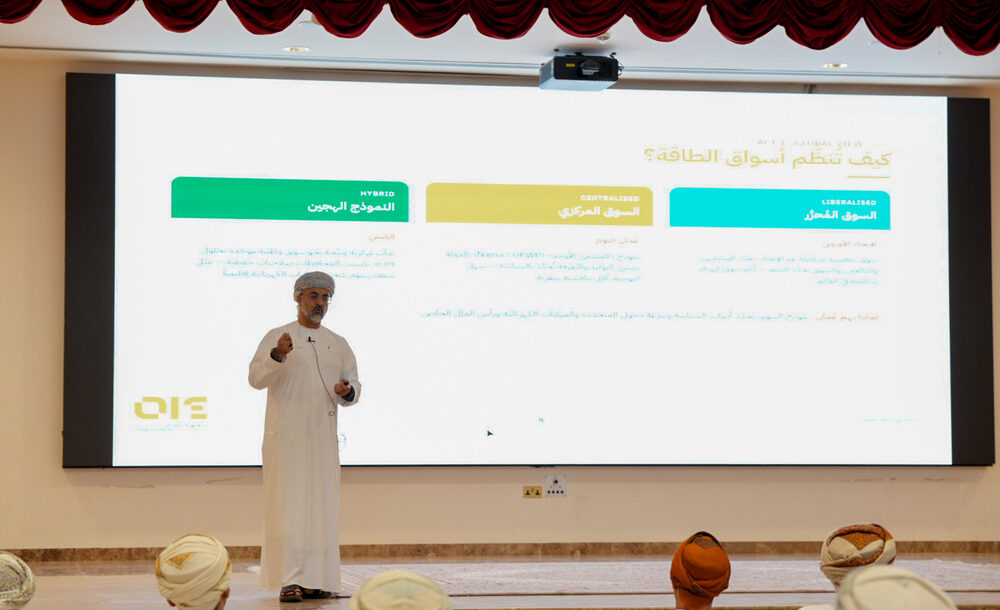

A RUSTAQ : The Ministry of Energy and Minerals, in cooperation with Oman Institute of Energy, organized a dialogue session today titled “New Energy: Global Transformations and the Sultanate of Oman’s Direction” in the Wilayat of A’Rustaq in the South Al Batinah Governorate.
The session aimed to enhance awareness of the rapid changes in the energy sector globally and to introduce the Sultanate of Oman’s national directions in the fields of energy transition and sustainability. These efforts are in alignment with the objectives of Oman Vision 2040 and the plans to reach net-zero carbon emissions by 2050.

During the session, Dr. Firas Al Abdwani reviewed the rapid global transformations in the energy sector and their most prominent driving factors. He discussed international legislation and regulations related to reducing carbon emissions, including the Carbon Border Adjustment Mechanism (CBAM) and the requirements of the International Maritime Organization (IMO). Furthermore, he highlighted their impacts on various economic sectors, along with the opportunities and challenges they present to national economies.
Read More
- Oman’s Urban October event draws over 60,000 visitors, records more than 230 deals
- Oman condemns Saudi airport attacks, urges restraint
- Oman convenes global experts to advance AI innovation in mental healthcare
- HH Sayyid Theyazin chairs International Financial Centre of Oman board meeting
- Oman participates in Interpol Anti-Drug Conference in Czech Republic
He also addressed the national energy strategy and future directions related to sustainability and the green economy.
Al Abdwani showcased promising investment opportunities in renewable energy and green hydrogen projects, emphasizing their role in supporting economic diversification and enhancing the competitiveness of the national economy.

The session discussed the importance of translating national visions and strategies into practical initiatives and projects that contribute to achieving sustainable development goals. It underscored the role of partnerships among government institutions, the private sector, and civil society organizations in supporting the transition toward clean energy.
Finally, the session emphasized the vital role undertaken by the governorates in supporting national trends related to the energy sector. It highlighted the importance of leveraging available economic and natural resources to enhance sustainable development and attract qualitative investments in future energy projects.





