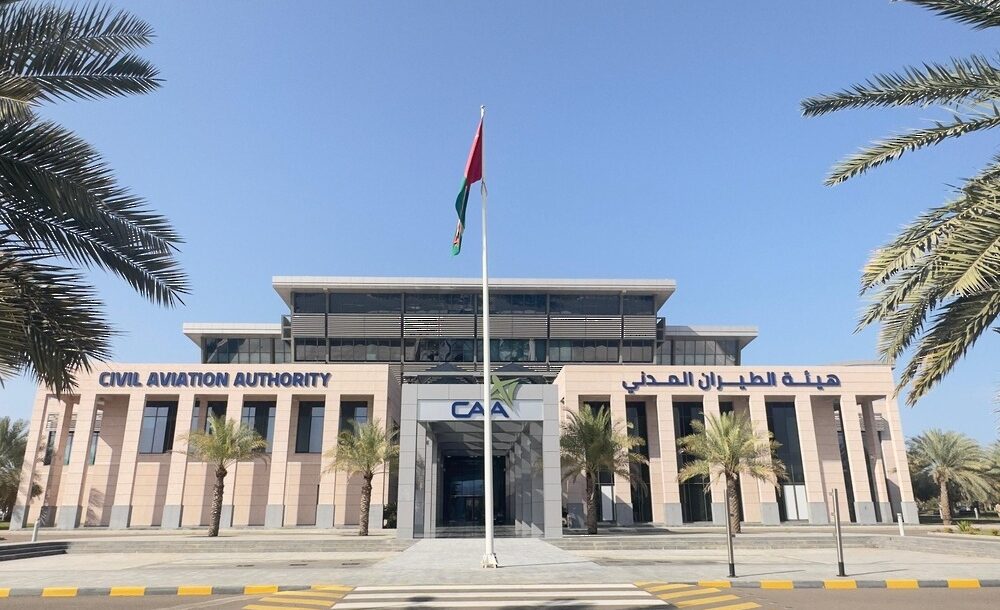

MUSCAT : According to Khaled bin Hilal Al-Toubi, Director of the Civil Aviation Environmental Protection Department at the Civil Aviation Authority, environmental sustainability forms a key pillar of the National Aviation Strategy 2040. The strategy focuses on strengthening legislation governing aviation safety, security, environmental protection, and economic development while encouraging innovative solutions that meet international environmental standards.
Al-Toubi said the Authority continues to enhance environmental governance within the aviation sector by developing regulatory frameworks, monitoring carbon emissions, conducting periodic inspections of airlines and airports, and ensuring compliance with national and international environmental requirements. These measures support transparency and reinforce environmental accountability across the industry.
The Authority is also advancing national initiatives aimed at reducing carbon emissions through the adoption of clean technologies and sustainable aviation fuel (SAF). Efforts include studies on emission reduction strategies, aircraft noise management, air quality improvement, climate resilience, and the development of environmental regulations for aviation activities.
Read More
- Oman’s Urban October event draws over 60,000 visitors, records more than 230 deals
- Oman condemns Saudi airport attacks, urges restraint
- Oman convenes global experts to advance AI innovation in mental healthcare
- HH Sayyid Theyazin chairs International Financial Centre of Oman board meeting
- Oman participates in Interpol Anti-Drug Conference in Czech Republic
In 2023, Oman submitted its National Action Plan for Reducing Carbon Dioxide Emissions from International Civil Aviation to the International Civil Aviation Organization (ICAO). The plan outlines projected air traffic growth and emissions through 2050 and identifies mitigation measures, including technical improvements, operational efficiencies, and the implementation of the Carbon Offsetting and Reduction Scheme for International Aviation (CORSIA).
The Sultanate follows a four-pillar approach to aviation sustainability, focusing on technological advancement, operational efficiency, sustainable aviation fuel, and adherence to international mechanisms. National airlines are modernising their fleets by introducing more fuel-efficient aircraft equipped with advanced engines and lightweight materials, helping reduce fuel consumption and emissions.
Operational measures are also playing a significant role. Airlines have adopted internationally recognised procedures such as optimised take-off and landing operations and single-engine taxiing after landing. Meanwhile, investments in advanced communication, navigation, and surveillance technologies have improved air traffic management, enhancing fuel efficiency and reducing environmental impact.
To accelerate the transition towards cleaner aviation, the Civil Aviation Authority established a national working group on sustainable and low-carbon aviation fuel in 2024. The group brings together government agencies, airlines, airports, fuel producers, academic institutions, and research centres to develop a national policy framework, identify investment opportunities, and support research and development in the sector.
Several companies in Oman are already exploring the production of sustainable aviation fuel using waste materials, organic resources, agricultural feedstocks, hydrogen, and captured carbon dioxide. Studies are currently underway to assess the viability of developing a domestic sustainable fuel industry.
The Authority is also working closely with stakeholders to maximise the environmental and economic benefits of the CORSIA programme by promoting projects capable of generating carbon credits. At the airport level, environmental inspection programmes have been activated, performance monitoring systems introduced, and a comprehensive sustainability governance framework is being developed.
For all the latest news from Oman and GCC, follow us on Twitter, Instagram and LinkedIn, like us on Facebook and subscribe to our YouTube page, which is updated daily.





