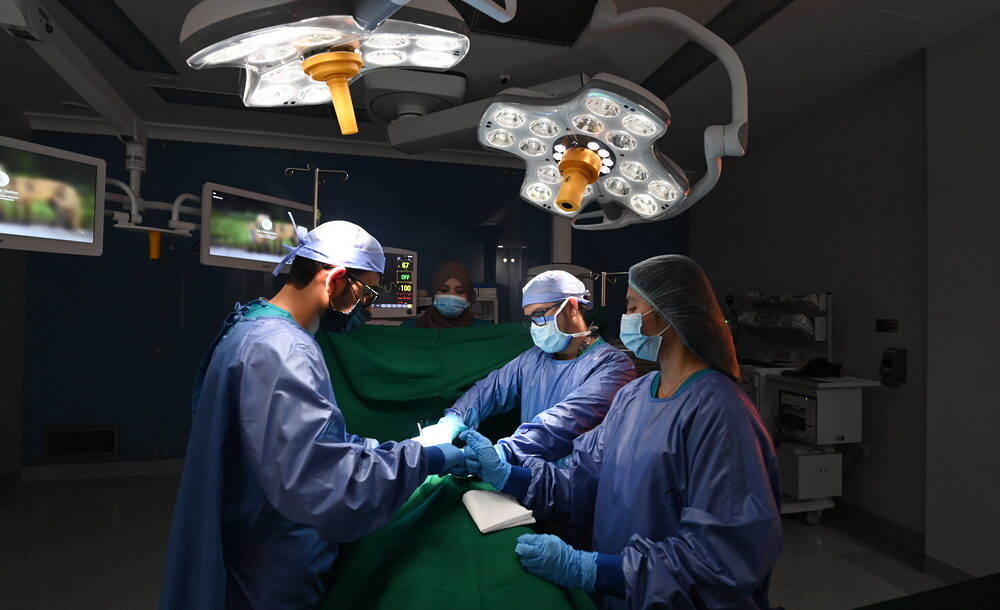

MUSCAT — The health sector under Oman Vision 2040 has undergone significant structural and operational transformation, reflecting major progress achieved during the Tenth Five-Year Development Plan, according to official data highlighting reforms in governance, infrastructure and digital health services.
The reforms, introduced under Royal Decree No. 10/2024, reshaped the sector’s governance model through a decentralised structure based on three specialised entities, aimed at enhancing efficiency and expanding authority at the governorate level.
As part of a broader integration strategy, key institutional changes included the establishment of the University Medical City, the Medical City for military and security services, and the transfer of Royal Court medical services to the Ministry of Health, consolidating healthcare delivery under unified national standards.
Read More
- His Majesty Sultan Haitham to begin UK state visit on October 19
- Musandam surpasses key investment, tourism and job targets in Oman
- Sayyida Zeyana Al Said named chairperson of regional air safety investigators’ society
- His Highness Sayyid Bilarab hails Omani women as partners in nation’s development
- Omani women in employment rise 9% to more than 270,000 in 2025
In infrastructure development, four major hospitals — Al-Suwaiq, Khasab, Al-Mazyunah and Wadi Bani Khalid — have been commissioned, alongside expansions at Sohar, Nizwa and Sur hospitals, as well as the National Heart Center. Primary healthcare has also been strengthened through two health complexes, seven new health centres and upgrades to nine local hospitals.
Specialised services introduced include a fertility centre, a National Virtual Health Centre, nine dialysis units, seven emergency departments and a central public health laboratory.
Work is ongoing on 21 additional health facilities, with completion rates reported at advanced stages, including 83 percent for Sultan Qaboos Hospital in Salalah and 71 percent for Samail Hospital.
In a move toward digital transformation, the Ministry of Health has integrated artificial intelligence into diagnostic services. The National Retinopathy Screening Programme has screened more than 30,000 patients with a reported accuracy rate of 92 percent, while reducing waiting times by over 80 percent.
Other initiatives include the Omani Genome Programme, supporting personalised medicine, and the Unified Health Record system, which now connects 255 health institutions nationwide.
On the industrial side, the number of medical manufacturing facilities has risen to 21, with 18 additional projects under development. Six pre-purchase agreements have also been signed with national manufacturers to localise production of biopharmaceuticals, intravenous solutions and treatments for genetic diseases, strengthening pharmaceutical security.
The developments have contributed to improved international performance indicators, with Legatum Prosperity Index ranking Oman 55th globally.
Health life expectancy reached 66.07 years in 2023, while community satisfaction rose to 82.4 percent, reflecting gains in service quality and workforce development.
Authorities say the next phase will focus on further system efficiency, expanded use of advanced technologies, and sustained development of national healthcare talent to ensure a high-standard, future-ready health system aligned with Oman Vision 2040.





