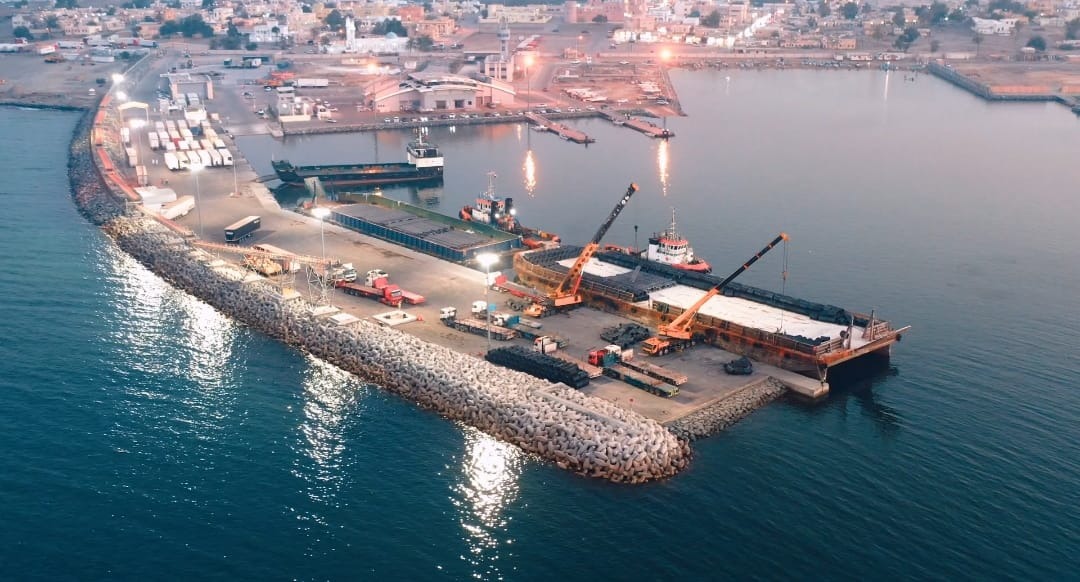

MUSCAT – During the year, the port received 1,053 vessels, reflecting ongoing efforts to improve handling efficiency and reduce berthing times by prioritising ships with higher loading capacities.
Official statistics show that dry bulk cargo accounted for 528,599 tonnes in 2025, compared to 286,279 tonnes in 2024, marking a significant increase. The port also handled 144,353 tonnes of food commodities, including vegetables, fruits and meat, reinforcing its key role in supporting food supply chains for the local market.
Eng. Samir bin Ghulam bin Haikal Al Balushi, Director of Al Suwaiq Port, told the Oman News Agency that the port achieved several operational and organisational milestones during 2025, most notably reaching a record level of nearly one million tonnes in cargo handling. He noted that development of the operational area, reorganisation of cargo yards and improved truck movement within the port contributed to smoother traffic flow and more efficient use of storage spaces.
He added that new operational equipment, including high-capacity cranes and forklifts, was introduced during the year, increasing productivity and reducing vessel turnaround times. A modern inspection and monitoring system was also activated, enhancing safety, security and the quality of imported goods.
Al Balushi explained that the port launched a new electronic system for issuing entry permits in 2025, linked to the relevant security authorities. The system has simplified procedures, strengthened access control and improved regulatory efficiency.
He stressed that Al Suwaiq Port continues to upgrade its operational procedures and adopt advanced technologies to ensure sustainable performance, enhance customer confidence, and strengthen its role in supporting supply chains and food security across North Al Batinah Governorate and the Sultanate of Oman.
Al Balushi confirmed that Asyad Ports is currently finalising the market and feasibility studies for the Al-Suwaiq Port expansion project, paving the way for future investment. He noted that the port mainly serves landing craft, general cargo vessels, and small- to medium-sized livestock ships with capacities of up to 10,000 tonnes, and maintains links with Gulf and regional ports.
The port handles a wide range of imports and exports, including foodstuffs, vegetables, fruits, livestock, building materials such as bitumen, vehicles, equipment and other general cargo, supporting local markets and boosting export activity.
Livestock shipments also increased in 2025, with 11,300 head received, compared to 9,923 in 2024, highlighting growth in this vital sector and the port’s role in strengthening food security.
Ongoing development works at the port include finalising expansion studies, upgrading infrastructure and services, increasing yard capacity, and modernising handling equipment. These improvements are expected to enhance productivity, reduce vessel waiting times and improve the efficiency of berths and cargo handling facilities.
Read More
- GCC tourism economy climbs to $254.7 billion in 2025
- Oman hotel revenues fall 11% to RO 156.5mn as guest numbers decline
- Oman’s Duqm Refinery hits 110% capacity as revenues reach $7 billion
- Oman keeps inflation contained at 2.9% despite global price pressures
- Oman Transport Ministry spends over RO188 million on development projects in nine months





