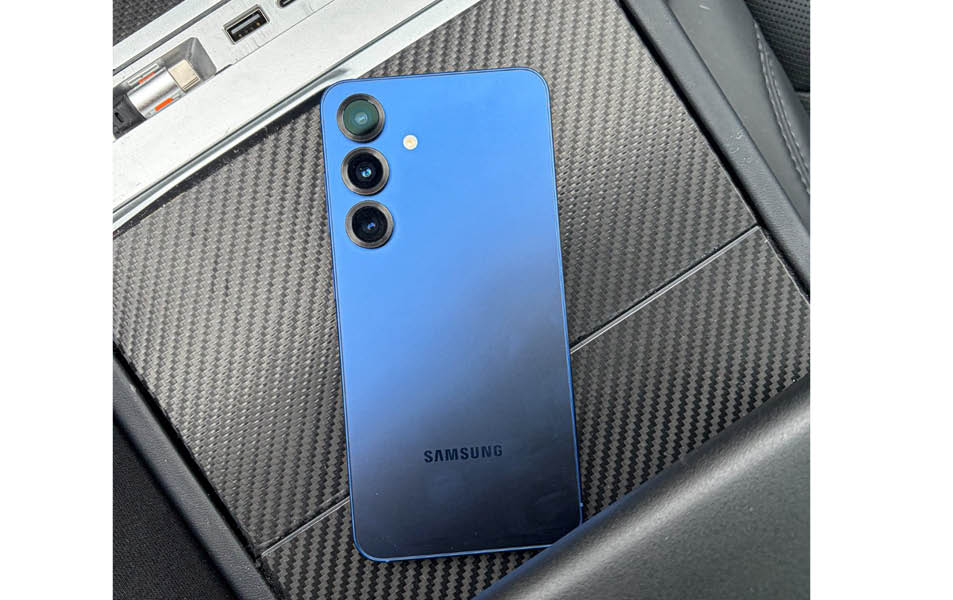

Seoul: The South Korean tech giant, the world’s largest manufacturer of Android smartphones, said it had already rolled out Galaxy AI features, largely powered by Google’s Gemini model, to around 400 million devices, including smartphones and tablets, by last year. That figure is now set to double next year, according to co-CEO Roh Tae-moon.
The move is expected to strengthen Samsung’s partnership with Google, whose Gemini model underpins many of the AI features, while also boosting parent company Alphabet in its competition with rivals such as OpenAI. Google launched Gemini 3 in November, touting gains across key AI performance benchmarks, prompting OpenAI to respond with the launch of its GPT-5.2 model weeks later.
Samsung is betting that integrated AI services across smartphones, tablets, televisions and home appliances will help it regain ground lost to Apple and fend off rising competition from Chinese manufacturers, including Huawei. While Apple was on track to be the world’s top smartphone maker last year, Samsung aims to differentiate through deeper AI integration across its ecosystem.
Read More
- Dubai witnesses unprecedented crowds as actor Suriya graces the grand inauguration celebrations of 3 new Malabar Gold & Diamonds showrooms
- Major currencies trade in narrow ranges ahead of central bank decisions
- Oman crude oil price falls by USD 1.66
- Bank Muscat Shari’a Money Market Fund sees strong investor demand
- Oman Cement appoints Jiang Tao as chief executive
Roh said consumer awareness of the Galaxy AI brand has surged sharply, with internal surveys showing recognition jumping to 80% from about 30% in just one year. While search remains the most commonly used AI feature on smartphones, users are increasingly turning to generative AI tools for image editing, productivity, translation and content summarisation. Galaxy AI combines capabilities from Google’s Gemini as well as Samsung’s in-house Bixby assistant, depending on the task.
Samsung shares rose 7.5% on Monday ahead of the company’s expected announcement of a strong fourth-quarter profit increase, driven largely by a global memory chip shortage that has benefited its semiconductor business. However, the shortage has also put pressure on smartphone margins, the company’s second-largest revenue stream. Roh said price increases could be “inevitable” due to rising chip costs, though Samsung is working with partners on longer-term strategies to soften the impact.
Market watchers including IDC and Counterpoint have warned that the global smartphone market could shrink next year as higher component prices feed into consumer costs.
On foldable phones, a segment Samsung pioneered in 2019, Roh acknowledged that growth has been slower than expected, citing engineering challenges and a lack of apps optimised for the form factor. Despite this, he expects foldables to go mainstream within the next two to three years. Samsung held nearly two-thirds of the global foldable smartphone market in the third quarter of 2025, according to Counterpoint, but faces intensifying competition as Apple is widely expected to unveil its first foldable device later this year.





