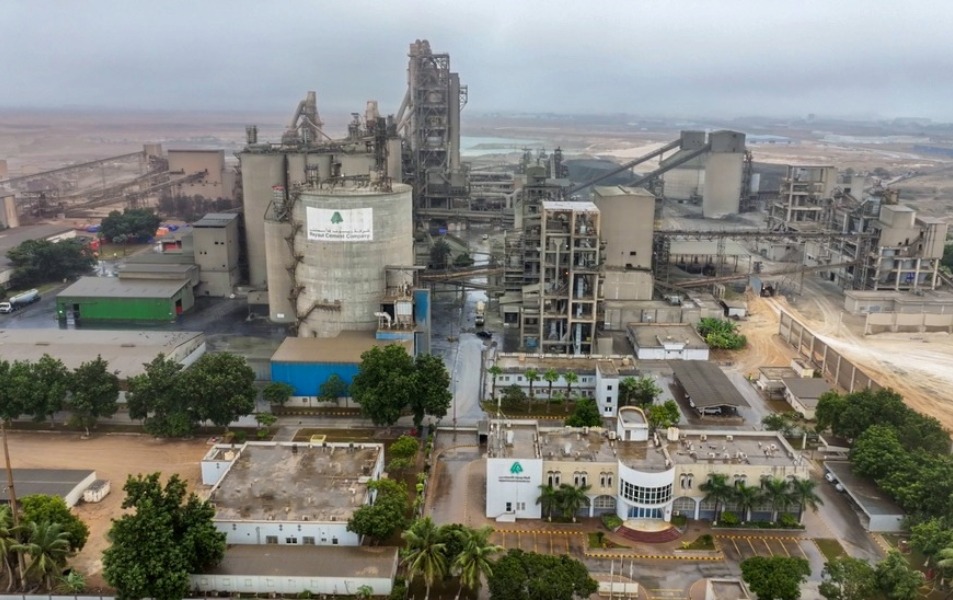

MUSCAT : The recovery was supported by higher sales volumes, improved operational efficiency and stronger contributions from key subsidiaries including Pioneer Cement, Sohar Cement and Raysut Maldives.
The turnaround comes as Oman’s cement industry continues to play an important role in supporting construction, real estate development and infrastructure projects. Raysut Cement Group currently operates with an annual production capacity of approximately 3.47 million tonnes of clinker and 5.70 million tonnes of cement, supported by a regional distribution and export network.
The company said it has entered a new phase of transformation under the slogan “A New Dawn,” with greater emphasis on performance, accountability, cost management and more efficient utilisation of its plants and assets.
Read More
Its operational transformation programme focuses on raising production efficiency, restructuring costs and maximising existing production capacities, while also exploring opportunities in energy, alternative fuels and mining.
Engineer Ali bin Abdullah Al-Zadjali, Chairman of Raysut Cement Company, said the group’s financial performance reflected the positive impact of measures aimed at restoring profitability and creating a more resilient and sustainable business.
He described the return to profit as an important milestone in the company’s transformation journey, driven by stronger cost control, operational efficiency, commercial discipline, better asset utilisation and improved performance monitoring.
Al-Zadjali said the next phase would focus on converting the momentum generated by the recovery into sustainable long-term growth.
This would include further improvements in operational discipline and energy efficiency, better utilisation of natural resources, assets and subsidiaries, as well as pursuing investment and commercial opportunities capable of creating long-term shareholder value.
Salim Abdul Qader, CEO of Raysut Cement Company, said the business had undergone a tangible transformation in its production processes and operational performance following a reorganisation of its activities.
He said the company’s return to profitability during the first six months of 2026 was its first in six years, reflecting the impact of its renewed focus on efficiency and competitiveness.
According to Abdul Qader, improvements across cement production have also strengthened product diversity, competitiveness and customer confidence, with further operational and financial improvement initiatives planned.
The transformation is also being supported by greater investment in the company’s workforce.
Tariq bin Salem Fadhil, Head of Human Resources at Raysut Cement Company, said the group was focused on developing human capital, strengthening Omanisation and preparing national talent through training, development and knowledge transfer.
The Omanisation rate has reached 67 per cent at Raysut Cement Company and 55 per cent at Sohar Cement Factory, he said.
Engineer Sulaiman bin Mohsen Al-Amri, Head of Information Technology at Raysut Cement Group, said the company had unified and interconnected systems across its subsidiaries, upgraded data centres and strengthened cybersecurity.
These initiatives have helped improve operational efficiency, speed up decision-making and strengthen productivity and business continuity across the group.
Raysut Cement now plans to expand the use of smart technologies, artificial intelligence, interconnected systems and data analytics as part of efforts to make technology a strategic partner across its operations.
Meanwhile, Devarajan, Head of Projects at Raysut Cement, said the company’s new operational strategy was focused on reducing energy, fuel and raw material consumption for every tonne produced.
The measures are expected to allow Raysut Cement to increase output from its existing plants while reducing production costs without compromising quality or safety standards.
“Raysut Cement has begun a new dawn and a new journey based on focusing on performance, cost control and teamwork,” he said.
Improving production efficiency, reducing variable costs and maximising the utilisation of existing plants will remain among the company’s priorities in the next phase.
For all the latest news from Oman and GCC, follow us on Twitter, Instagram and LinkedIn, like us on Facebook and subscribe to our YouTube page, which is updated daily.





