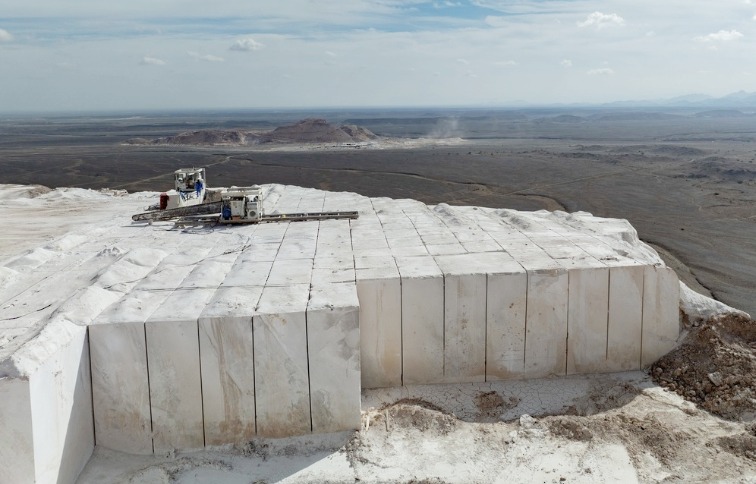

MUSCAT : The latest offering includes two public mining sites in North Sharqiyah, covering approximately 1.33 square kilometres and 1.22 square kilometres respectively. Initial geological surveys indicate the presence of dark marble deposits with strong commercial potential, positioning the sites as promising opportunities for new mining and processing projects.
Engineer Saud bin Khamis Al Mahrouqi, Director General of Minerals at the Ministry of Energy and Minerals, said Omani marble stands out as one of the sector’s most successful resources due to its high geological quality and wide range of colours, making it competitive in regional and international markets. He noted that Omani marble is extensively used in tiles, slabs and decorative stone applications, and is exported to several countries, reflecting the strength of local reserves and the efficiency of national production and manufacturing chains.
Oman currently has more than 15 active quarries and around 11 integrated marble processing plants, with annual production exceeding one million tonnes. According to Al Mahrouqi, production has the potential to rise further in line with improving global demand. He added that the Ministry’s policy prioritises maximising local added value by limiting the export of raw marble blocks and expanding the manufacture of finished, higher-value products.
Read More
- Indian Navy’s INS Sudarshini docks in Salalah on final overseas stop of transoceanic voyage
- ‘Serving Oman is an honour we cherish’: PDO’s Managing Director Dr Aflah Al Hadhrami reflects on Royal recognition
- Muscat Municipality trains SQU students in meat safety and veterinary inspection
- Dedicated ambulance service launched for bedridden patients in Muscat
- Struggling to pay electricity bills? Nama Supply offers flexible payment plans
Beyond increasing output, the Ministry’s strategy focuses on improving operational efficiency, encouraging the adoption of modern technologies, creating job opportunities, and promoting environmental sustainability. This includes recycling marble waste and linking it to supporting industries, reinforcing the principles of a circular economy.
Al Mahrouqi explained that the Ministry is implementing strategic programmes to develop the marble sector by preparing public mining sites with full approvals and applying a competitive bidding system that ensures transparency and equal opportunity. These measures aim to provide investors with clear legislative and regulatory frameworks, creating an attractive and transparent investment environment. He stressed that Omani marble has strong potential to emerge as a globally recognised brand.
Omani marble resources include metamorphic limestone and dense sandstone that can be polished in colours ranging from white and brown to yellowish and black. Major reserves are concentrated in Ibri, Bahla, Nizwa, Ibra, Al Qabil and Mahdah, as well as several locations within the ophiolite belt of the western and eastern Hajar Mountains. Extraction is carried out in mountainous areas using advanced techniques such as wire cutting and diamond blades, before blocks are transported to processing plants for conversion into slabs and finished products.
The Ministry confirmed that its development efforts also cover the identification of new quarry sites, the establishment of specialised logistics centres, and the promotion of local manufacturing, including polished slabs and architectural cladding materials. Sawing waste is also being utilised to produce environmentally friendly products.
Omani marble exports are primarily directed to GCC countries, India and South Korea, in line with the policy of restricting raw block exports. As part of its drive to promote quality investment opportunities, the Ministry continues to offer mining sites through the “Taqah” platform, which showcases building materials projects for Omani and international investors, including a black marble site in the Wilayat of Dima Wa Al Taiyeen in North Sharqiyah, to strengthen local and global market reach.
The offering runs from December 28, 2025, to April 28, 2026, as part of broader efforts to expand the investment base and enhance the sector’s global competitiveness.
For all the latest news from Oman and GCC, follow us on Twitter, Instagram and LinkedIn, like us on Facebook and subscribe to our YouTube page, which is updated daily.





