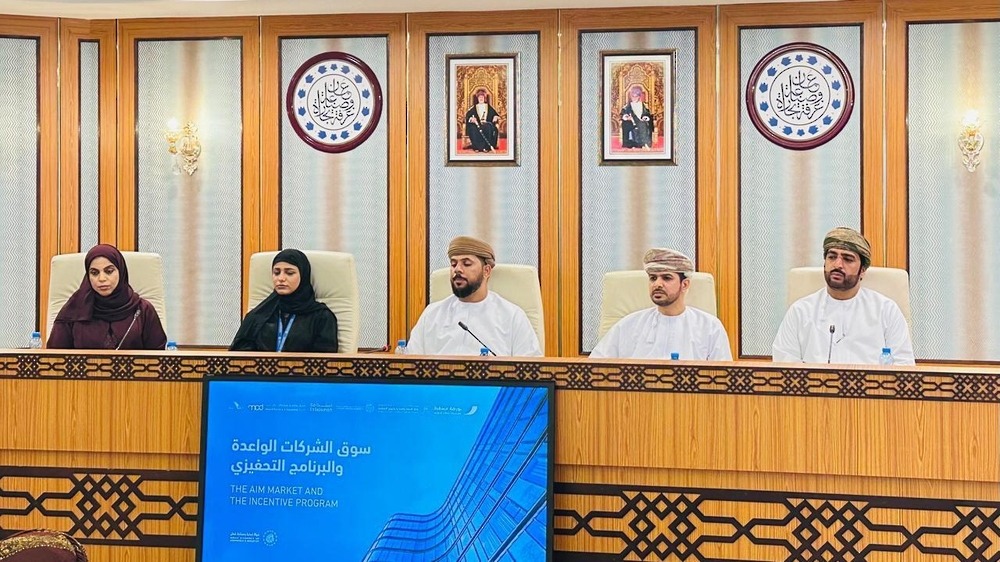

Muscat: The initiative comes in line with high directives to strengthen the national capital market and support sustainable growth for targeted companies, while enhancing their competitiveness and ability to expand and develop their businesses.
The ministry said it actively promoted the incentive programme through field visits to companies and meetings organised via branches of the Oman Chamber of Commerce and Industry across several governorates. These efforts aimed to encourage limited liability companies to transform into closed joint-stock companies or to establish new entities under the third track of the initiative.
As a result, seven limited liability companies have been converted into closed joint-stock companies, while 10 new closed joint-stock companies, including holding companies, have been established. The move has helped boost corporate competitiveness, improve governance practices, and strengthen sustainability and financial stability, enabling companies to better compete in local and international markets and attract quality investments.
Read More
- Oman breaks ground on RO 5.8 million tourism and commercial project in Masirah
- Oman airports handle 9.3 million passengers by end of August, down 7.1%
- Over 700 banned tobacco products seized in Oman’s Masirah Wilayat
- Muscat Municipality warns against illegal worker housing in residential neighbourhoods
- Omani doctor injured in Riyadh airport attack, embassy says
Mohammed bin Salem Al Hashmi, Director of the Regulatory Establishments Department at MoCIIP, said the incentive programme represents a strategic step towards enhancing the robustness of Oman’s business environment. He noted that transformation into closed joint-stock companies raises levels of compliance and transparency, strengthens governance, supports company growth and expansion, and contributes to the development of the national capital market.
He added that the initiative also enhances regulatory efficiency and prepares companies to operate within clearer frameworks, striking a balance between market protection and investment promotion, while supporting economic diversification goals.
According to the ministry, the incentive package includes an exemption from one-third of income tax for two years, fast-track access to financing through the Development Bank, a 10 per cent price preference in tenders, the option to pay income tax in instalments, and a six-month exemption from value-added tax.
To qualify, companies must have a minimum capital of RO 500,000, employ at least 20 Omani nationals or meet prescribed Omanisation ratios, and comply with value-added tax requirements. The ministry said these conditions are designed to promote company growth, support the capital market, and ensure long-term financial and economic sustainability in the Sultanate.





