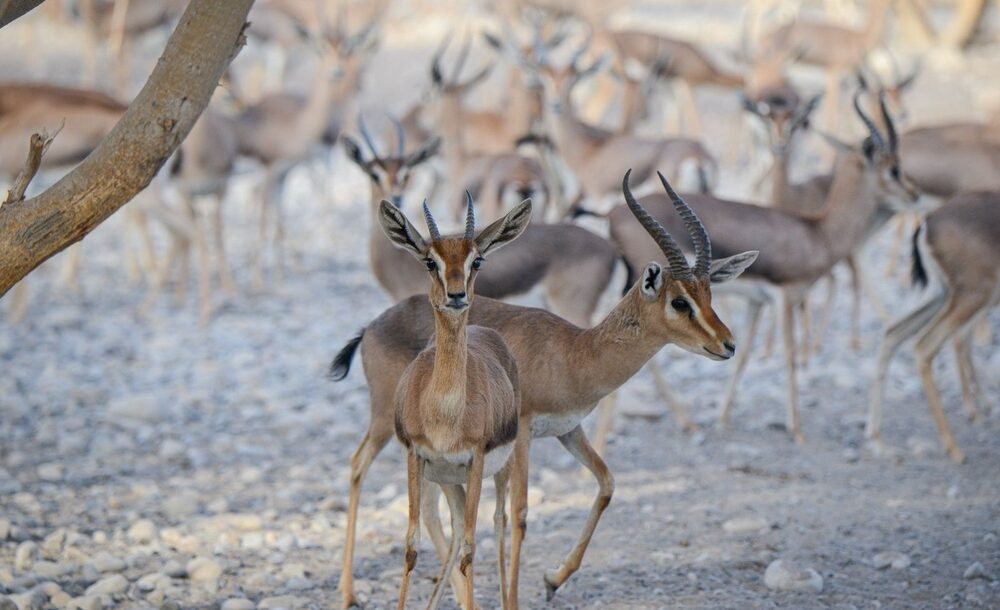

Muscat – A pioneering research initiative in the Sultanate of Oman has successfully documented the complete genetic architecture of the Arabian Gazelle (Gazella arabica), marking a significant advancement in wildlife conservation science. The comprehensive study, published in the international journal “Zoology in the Middle East”, provides crucial insights into the genetic diversity of gazelle populations across Oman’s breeding centers.

This landmark research represents a transformative development in Oman’s wildlife conservation and genetic resource management strategies. The findings establish a precise genetic database that will inform conservation programs for vulnerable species, particularly those facing extinction threats.
Conducted through collaboration between the Environment Authority, Oman Animal and Plant Genetic Resources Center (under the Ministry of Higher Education, Research and Innovation), and Sultan Qaboos University (SQU), the study employed cutting-edge genetic analysis methodologies. The research team performed mitochondrial DNA sequencing and utilized nuclear microsatellite markers to examine 65 gazelle specimens from three key conservation sites: Al Saleel National Park, the Wildlife Rehabilitation and Propagation Centre in the Wilayat of Barka and the Arabian Oryx Sanctuary.
Read More
- His Majesty Sultan Haitham returns home after UK state visit
- Oman participates in London Press Club awards, presents Journalist of the Year honours
- His Majesty Sultan Haitham concludes UK state visit as investment and trade ties deepen
- Oman Meteorology: Moderate chance of tropical activity in Arabian Sea, no direct impact expected
- Oman’s TRA to host public dialogue on child online safety

Analysis revealed substantial genetic diversity within the three gazelle populations, with evidence of healthy genetic exchange between groups. This genetic richness enhances the species’ resilience against environmental challenges and disease threats. The study further identified only low to moderate genetic differentiation between populations, indicating their suitability for combined reintroduction programs without significant inbreeding risks.
According to researcher Zahir bin Salim Al Alawi from the Environment Authority, “This research provides the scientific foundation for developing effective conservation strategies that maintain genetic diversity – our primary defense against environmental threats and disease outbreaks.”
The genetic data enables authorities to track the origins of both wild and confiscated animals, strengthening efforts against illegal wildlife trafficking. Dr. Alia Al Ansari from Sultan Qaboos University (SQU) highlighted the importance of institutional collaboration, noting that “the Environment Authority has immediately applied these genetic insights to refine its conservation and reintroduction protocols.”

The project has facilitated the creation of a national genetic bank for wildlife conservation, preserving Oman’s genetic heritage for future generations. Researcher Asila Al Na’ebi from Oman Animal and Plant Genetic Resources Center emphasized that “documenting these genetic profiles helps secure Oman’s natural heritage while supporting intellectual property rights over indigenous genetic resources.”
Eng. Ahmed Al Shukeili of the Environment Authority confirmed that the study directly supports Oman Vision 2040’s environmental objectives, particularly those concerning biodiversity conservation and ecosystem sustainability. The research establishes a scientific benchmark for evidence-based conservation policy and represents a model for integrating genetic research with national conservation priorities.