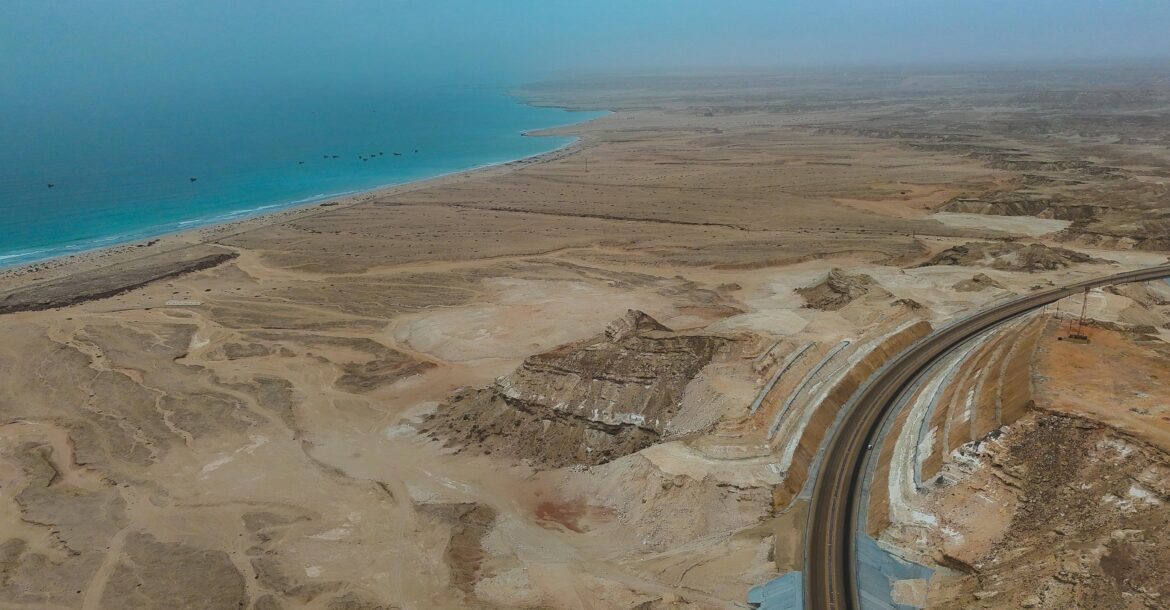

MUSCAT – The road will extend 14 kilometers, connecting the tourism area with the fishing port and the fisheries and food industries complex.
The project consists of two lanes in each direction and includes four main roundabouts, surface water drainage systems designed with modern infrastructure, as well as signage, concrete and steel barriers, and service facilities. This comes as part of an integrated plan to develop the transport system within the master plan of the zone.
Eng. Ahmed bin Ali Akkaak, CEO of the Special Economic Zone at Duqm, stated that the coastal road project represents a qualitative addition to the infrastructure of the tourism zone in Duqm, as it adheres to the highest engineering standards in quality and traffic safety. He added that the project enhances the area’s attractiveness for tourism investments and related economic activities. The road will pass through scenic landscapes that vary between seashores, natural hills, and future development projects, offering visitors a unique experience and boosting the vitality of the tourism sector.
Read More
- Youth are the pillar of Oman’s development and future, says minister
- His Majesty Sultan Haitham issues decrees amending Council of Oman, Shura election laws
- Oman moves to ensure essential goods supply, price stability as CPA meets retailers
- 13 expats arrested for gambling in Muscat
- His Majesty Sultan Haitham expresses condolences to Jordan King over church attack
The tourism zone is considered one of the most prominent components of the Special Economic Zone at Duqm. It spans around 30 square kilometers, of which 15 square kilometers directly overlook an 18-kilometer waterfront, while the remaining area lies on nearby highlands, offering a distinctive diversity for tourism activities. Work is underway to develop the detailed master plan of the zone, ensuring the distribution of tourism activities according to the latest urban planning systems, defining architectural façade requirements, and establishing artificial development projects that enhance the beauty of the zone and strengthen its capacity to attract both domestic and international tourism.
The project also has strategic significance, as it directly links the tourism zone with the fishing port, and subsequently with Duqm Airport. This contributes to the integration of the transport and logistics network. The road also provides direct access between hotels, resorts, and leisure facilities, supporting current and future investment projects in the tourism sector. Ultimately, it reinforces Duqm’s position as a promising tourism destination that contributes to the national economy and supports Oman’s economic diversification plans.





