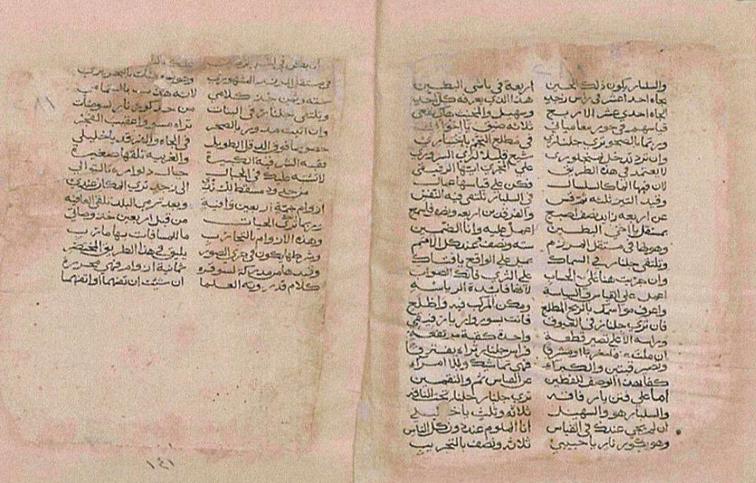

Muscat: This marks the second Omani manuscript to receive this international recognition.
The Great Nuniyah is celebrated as one of Oman’s most significant contributions to the field of navigation and marine sciences. Written by Ahmad ibn Majid, the manuscript documents extensive knowledge of ship movements, anchoring techniques, and ancient international maritime routes. Notably, while earlier scholars had mapped the Earth into seven northern regions, Ibn Majid’s work boldly expanded this to include seven additional regions in the southern hemisphere—redefining geographical understanding of the time.
Beyond scientific value, the manuscript holds deep humanistic significance. It offers vivid descriptions of marine life—such as whales, snakes, and coral reefs—as well as realistic portrayals of the diverse coastal communities encountered during voyages. This makes it not only a navigational guide but also a cultural and historical record of life at sea in the 15th century.
Read More
- Chinese President Xi welcomes His Majesty Sultan Haitham at Beijing ceremony
- Oman extradites Mahadev betting syndicate promoter Sourabh Chandrakar to India
- Oman reviews aviation authority’s early warning and crisis communication systems
- One-year-old boy dies after being run over by school bus in Oman
- His Majesty Sultan Haitham arrives in Beijing for state visit
Born in 1421 AD on Oman’s coast, Ahmad ibn Majid—often referred to as the “Lion of the Sea”—is widely credited with developing the magnetic compass. Operating primarily from Ras al-Hadd, he left behind a rich scientific legacy with over 40 known works, including The Great Nuniyah. His contributions were earlier acknowledged by UNESCO in 2021 as part of their commemorations of globally influential historical figures.
The manuscript is currently preserved by Oman’s Ministry of Culture, Sports and Youth, ensuring its safeguarding for future generations.
UNESCO’s Memory of the World Programme, established in 1992, aims to preserve vital documentary heritage that is at risk due to conflict, environmental factors, or neglect. This includes manuscripts, archives, films, photographs, and more. Oman’s first successful inscription came in 2017 with The Mine of Secrets in Oceanography by sailor Nasser bin Ali Al-Khadouri.





