

Muscat: The exhibition, ‘Legacy of Indo-Oman Relations’, opened on February 11 and runs until February 13, 2025.
A joint effort by the National Archives of India (NAI) and the National Records and Archives Authority (NRAA) of Oman, the exhibition features over 100 documents, photographs, maps, and artefacts that span various historical periods, reflecting the deep-rooted cultural and civilizational ties between Oman and India. The materials on display highlight the two nations’ centuries-old diplomatic relationship, showcasing a rich history of manuscripts, letters, and telegrams exchanged between the two countries throughout the ages.
The opening ceremony was presided over by Arun Singhal, Director General of the National Archives of India. In his address, Singhal emphasised the long-standing bond between Oman and India, which dates back more than 5,000 years. He noted the enduring connection across the Arabian Sea, where the two peoples have historically exchanged goods, services, and ideas, alongside sharing common cultural and civilizational heritage.
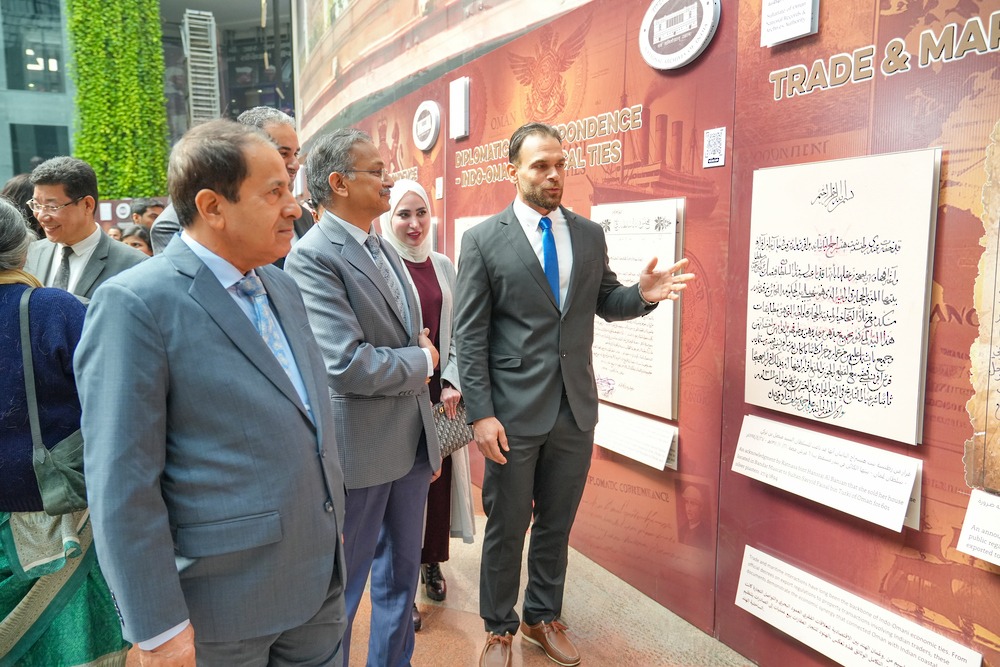
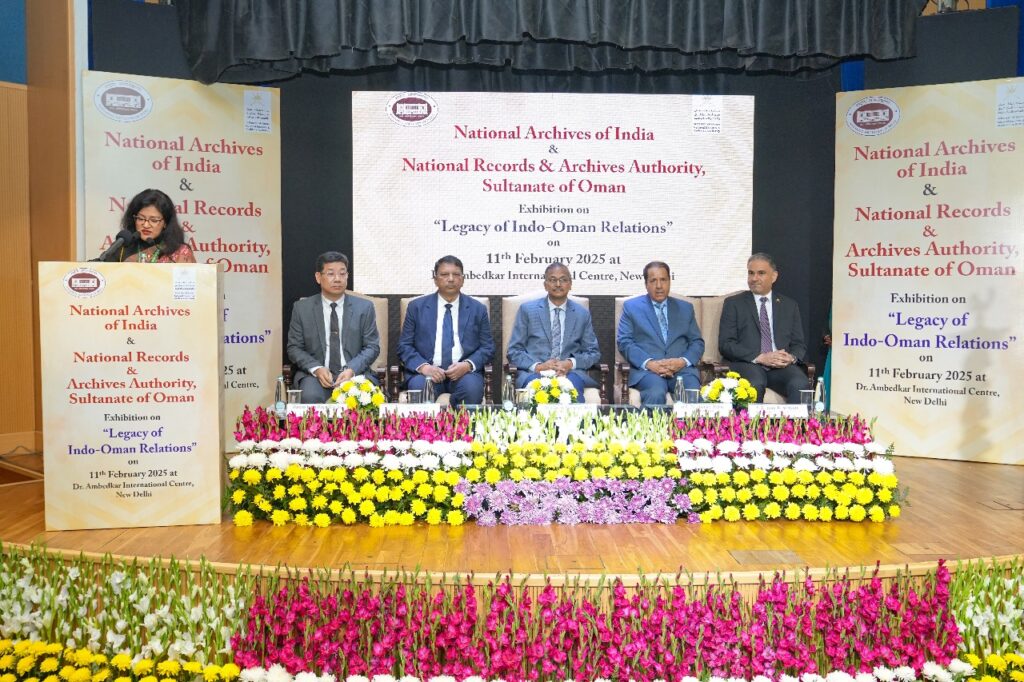
Singhal highlighted the significance of the documents showcased, noting that they provide valuable insights into the Omani-Indian maritime history, as well as the commercial and cultural exchanges that have shaped the region.
The ceremony was attended by His Excellency Dr. Hamad bin Mohammed Al Dhawyani, Chairman of the NRAA, His Excellency Issa bin Saleh Al Shaibani, Ambassador of the Sultanate of Oman to India, along with ambassadors from various Arab and foreign countries, government officials, scholars, and business leaders.
The exhibition spans multiple thematic pavilions, each illustrating key political developments from ancient to modern times. Among the exhibits are maps, letters, and archaeological artefacts documenting the historical exchanges between the two nations. Highlights include the exchange of diplomatic visits and the shared history of friendly relations between Oman and India.
Notably, the exhibition also features archaeological evidence from Ras Al Hadd in eastern Oman, which points to trade links with the Indus Valley Civilization (around 2500 BC). Relics from this period reveal that Indian traders exchanged spices, textiles, and precious stones for Omani frankincense, dates, and copper—goods of significant value in the ancient world.
Read More
- Low clouds, fog expected over Muscat and Al Batinah
- Oman sets October 15 deadline for approval to use national symbols on products
- Oman, Iran agree framework for safe shipping corridor through Strait of Hormuz
- Thunderstorms, strong downdraft winds sweep parts of Oman
- Saudi Crown Prince sends written message to His Majesty Sultan Haitham





