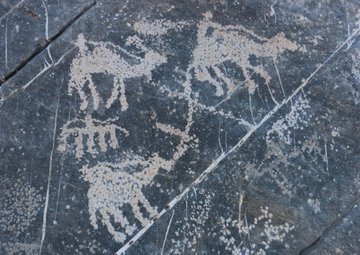

Muscat – However, the artwork is concentrated in the mountainous regions and can be divided into two schools: the northern school in the Hajar Mountains and the southern school in the Dhofar mountain range. These artworks, which date back to ancient times, reveal how early inhabitants of Oman documented their lives.
Researcher Dr. Saif bin Yousef Al Aghbari highlights the symbolism in the rock inscriptions, noting similarities between northern and southern engravings. For example, the Jalan inscription contains letters from the South Arabian language, while inscriptions in Samad Al-Shan feature the Southern Musnad script. These inscriptions suggest the presence of an ancient Arabic alphabet before the standard Arabic script emerged with Islam.
The rock art depicts aspects of daily life such as weapons, hunting tools, and even symbolic animals like stars, snakes, and ibexes. Dr. Saif Al Aghbari elaborates on various techniques used by ancient artists, including hammering, scratching, dotting, and colouring. Some of the oldest drawings are thought to date back to the Bronze Age.
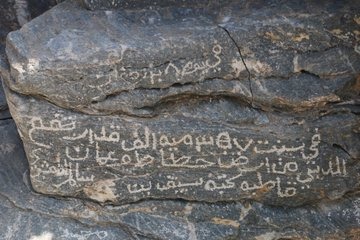
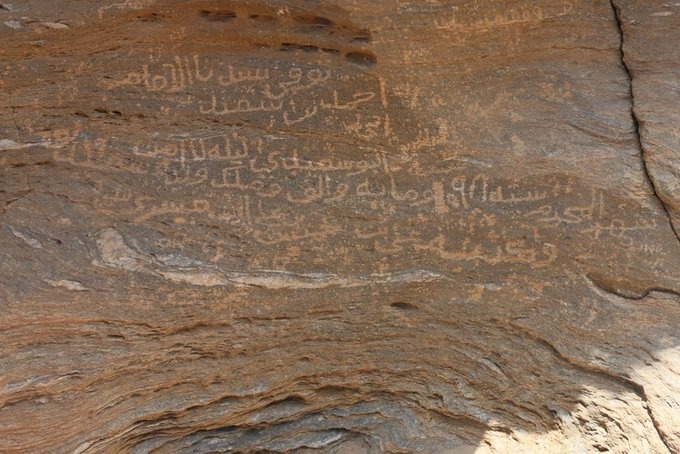
Dr. Habib bin Marhoon Al Hadi, a researcher in Omani history, emphasises the cultural significance of rock art, reflecting ancient religious beliefs and societal practices. He notes the symbolic meanings behind many drawings, some of which are abstract and geometric, making it challenging to interpret their precise connotations. This art also provided a means of recording historical events, including political and social shifts.
Oman’s rich rock art heritage spans several historical periods, with evidence of Neolithic drawings and inscriptions from the third century BC.
Sulaiman bin Saleh Al Rashidi, a researcher in documentary sciences, underscores the importance of preserving rock art as a cultural and historical treasure. He calls for a integrated approach to its conservation, including public awareness and legal frameworks to safeguard these ancient artifacts from natural and human threats.
Rock art not only provides a glimpse into Oman’s past but also contributes to the country’s tourism sector. Sulaiman Al Rashidi suggests that these sites could attract heritage tourism, benefiting the national economy and fostering educational opportunities by incorporating this unique art into curricula and promoting its cultural significance.
Read More
- His Majesty Sultan Haitham returns home after state visits to China, Brunei
- Oman’s digital economy contributes 9% to GDP as investments reach RO 1.3 billion in 2025
- Muscat Municipality announces traffic diversion on Al Khuwair service road from November 4
- Oman clarifies expat recruitment rules after agency talks
- Oman police arrest two over vehicle theft, number plate tampering and resisting officers in Seeb





