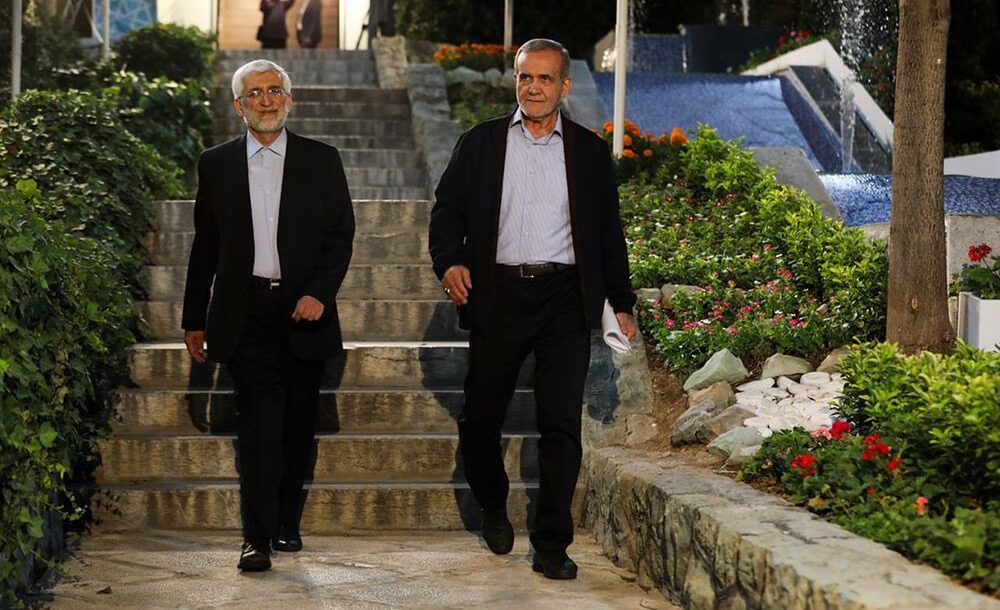

IRAN: voters are casting their ballots in the second round of early presidential elections today. This runoff follows last Friday’s initial vote, which saw reformist Masoud Pezeshkian and conservative Saeed Jalili emerge as the top contenders to succeed the late President Ebrahim Raisi.
Masoud Pezeshkian, a cardiologist born in 1954, has a notable political career, including serving as Minister of Health under former President Mohammad Khatami and being a current member of Parliament representing East Azerbaijan Province. On the other side, Saeed Jalili, born in 1965, has significant experience in national security, having led Iran’s nuclear negotiation team during Mahmoud Ahmadinejad’s presidency and previously served as Secretary-General of the Iranian Supreme National Security Council.
These elections hold immense significance, with the next President facing critical issues such as economic challenges at home and complex international relations, particularly the nuclear deal and ties with the United States and Israel. The stakes are high, as the new President will need to navigate long-term strategic agreements with China and Russia while addressing domestic economic concerns.
Read More
- Philippines, GCC move to expand medical screening network for workers heading to Gulf
- Air India appoints former Ethiopian Airlines Chief Tewolde Gebremariam as new CEO, MD
- GCC bottled water market reaches $7.55 billion
- Lightning strikes kill 14 people in India’s Jharkhand
- Libyan coast guard rescues 29 migrants off Sirte coast
Ali Salari, a political economy professor at the University of Tehran, highlighted the importance of the next President’s ability to manage unresolved foreign policy issues and activate key strategic agreements. Similarly, Mohammad Hosseini, former Minister of Culture, emphasized that the election will shape the future political landscape and prioritize the economic file.
Reformist leader Rahmatullah Bigdeli called for lifting economic sanctions, resolving the nuclear agreement, and fostering relations with regional and global partners.
With over 61 million eligible voters, the turnout and outcome of this election will be critical. The Iranian Interior Ministry has announced that all votes will be counted manually, following a 40 per cent turnout in the first round.
This early election, prompted by the tragic death of President Ebrahim Raisi in a helicopter crash, has temporarily placed Mohammad Mokhber, the first vice president, at the helm.





