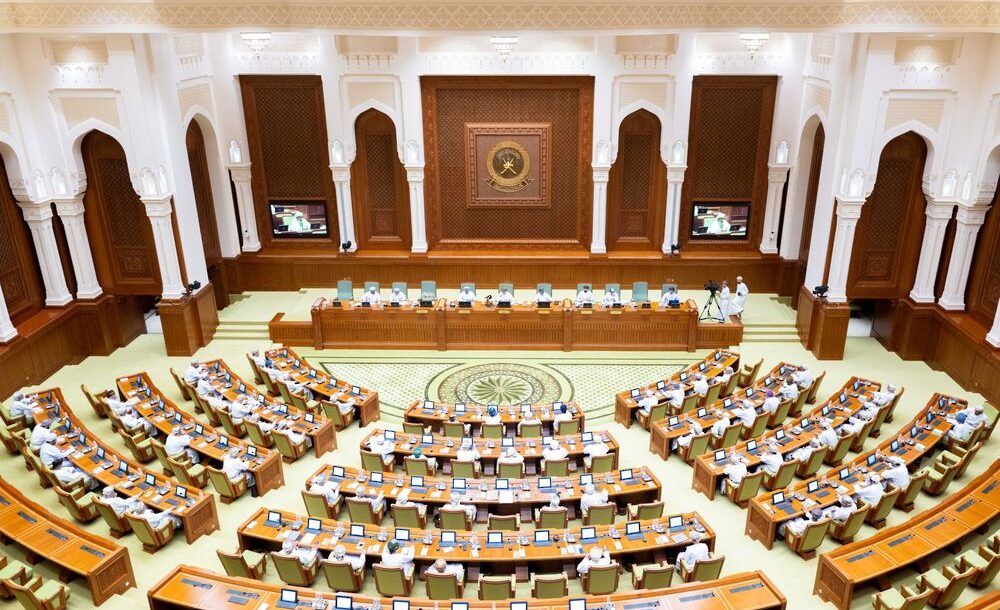

MUSCAT — Oman has amended its Council of Oman Law to tighten attendance requirements for Shura Council members and refer draft development plans and the state budget to both legislative chambers simultaneously for review.
The changes fall under Royal Decree No. 97/2026, issued by His Majesty Sultan Haitham bin Tarik on October 26. The decree takes effect the day after its publication in the Official Gazette.
Under the amendments outlined in a summary published by Atheer, Shura Council members will lose their membership if they miss three consecutive meetings or five separate meetings within a year, covering meetings of the council, its bureau or its committees.
Read More
- University Medical City performs Oman’s first middle ear hearing aid implant
- Oman swimmer Al Hasani carries flag at Dakar Youth Olympics, eyes personal best
- Oman sets jail terms of up to three years for insulting national flag, emblem or anthem
- Oman’s Health Ministry says premarital medical certificates valid for six months
- Oman allows National Day vehicle stickers from November 1 to 30, sets safety rules
The changes also prohibit members from misusing parliamentary immunity or exploiting it for purposes beyond its intended scope. In cases of abuse, the relevant chamber must respond to a request to lift immunity and authorise criminal proceedings.
Membership of the State Council or Shura Council cannot be combined with a position on the board of the Oman Chamber of Commerce and Industry.
The amendments establish a mechanism for filling vacant Shura Council seats, including by selecting the next eligible female candidate with the highest proportion of votes in the relevant governorate.
On economic policy, draft development plans and the state budget will be referred to the State Council and Shura Council at the same time. Draft economic and social agreements may also be referred to the State Council for its views.
The Shura Council will be permitted to submit recommendations to the government on its own initiative concerning obstacles facing the economy and measures to support development, where it considers such action necessary in the public interest.
The amendments also set limits on the use of the council’s scrutiny powers. These must not serve private interests, address personal matters, breach the Basic Law of the State or other legislation, harm the public interest, or cause harm to individuals or public and private legal entities.
They must also exclude sovereign or security matters, cases pending before courts or the Public Prosecution, and matters already settled by a final judicial ruling.





