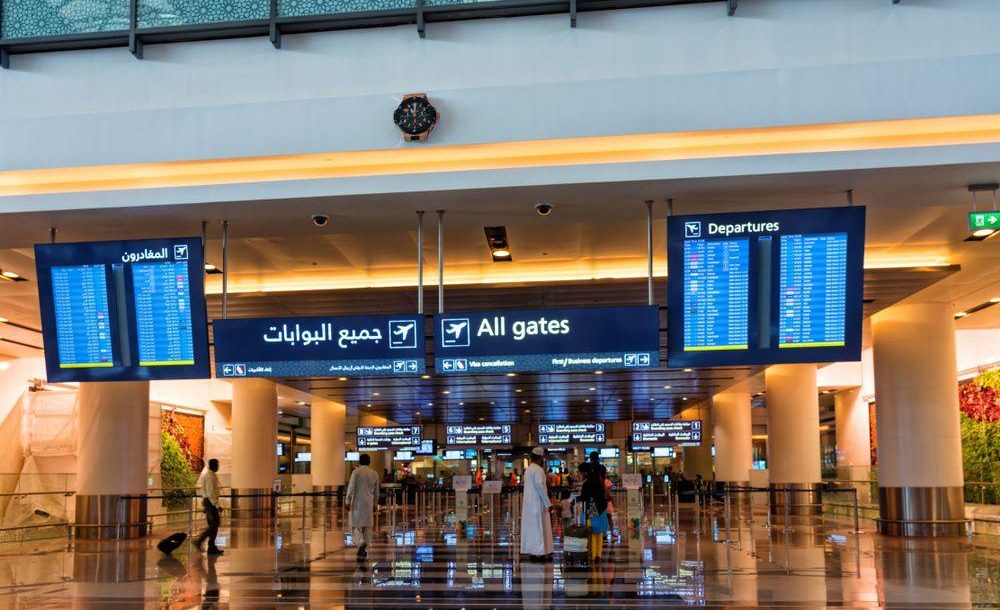

MUSCAT — An estimated 117,000 passengers affected by flight disruptions were eligible for compensation under Oman’s passenger rights rules over the past year, claims company AirHelp said.
The company’s analysis covered flights falling under Oman’s Passenger Rights Protection Regulation between September 2025 and August 2026, including those affected by long delays, cancellations and denied boarding.
AirHelp said eligible passengers could collectively be owed millions of euros, although it did not provide a precise total or say how many had already received compensation.
Read More
- Oman opens RO 2.57 million Nizwa Public Park after trial draws 1.3 million visitors
- Oman-UK: From historical legacy to future partnership
- Oman to showcase climate achievements at COP31 in Türkiye
- Oman’s Health Ministry issues regulations for overseas premarital medical screening
- Oman targets wider export markets as dates and honey exhibition opens
The regulation, introduced by the Civil Aviation Authority in 2024, covers all flights departing from Oman and flights arriving in the country operated by Omani carriers, including Oman Air and SalamAir.
On international routes, passengers may qualify for compensation if they reach their final destination more than six hours late, their flight is cancelled less than 14 days before departure, or they are denied boarding against their will, according to AirHelp.
Compensation depends on flight distance, with payments of RO 108 for journeys under 1,500 kilometres, RO 173 for routes between 1,500 and 3,500 km, and RO 260 for longer flights. Routes from Muscat to London, Paris and Frankfurt fall within the highest band, the company said.
“But these protections only matter if people use them,” Eric Napoli, AirHelp’s chief legal officer, said.
The company cited separate research indicating that 79% of passengers do not understand their rights, even in markets with longstanding passenger protection rules. It did not specify an Oman-only figure.
Airlines are exempt from compensation when disruptions result from force majeure, or when passengers are rerouted and arrive less than two hours late, AirHelp said.
The rules also require airlines to provide refreshments after two hours, meals after three hours, and hotel accommodation with transport after six hours. Airlines that fail to provide the required care must compensate passengers instead, according to the company.
Passengers with reduced mobility are entitled to free assistance and cannot be refused carriage without a valid safety reason.
AirHelp said passengers have two years to submit claims and that it has begun handling cases under the Omani regulation.