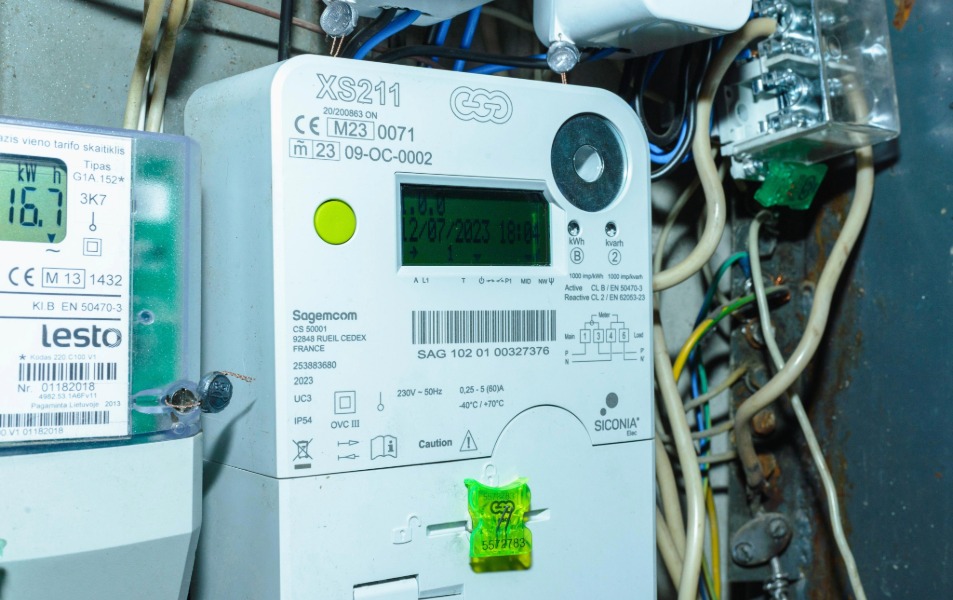

MUSCAT : More than 1.5 million smart electricity meters have been installed across Oman, taking the nationwide rollout to about 80%, according to a senior official at Nama Electricity Distribution.
Speaking exclusively on Al Sawt Podcast, the sister platform of The Arabian Stories, Eng. Mohammed Al Ghunaimi, Director General of Planning at Nama Electricity Distribution, said the programme had evolved from an initiative focused on remote meter reading into a wider technological infrastructure supporting the electricity network.
“The project has now reached approximately 80% across the various governorates of the Sultanate, with more than 1.5 million smart meters installed,” Al Ghunaimi said.
Read More
- Royal Hospital implants Oman’s first CardioMEMS sensor to support heart failure care
- Oman records nearly 3,000 individual labour complaints in first half of 2026
- Oman opens registration for 2027 Hajj season for citizens, residents
- Four days, two countries: Oman expands economic diplomacy in Africa
- Oman police arrest 17 for illegal entry in Musandam
Oman’s smart metering programme began around 2019-2020, when Nama companies were instructed to install smart meters for major electricity consumers, primarily to enable remote readings.
The programme entered a significant new phase in 2021 with the launch of the smart metering infrastructure project.
Al Ghunaimi said the transition involves considerably more than replacing conventional electricity meters. Each smart meter is supported by communications networks, data-receiving systems, analytical platforms and other technologies that together form a wider digital infrastructure.
For consumers, one of the most immediate benefits is greater accuracy in electricity meter readings and billing.
But Al Ghunaimi said the larger value lies in the data generated by the system and its ability to give electricity companies greater visibility over the network.
Smart meters provide a communication and sensing point at customers’ premises, allowing the company to better understand electricity consumption patterns. That information can then be used to improve network planning and anticipate requirements more effectively.
The technology can also provide information on interruptions and the quality of electricity supplied to customers, helping the company identify problems across the network.
Al Ghunaimi said analysis of the data collected through the smart metering infrastructure is ultimately intended to improve the reliability and quality of electricity supply and enable faster restoration of service following outages.
The rollout represents a key element of the electricity sector’s broader transition towards smarter networks, with real-time and remotely collected data increasingly supporting decisions on network planning, operations and customer service.
For all the latest news from Oman and GCC, follow us on Twitter, Instagram and LinkedIn, like us on Facebook and subscribe to our YouTube page, which is updated daily.





