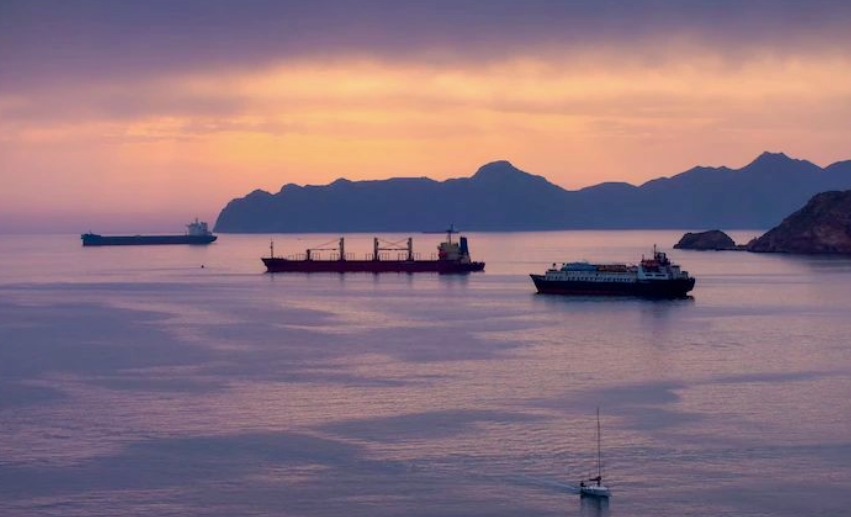

MUSCAT : The number of commercial vessels passing through the Strait of Hormuz continued to decline on Monday as escalating regional attacks disrupted one of the world’s most important energy shipping routes.
Preliminary data from shipping analytics firm Kpler showed that just four commodity vessels transited the strait on Monday, down from 10 vessels a day earlier.
Of the four vessels, two dry bulk carriers exited the waterway, while two oil tankers entered the strait in ballast mode.
Read More
- SpiceJet Delhi-Dubai flights delayed over 24 hours, passengers protest
- Meta agrees to report child abuse cases to Indian authorities
- US judge blocks Trump move to restrict international student stays
- US open to Iran negotiations, Trump says
- France unveils fresh bill to ban social media use for under-15s
The decline marks a dramatic fall from normal traffic levels. Before the Iran war began on February 28, the Strait of Hormuz typically handled around 125 large commercial vessels a day, including oil tankers, gas carriers, bulk vessels and container ships.
According to the Hormuz Strait Monitor, at least 436 vessels were at a standstill, highlighting the growing disruption to maritime traffic in the region.
Tensions have intensified following a series of attacks on vessels in and around the strait as well as strikes targeting Saudi energy infrastructure.
Iranian media also reported that an oil tanker exploded and caught fire after striking mines in the Strait of Hormuz, although details surrounding the incident remained limited.
The worsening security situation has pushed energy prices higher, with Brent crude futures rising $1.24, or 1.18 per cent, to $106.93 a barrel in early trading.
Oil markets have already been under pressure after drone attacks forced Saudi Arabia to shut its key East-West oil pipeline, an important alternative export route that allows crude shipments to bypass the Strait of Hormuz.
Meanwhile, diplomatic efforts to ease tensions have suffered a setback, with Gulf Arab states postponing planned talks with Iran over possible arrangements for shipping through the strait.
Shipping movements have also fallen in the nearby Bab el-Mandeb Strait, where Kpler recorded 21 commodity vessel transits on Monday, down from 28 a day earlier.
For all the latest news from Oman and GCC, follow us on Twitter, Instagram and LinkedIn, like us on Facebook and subscribe to our YouTube page, which is updated daily.





