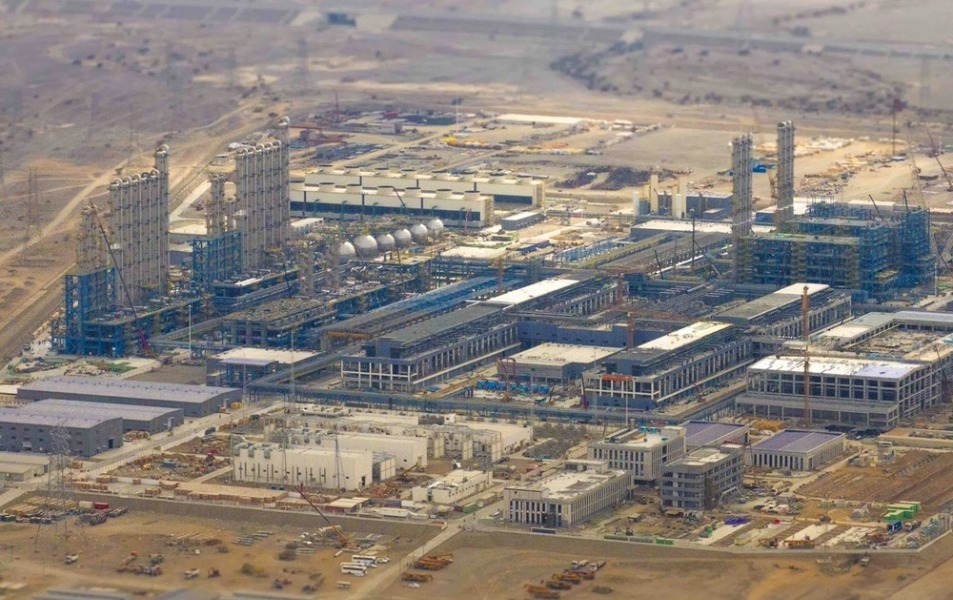

MUSCAT : The industrial sector is moving beyond simply expanding the number of factories and production capacity towards developing an integrated ecosystem built around advanced technologies, local supply chains, higher local content and skilled national talent.
According to figures from the National Centre for Statistics and Information (NCSI), manufacturing industries contributed around RO 3.7 billion to Oman’s GDP at constant prices by the end of 2025, while their contribution stood at RO 869 million in the first quarter of 2026.
Under the Industrial Strategy 2040, Oman aims to raise manufacturing’s contribution to RO 5.44 billion by 2030 before reaching approximately RO 10.702 billion by 2040.
Read More
- A taste of Britain comes to Oman! LuLu British Food Week serves up a feast of flavors
- Oman Cables breaks ground on new plant with investment exceeding RO 10 million
- Shariah-compliant United Omani Islamic Fund opens public subscription on October 18
- OQ8, Invest Oman to explore investment and business opportunities at Duqm Now forum
- Roberto’s Muscat welcomes Ilario Prospero as General Manager
The push comes as Oman’s non-oil merchandise exports continue to expand. Their value rose 1.5 per cent year-on-year to RO 2.739 billion by the end of May 2026, covering products including metals, chemicals, energy-related industries and food products.
The strategy seeks to lift the value of non-oil merchandise exports to more than RO 10 billion by 2030.
Re-exports, meanwhile, jumped 64.4 per cent during the same period to more than RO 1 billion.
Minister of Commerce, Industry and Investment Promotion Anwar bin Hilal Al Jabri said the indicators reflected the effectiveness of national policies aimed at transforming Oman’s industrial sector into a more integrated and competitive ecosystem.
He said rising foreign direct investment in industry demonstrated Oman’s growing attractiveness as an investment destination, supported by its strategic geographical position, modern infrastructure, integrated economic and industrial zones, investment incentives and access to regional and international markets.
The Ministry will focus on strengthening partnerships with the private sector, localising priority industries, increasing local content and supporting SMEs connected to industrial supply chains.
“Our ambition is not limited to increasing the size of the industrial sector,” Al Jabri said, stressing the goal of developing a sustainable, smart and competitive industrial sector capable of innovation and exports, while reinforcing Oman’s position as a regional industrial, logistics and investment hub.
Industrial workforce tops 240,000
Eng. Ghalib bin Saeed Al Maamari, Undersecretary for Commerce and Industry, said around 240,226 people were employed in Oman’s industrial sector at the end of 2025.
The Industrial Strategy 2040 aims to increase the workforce to approximately 273,000 by 2030, with opportunities expected particularly in food manufacturing, non-metallic mineral products, machinery and equipment industries.
The strategy also targets a funding mix in which local private investment accounts for around 54 per cent and foreign investment for 34 per cent.
Industrial development is also expected to generate activity beyond factory floors, including packaging, transportation, warehousing, laboratories, maintenance, spare parts, software, automation, engineering and safety services.
Oman has identified 30 promising industrial activities from a total of 119, focusing on clusters covering food, petrochemicals, healthcare, metals and minerals, electromechanical industries, environmental industries and renewable energy.
Meanwhile, around 7,307 Omani products were registered on the “Made in Oman” platform between 2024 and June 2026.
Factories turn to AI and automation
Technology is becoming a central component of Oman’s industrial transformation.
Eng. Khalid bin Salim Al Qasabi, Director General of Industry, said manufacturers are increasingly adopting automation, interconnected production lines, artificial intelligence, data analytics, predictive maintenance and advanced supply-chain management.
Oman’s Smart Production Factories Programme, launched in 2024, initially evaluated 20 factories using the internationally recognised Smart Industry Readiness Index (SIRI).
The programme was subsequently expanded to target 60 factories, with 45 evaluations completed by the end of June 2026, equivalent to 75 per cent of the target.
The index assesses areas including automation, connectivity, intelligence, workforce readiness, governance, supply chains and product lifecycle management.
The separate Kafa’a lean manufacturing programme is targeting nine factories during its first phase while training 13 Omani practitioners.
Projects implemented under the programme are expected to generate combined savings of around RO 360,000 annually through improved production capacity, lower waste and reduced operating costs.
The growing adoption of industrial technology is also increasing demand for specialists in automation, data analytics, industrial cybersecurity, advanced maintenance, energy management, quality, safety and supply-chain operations.
The Ministry said professional accreditation and skills classification initiatives will also be used to identify labour-market requirements and guide education, training, employment and Omanisation programmes.
Industrial investors are additionally eligible for incentives that include customs exemptions on machinery, equipment, spare parts, raw materials and packaging materials, as well as income-tax exemptions for specified periods subject to applicable regulations.
Authorities are now developing new measures to assess industrial performance not merely by production and investment volumes, but also by the value retained inside Oman through local suppliers, employment, skills development, import substitution and higher-value exports.
For all the latest news from Oman and GCC, follow us on Twitter, Instagram and LinkedIn, like us on Facebook and subscribe to our YouTube page, which is updated daily.





